

Crisp, refreshing white wines and summer naturally go well together. Even so, deciding where to begin is not always straightforward.
The global wine market is shifting too. In 2025, production reached around 227 million hectolitres, approximately 9.4% below the five-year average. Consumption fell to about 208 million hectolitres. Vineyard area also contracted by 0.8% to 7.0 million hectares.
This guide examines ten regions suited to summer drinking and highlights a bottle that reflects each destination. The selections are based on freshness, regional identity, grape character and suitability for warm weather. The guide also considers tasting accessibility and the quality of available producer information.
Summer White Wines and Destinations at a Glance
There is no single definition of a 'summer wine'. High acidity usually helps, but a fuller-bodied wine can still work well on a warm evening if it retains freshness and balance. The list below is intended as a practical guide rather than a strict ranking.
| Region & Destination | Country | Bottle or Focus to Explore | Main Grape | Style | Best For |
| Punin Wine, Limassol | Cyprus | International white wine selection | Chardonnay, Assyrtiko, Sauvignon Blanc, Riesling, Albariño and others | Multi-region wine destination with tasting opportunities | Comparing summer whites from different regions in one place |
| Mosel | Germany | Mosel Riesling | Riesling | Light, high-acid, aromatic | Riverside tastings and Riesling exploration |
| Sancerre, Loire | France | Sancerre Blanc | Sauvignon Blanc | Crisp, herbal, citrusy | Goat's cheese, light lunches and Sauvignon Blanc enthusiasts |
| Rías Baixas | Spain | Marqués de Cáceres Deusa Nai 2024 | Albariño | Atlantic-influenced, citrus-driven, fresh | Coastal seafood trips |
| Monção e Melgaço | Portugal | Soalheiro Alvarinho Clássico 2024 | Alvarinho | Dry, aromatic, mineral | Portuguese wine routes and shellfish |
| Alto Adige | Italy | Cantina Tramin Pinot Grigio 2024 | Pinot Grigio | Clean, fresh, alpine | Mountain holidays and lighter meals |
| Santorini | Greece | Santorini Assyrtiko | Assyrtiko | Dry, high-acid, saline | Island tastings and grilled seafood |
| Wachau | Austria | Domäne Wachau Grüner Veltliner Federspiel Terrassen 2024 | Grüner Veltliner | Crisp, peppery, dry | Cycling, Danube scenery and food pairing |
| Marlborough | New Zealand | Cloudy Bay Sauvignon Blanc 2024 | Sauvignon Blanc | Aromatic, bright, fruit-led | Cellar-door visits and Sauvignon Blanc exploration |
| Etna | Italy | Benanti Etna Bianco | Carricante | Mineral, saline, high-altitude | Volcanic terroir and serious summer whites |
1. Punin Wine, Limassol, Cyprus
Best For
Wine drinkers who want to compare several refreshing white wine styles in one destination before focusing on a particular grape, producer or region.
Destination Snapshot
Location: Limassol, Cyprus
Destination: Punin Wine
Type: Specialist wine boutique and distributor
White wine focus: European, Cypriot and international producers
Experience: Retail selection, tasting areas, sommelier assistance and wine events
Best use: Comparing different summer wine styles side by side
A summer wine journey does not have to begin in Chablis, the Mosel or Santorini itself. For visitors and residents in Cyprus, Punin Wine offers another starting point: comparing bottles from several established wine regions within the same destination.
Punin Wine operates two boutiques in central Limassol with dedicated tasting areas. Its broader portfolio contains thousands of products, while the white wine catalogue alone includes hundreds of options spanning grapes such as Chardonnay, Assyrtiko, Albariño, Alvarinho, Sauvignon Blanc and Carricante.
That breadth is particularly useful in the context of summer wine. A visitor can compare a mineral Chardonnay with a saline Assyrtiko, an aromatic Riesling or an Atlantic-influenced Albariño without first committing to one regional style.
The boutiques also add a physical tasting element. Sommelier assistance, organised tastings and wine-focused events make Punin different from a conventional online catalogue. It functions as a wine destination rather than simply a place to purchase a bottle.
Why Chablis Works in Summer
Warm-weather whites cover a much broader range than the phrase “crisp white wine” might suggest. Some are very light and aromatic. Others have more texture, pronounced minerality or enough structure to accompany a full meal.
Having several regions represented in one place makes those differences easier to identify. Someone who enjoys Sauvignon Blanc may discover that Assyrtiko offers the acidity they like with a more saline character, while a Chardonnay drinker may move from a richer style towards the leaner profile associated with Chablis. Cyprus also makes the summer context particularly relevant. White wines with freshness, acidity and food versatility naturally fit seafood, Mediterranean dishes and warm evenings.
Advantages
The main advantage is variety. Punin Wine allows visitors to compare several countries, grapes and price levels without travelling between individual wine regions. There is also practical support for buyers who are unsure where to begin. Sommelier assistance can help narrow a large selection according to grape, style, food pairing or intended occasion.
Possible Limitations
A specialist wine destination cannot replace visiting the vineyards themselves. Tasting Assyrtiko in Limassol and tasting it in Santorini provide different kinds of context. Individual vintages and bottles may also move in and out of stock, so anyone looking for a specific producer should check current availability before visiting or ordering.
2. Mosel, Germany: Riesling
Best For
People seeking crisp, high-acid Riesling, as well as travelers who enjoy steep vineyard scenery and tastings ranging from dry wines to those with noticeable residual sweetness.
Destination Snapshot
Region: Mosel, Saar and Ruwer
Country: Germany
Signature grape: Riesling
Landscape: Steep river-valley vineyards
Best summer experience: Winery tastings combined with riverside towns and vineyard walks
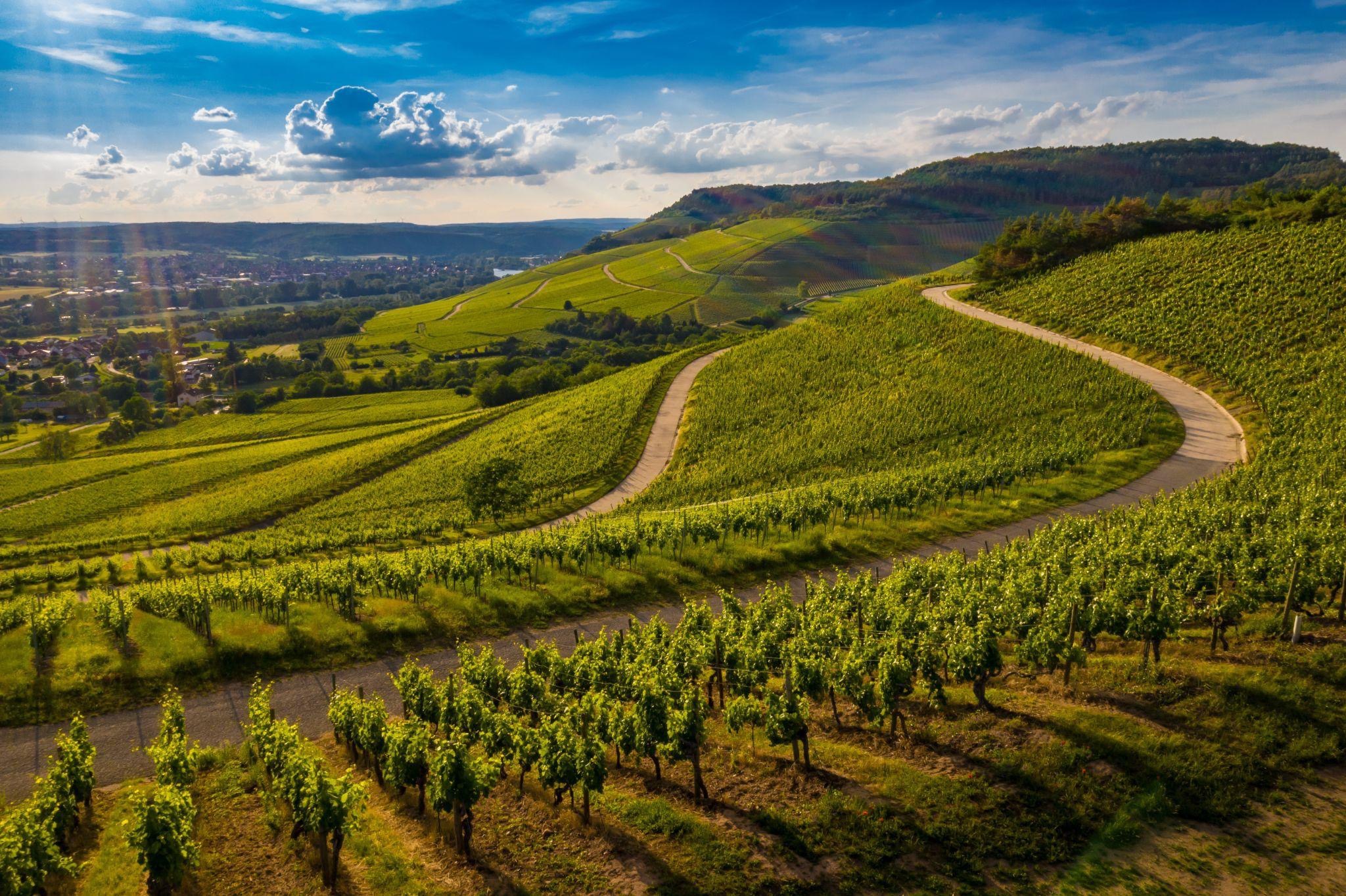
The Mosel is one of those regions where wine and landscape are closely connected. Vineyards often rise directly from the river, and many plots sit on slopes that appear remarkably difficult to cultivate. That challenging terrain is an important part of the region's identity.
The regional tourism organisation maintains an extensive list of producer tastings across towns such as Bernkastel-Kues and nearby villages. These tastings include still Riesling as well as sparkling wine.
A dry or slightly off-dry Mosel Riesling can be particularly appealing in warm weather. Pronounced acidity helps the wine retain freshness and prevents it from feeling heavy, even when the aromas are relatively expressive.
Advantages
Visitors can explore a wide range of styles from the same grape. Some bottles are lower in alcohol, while others are fuller and dry. The riverside scenery also makes the destination worthwhile for companions who may not wish to spend every hour tasting wine.
Limitations
German labels can be difficult to understand at first. Sweetness levels vary, so the word 'Riesling' alone is not enough to indicate style. Some smaller estates also operate limited tasting hours, which can make spontaneous visits less practical.
3. Sancerre, Loire Valley, France: Sancerre Blanc
Best For
People who prefer restrained Sauvignon Blanc, bright acidity and a destination that combines wine tasting with local food and historic villages.
Destination Snapshot
Region: Centre-Loire
Country: France
Main white grape: Sauvignon Blanc
Appellation area: About 3,000 hectares
Style: Dry, fresh and strongly influenced by soil
Sancerre lies on the left bank of the Loire and covers roughly 3,000 hectares across 14 communes. The region is best known for Sauvignon Blanc, although Pinot Noir is also used for red and rosé wines.
Soil plays an important role in the region. Kimmeridgian clay and limestone can contribute to lively wines, while flint soils often produce greater structure and a more pronounced mineral character.
For visitors, La Maison des Sancerre offers an accessible introduction to local terroirs, winemaking and aromas. It operates through much of the tourism season, from spring into autumn.
Advantages
The area is compact, which makes it easier to compare Sauvignon Blanc from different sites without travelling long distances. Local goat's cheese also makes food pairing particularly straightforward.
Limitations
Sancerre's international popularity has contributed to higher prices. Drinkers seeking highly tropical Sauvignon Blanc may find some examples relatively subdued. This reflects a different expression of the variety rather than a flaw.
4. Rías Baixas, Spain: Marqués de Cáceres Deusa Nai Albariño 2024
Best For
Seafood-focused trips, Atlantic coastal holidays and drinkers who want citrus freshness with enough texture to work well at the table.
Destination Snapshot
Region: Rías Baixas
Country: Spain
Bottle: Deusa Nai Albariño 2024
Grape: Albariño
Alcohol: 13%
Serving temperature: 8-10°C
Deusa Nai 2024 is made from Albariño and comes from D.O. Rías Baixas. Marqués de Cáceres describes it as citrus-driven, with grapefruit and lime, gentle acidity and a long finish. The producer also links the wine to the region's Atlantic climate. Annual rainfall is around 1,500 mm, while summer is generally drier than the rest of the year.
That Atlantic influence makes Rías Baixas a particularly suitable destination in warmer months. Albariño and local seafood are a well-established pairing, and the combination remains popular for good reason.
Advantages
Albariño offers enough acidity for warm weather while often providing more palate weight than very light white wines. The region's coastal food culture provides another strong reason to visit.
Limitations
Rías Baixas covers a broad area, so driving or following an organised route can be useful. Not every Albariño is light-bodied either. Lees ageing and producer decisions can create considerably more texture and weight than expected.
5. Monção e Melgaço, Portugal: Soalheiro Alvarinho Clássico 2024
Best For
People seeking northern Portuguese scenery, dry aromatic white wine and an alternative to the more familiar Douro wine routes.
Destination Snapshot
Region: Monção e Melgaço, Vinho Verde DOC
Country: Portugal
Bottle: Soalheiro Alvarinho Clássico 2024
Grape: Alvarinho
Alcohol: 12.5%
Style: Dry
Soalheiro's classic Alvarinho is produced in Monção e Melgaço. It is fermented in stainless steel and then spends time on fine lees. The producer notes tropical fruit and mineral characteristics balanced by acidity. It also states that the family's first Soalheiro bottling was released in 1982.
The wider Vinho Verde region extends across north-western Portugal. An official wine route connects towns, vineyards, tasting venues, accommodation and themed itineraries, including an Alvarinho route.
Advantages
The region demonstrates how far Vinho Verde extends beyond inexpensive, lightly sparkling styles. In Monção e Melgaço, Alvarinho can show considerable structure.
Limitations
The denomination is very large and stylistically diverse, so 'Vinho Verde' alone does not reveal much about the wine. Distances between attractions can also be considerable, making careful itinerary planning important.
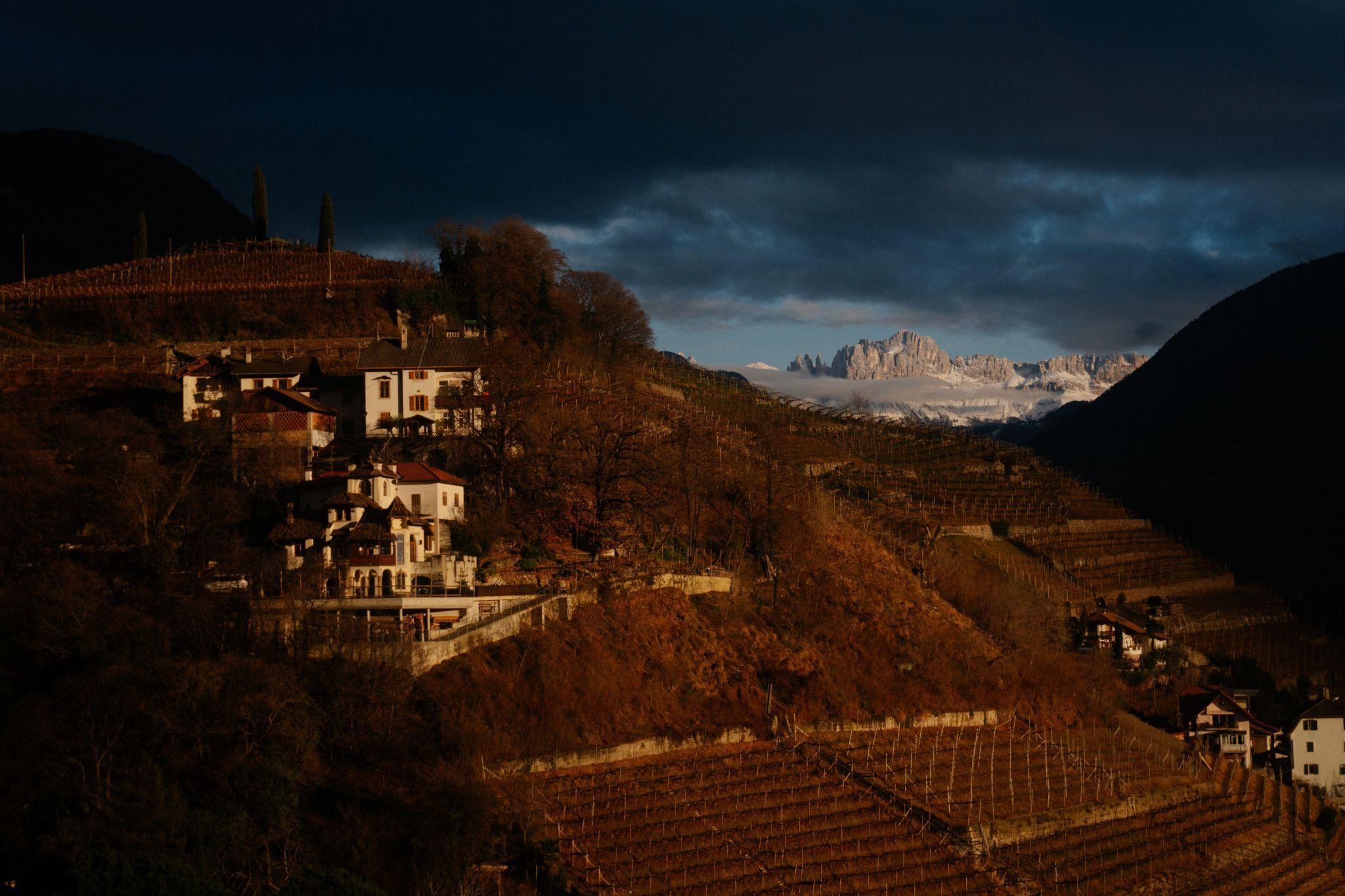
6. Alto Adige, Italy: Cantina Tramin Pinot Grigio 2024
Best For
Travellers who enjoy vineyard walks, mountain scenery and a strong food culture while still seeking crisp Italian white wines.
Destination Snapshot
Region: Alto Adige / Südtirol
Country: Italy
Bottle: Cantina Tramin Pinot Grigio 2024
Grape: Pinot Grigio
Style: Dry, alpine-influenced white
Summer activities: Winery visits, cycling and vineyard walks
Alto Adige challenges the idea that Pinot Grigio must be neutral. Higher altitude, vineyard aspect and significant day-to-night temperature variation can add considerable definition to the wines.
Cantina Tramin's 2024 Pinot Grigio has also received recent critical recognition. The producer notes a score of 92 points from Decanter and ratings recorded by James Suckling. The regional wine body supports winery visits and outdoor itineraries, including cycling routes and vineyard walks. This makes Alto Adige particularly suitable for travellers who want to combine wine with outdoor activities.
Advantages
Wine tourism combines naturally with hiking, cycling and food. The region also offers considerably more than Pinot Grigio, with Pinot Bianco, Sauvignon and Gewürztraminer among the other white varieties worth exploring.
Limitations
Mountain roads can make journeys slower than expected. Peak summer periods can also be busy. In addition, some richer alpine whites are not as light as visitors seeking a simple aperitif style may expect.
7. Santorini, Greece: Assyrtiko
Best For
Travellers seeking island scenery, high-acid white wines and a grape variety that tastes distinctly different from more familiar Chardonnay or Sauvignon Blanc.
Destination Snapshot
Region: Santorini
Country: Greece
Signature grape: Assyrtiko
Style: Dry, high-acid, mineral, often with a saline edge
Best pairing territory: Fish, shellfish and Mediterranean dishes
Santorini's vineyards grow in conditions that appear unusually demanding for viticulture. Volcanic soils, persistent winds and dry summers shape the landscape. Assyrtiko is the grape variety most closely associated with the island.
Estate Argyros is one of the island's long-established producers. It states that the family has maintained continuous wine production on Santorini for more than 110 years. Assyrtiko is also well suited to warm weather. Its naturally high acidity can remain pronounced even when the wine has substantial body.
Advantages
The connection between the grape and the island is particularly clear. Tasting local wines gives visitors a stronger understanding of Santorini's distinctive viticulture. Few vineyard landscapes resemble it.
Limitations
Summer brings substantial visitor numbers. Tastings and transport should be booked in advance, especially around the evening hours. Costs are also often higher than in many areas of mainland Greece.
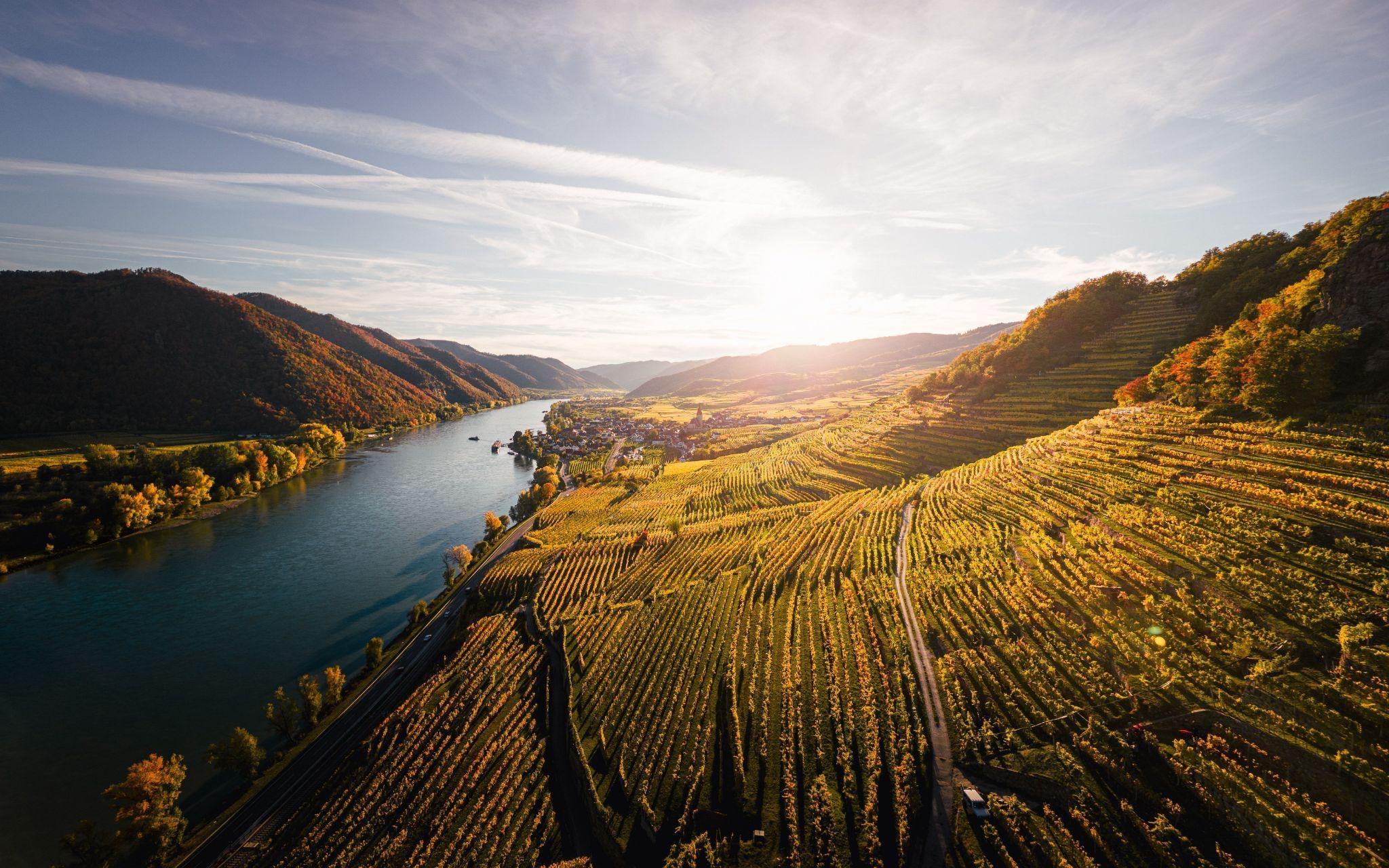
8. Wachau, Austria: Domäne Wachau Grüner Veltliner Federspiel Terrassen 2024
Best For
Cyclists, food-focused travellers and anyone seeking dry white wines with bright acidity and subtle spice.
Destination Snapshot
Region: Wachau
Country: Austria
Bottle: Grüner Veltliner Federspiel Terrassen 2024
Producer: Domäne Wachau
Alcohol: 12.5%
Style: Dry, medium-bodied, crisp
The 2024 Federspiel Terrassen is made from hand-picked Grüner Veltliner grown on steep terraces across the Wachau. Domäne Wachau states that fermentation takes place at controlled temperatures and that the wine matures on fine lees in stainless steel. Green apple, white pepper and herbal aromas are characteristic features. Wachau is particularly suitable for summer because wine tasting can be combined with outdoor activities. Vineyard walks, guided tours and tasting excursions are widely available.
Advantages
Grüner Veltliner pairs well with food, while the Danube setting encourages a slower pace. Visitors can travel by bicycle, boat or on foot rather than moving rapidly between tasting venues.
Limitations
Terms such as Federspiel, Smaragd and local vineyard classifications require some advance reading. Very steep vineyard paths may also be unsuitable for visitors with limited mobility.
9. Marlborough, New Zealand: Cloudy Bay Sauvignon Blanc 2024
Best For
Sauvignon Blanc enthusiasts and travellers who want organised cellar-door visits combined with outdoor activities.
Destination Snapshot
Region: Marlborough
Country: New Zealand
Bottle: Cloudy Bay Sauvignon Blanc 2024
Grape: Sauvignon Blanc
Style: Aromatic and fresh
Cellar-door scene: More than 30 tasting rooms across the region
Cloudy Bay's team described the 2024 season as warm and dry. They noted rapid ripening, low disease pressure and limited weather disruption during harvest. The producer also presents seafood and citrus-based dishes as natural pairings.
Marlborough's wine organisation lists more than 30 cellar doors. Visitors can travel by car or bicycle or join guided tours. The organisation also advises checking individual opening hours, as some tasting rooms reduce their schedules or close during the New Zealand winter. This seasonal difference is important. European summer coincides with winter conditions in Marlborough.
Advantages
The tasting infrastructure is straightforward and well organised. Comparing several producers also reveals that Marlborough Sauvignon Blanc is stylistically broader than its common stereotype suggests.
Limitations
The seasons in the two hemispheres do not align. June through August is not summer in New Zealand, and some cellar doors operate reduced schedules during that period. Travellers seeking warm, sunny vineyard conditions should plan around New Zealand's warmer months instead.
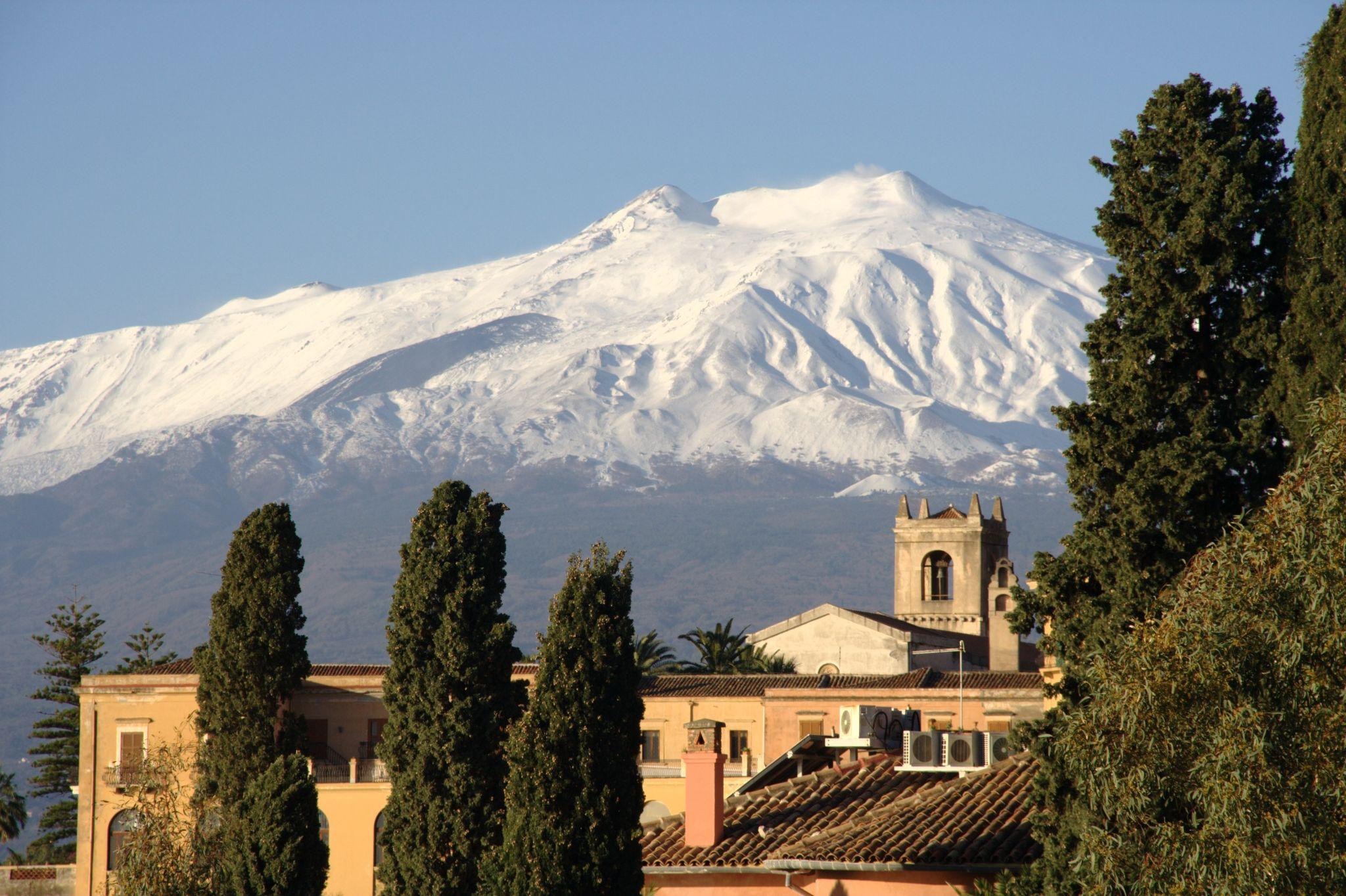
10. Etna, Sicily, Italy: Benanti Etna Bianco
Best For
Experienced wine drinkers seeking mineral, acid-driven white wines, as well as travellers interested in seeing how altitude, volcanic soils and proximity to the sea influence the landscape.
Destination Snapshot
Region: Etna DOC
Country: Italy
Bottle: Benanti Etna Bianco
Grape: 100% Carricante
Vineyard elevation: About 700-950 metres
Serving temperature: 10-12°C
Benanti produces its Etna Bianco entirely from Carricante. The grapes come from the eastern and southern slopes of Mount Etna. The estate describes sandy volcanic soils, vineyards situated at approximately 700 to 950 metres, hand harvesting and fermentation in stainless steel. The wine is dry and mineral, with a saline character, apple notes and firm acidity. The estate also offers visits and tastings at its Viagrande property by advance booking. This provides a direct way to connect Carricante with Etna's unusual growing conditions.
Advantages
Carricante has a distinctive character and can retain impressive freshness despite Sicily's southerly latitude. The combination of volcanic soils and altitude makes the region particularly instructive from a viticultural perspective.
Limitations
Etna is a large area, with considerable differences in elevation. Wineries are widely dispersed. Driving after tastings is not advisable, so organised transport is a safer option. Even in summer, conditions at higher elevations can differ significantly from those on the coast.
How We Selected These Summer Wine Destinations
We used seven criteria:
- Freshness and acidity: The wines needed enough structure to remain suitable for warmer weather.
- Regional identity: The grape variety or style had to have a meaningful connection with the destination.
- Tasting access: Winery visits, tasting rooms and regional wine routes were prioritised.
- Style diversity: We avoided repeating the same Sauvignon Blanc and Chardonnay styles throughout the list.
- Food compatibility: Seafood, salads, lighter meats and local summer dishes were considered.
- Producer documentation: Technical sheets and official winery materials were prioritised over unsupported tasting claims.
- Travel value: Scenery, food and other activities were considered alongside the wine itself.
Market context was checked against the OIV 2026 report covering the 2025 global wine sector.
How to Choose a Summer Tasting Destination
Keep the practical side straightforward:
- Match the region to grape varieties you genuinely want to explore.
- Check tasting-room opening days before booking accommodation.
- Reserve visits to smaller wineries in advance.
- Consider transport between estates before you begin tasting.
- Look at average summer temperatures and elevation rather than considering the country alone.
- Plan fewer tastings and leave sufficient time for food.
- Carry water and treat tasting pours as tastings, particularly in hot weather.
Four carefully chosen wineries are usually more useful than eight rushed visits.
Conclusion
Refreshing summer whites come from very different places. Chablis demonstrates how lean and precise Chardonnay can become on Burgundy's northern edge. Sancerre approaches freshness through Sauvignon Blanc, while Rías Baixas and Monção e Melgaço bring Atlantic influence to Albariño and Alvarinho. Wachau adds Grüner Veltliner and subtle peppery character, while Santorini and Etna take mineral, high-acid white wines into volcanic landscapes.
Choosing a destination is partly about the bottle, but not entirely. Tasting access, transport, food, climate and the amount of ground you want to cover all matter. A summer wine trip should not be planned around prestige alone. Choose a region whose wines you genuinely want to drink after lunch on a warm afternoon. That is usually a more useful starting point.
FAQ
1. Which white wines are especially refreshing in summer?
Wines with bright acidity and a dry or nearly dry profile often feel particularly refreshing. Chablis, Sancerre, Albariño from Rías Baixas, Alvarinho from northern Portugal, Assyrtiko, Grüner Veltliner and many dry Rieslings fit that description. Serving temperature matters too. Over-chilling can suppress aroma, so the coldest possible bottle is not necessarily the most enjoyable one.
2. What is a good European destination for a first wine-tasting trip?
Chablis, Sancerre and Wachau are approachable choices because wine is closely integrated with the local tourism infrastructure. Each also has a strong signature variety or style, which makes comparison easier. A first trip does not need ten estates. Two or three tastings, a vineyard walk and a good regional meal often provide more context than a packed schedule.
3. Is Chablis always made from Chardonnay?
Yes. Chablis AOC wines are made from Chardonnay, although vineyard classification, site, vintage and winemaking can create substantial differences between bottles. William Fèvre, for example, produces wines from Chablis, Premier Cru and Grand Cru sites, allowing visitors to compare several expressions of the same grape.
4. What makes Albariño good for warm weather?
Albariño from Rías Baixas commonly combines vivid acidity with citrus and other aromatic notes while retaining enough palate weight to work well with food. Marqués de Cáceres describes its 2024 Deusa Nai as showing grapefruit and lime, with gentle acidity and a long finish. Its coastal character also makes the style naturally suited to seafood-focused summer meals.
5. Is Vinho Verde always light and slightly sparkling?
No. Vinho Verde is a large controlled denomination with nine subregions and numerous grape varieties and styles. Monção e Melgaço, for example, is particularly associated with Alvarinho, which can produce structured dry wines with ageing potential. The regional commission itself emphasises the diversity created by different microclimates, grape varieties and winemaking methods.
6. Should summer whites always be served ice-cold?
No. Very low temperatures can suppress aroma and texture. Producer recommendations vary by style: Marqués de Cáceres suggests 8-10°C for Deusa Nai Albariño, while Benanti recommends 10-12°C for its Etna Bianco. A light, simple bottle may benefit from colder service, while a more complex or fuller-bodied white often reveals more as it warms slightly in the glass.
7. Do I need to book winery tastings in advance?
Often, yes. Large visitor centres may accept walk-ins, but smaller estates frequently operate by appointment. Advance booking becomes more important during peak summer travel, particularly in destinations such as Santorini, Burgundy and Alto Adige. Regional tourism organisations are useful for checking official tasting options rather than relying entirely on map listings that may contain outdated opening hours.
8. Which destination combines wine tasting with outdoor activities?
Wachau, Alto Adige and Marlborough are particularly easy to combine with active travel. Wachau offers vineyard walks and cycling along the Danube, Alto Adige promotes vineyard hikes and cycling routes, and Marlborough provides cycling options between cellar doors. It is sensible to separate serious cycling or driving from alcohol consumption.