

If you’ve ever dreamed of towering glaciers, thousands of penguins waddling along rugged shorelines, and some of the most untouched landscapes on Earth, then South Georgia Island belongs on your travel bucket list.
Nestled deep in the South Atlantic Ocean, this remote island is often called the “Galápagos of the Poles” because of its incredible wildlife and dramatic scenery.
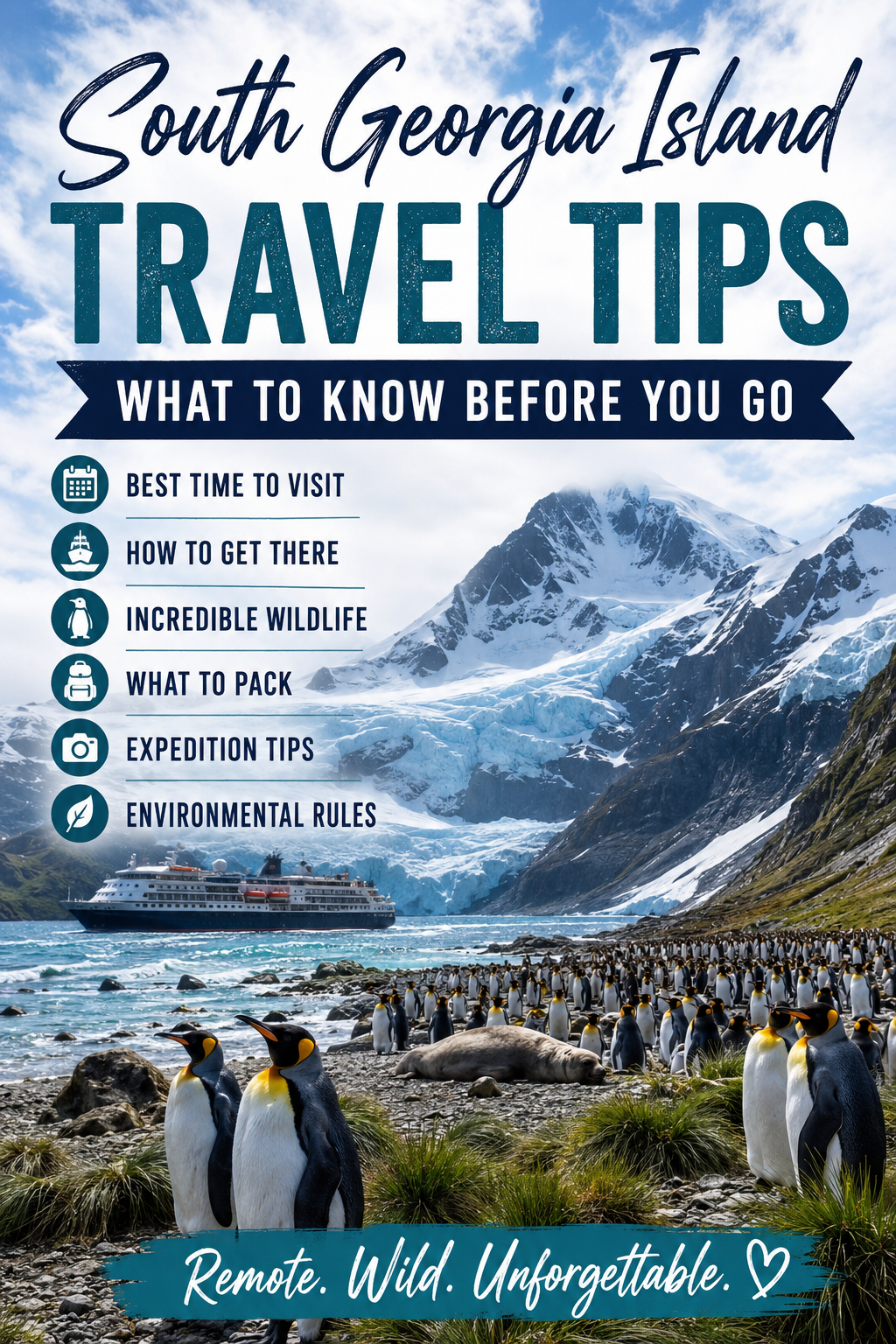
But visiting South Georgia Island is not like booking a weekend getaway. This is true expedition travel — remote, rugged, and unforgettable. Before you set sail, here’s everything you need to know to plan the adventure of a lifetime.
Where is South Georgia Island?
South Georgia Island is located in the South Atlantic Ocean between South America and Antarctica. Although geographically isolated, it is a British Overseas Territory and is famous for its wildlife, icy peaks, and whaling history.
Most travelers visit South Georgia Island as part of an Antarctic expedition cruise.
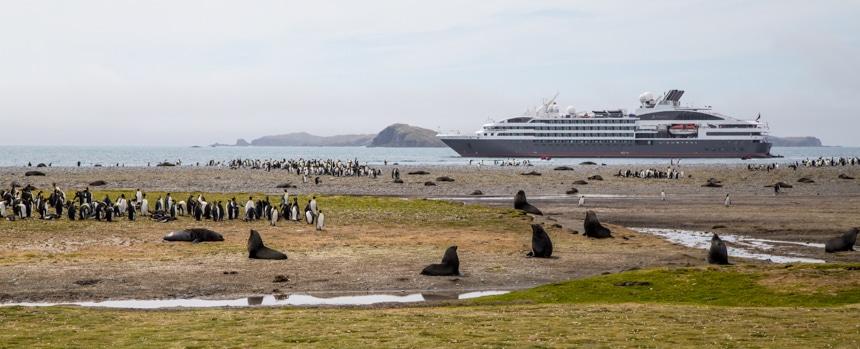
Booking a South Georgia Island cruise through a dedicated polar operator is the move – not because the alternatives are bad, but because there are no alternatives. These ships are built for subantarctic conditions. Ice-class hulls. Small Zodiac inflatables for getting passengers from ship to shore. Naturalists who have been coming to South Georgia for twenty years and can tell you, without looking up, which beach has the best fur seal pups in November.
Shore landings run two to three hours each. Visitor numbers are capped – typically 100 people ashore at any one site, sometimes far fewer. The daily schedule exists mostly as a suggestion; weather and wildlife dictate what actually happens. Some travelers find that maddening. Most, by day three, have fully converted.
The Best Time to Travel to South Georgia Island
The travel season runs from late October through March during the Southern Hemisphere summer.
Here’s what you can expect during each part of the season:
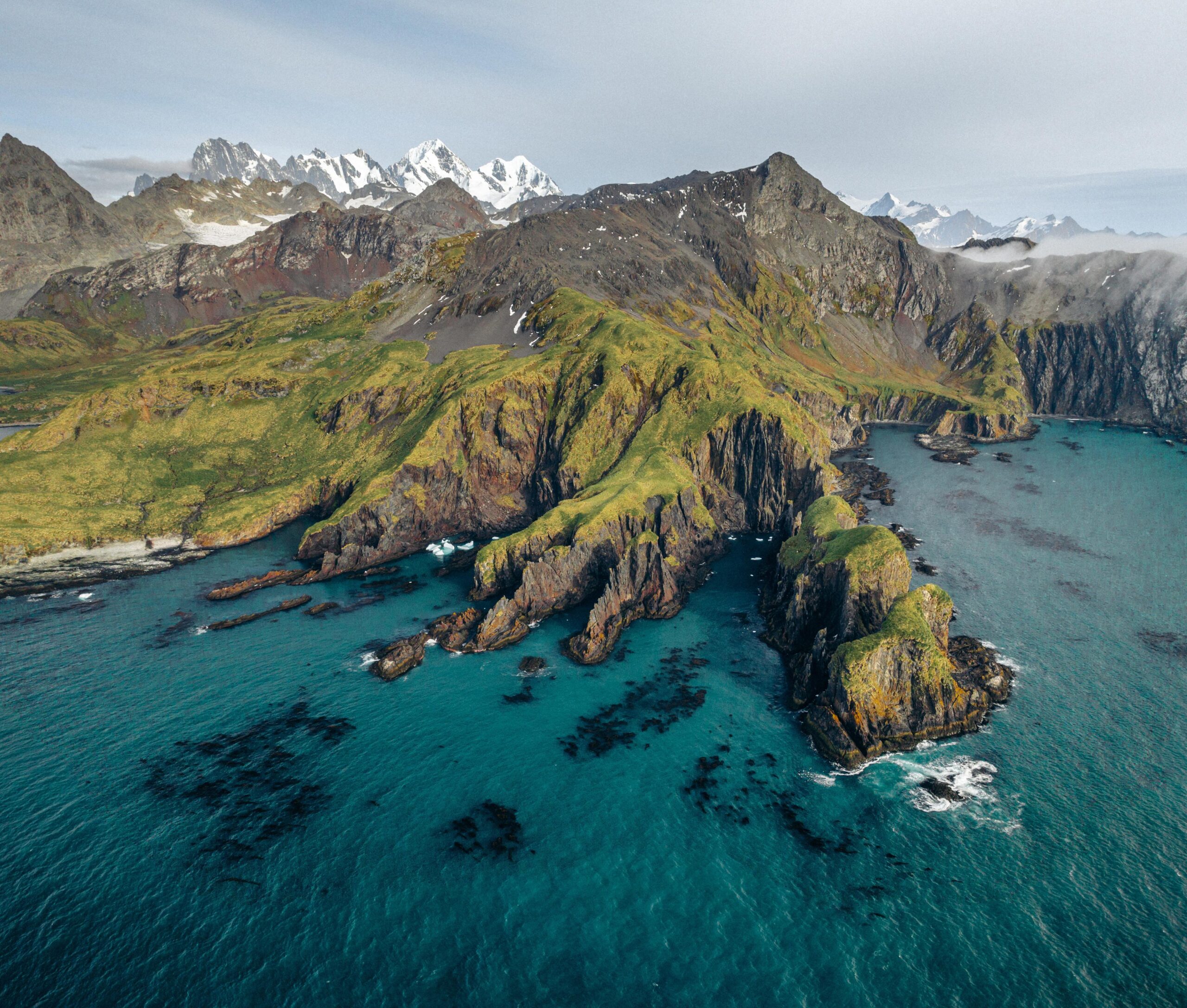
October–November
- Snow-covered landscapes
- Peak seal breeding season
- Penguins begin nesting season
- Excellent photography opportunities
December–January
- Warmer temperatures
- Penguin chicks hatching
- Longer daylight hours
- Peak expedition season
February–March
- More active wildlife
- Whale sightings increase
- Slightly milder conditions
- Fewer crowds on some sailings
No matter when you visit, expect cold temperatures, wind, and rapidly changing weather.
One thing worth flagging for birdwatchers: Prion Island – where wandering albatrosses nest, the largest seabird on Earth with wingspans stretching past ten feet – closes to all visitors between November 20 and January 7 each year. The closure protects breeding fur seals. Miss that window if seeing albatrosses on their nests is a priority.
Otherwise? There's genuinely no wrong month. King penguins breed on an unusual multi-year cycle, which means chicks in various stages of development are present year-round. The wildlife doesn't schedule downtime.
Wildlife You’ll See
South Georgia Island is one of the best wildlife destinations on the planet.
What travelers can realistically expect to encounter:
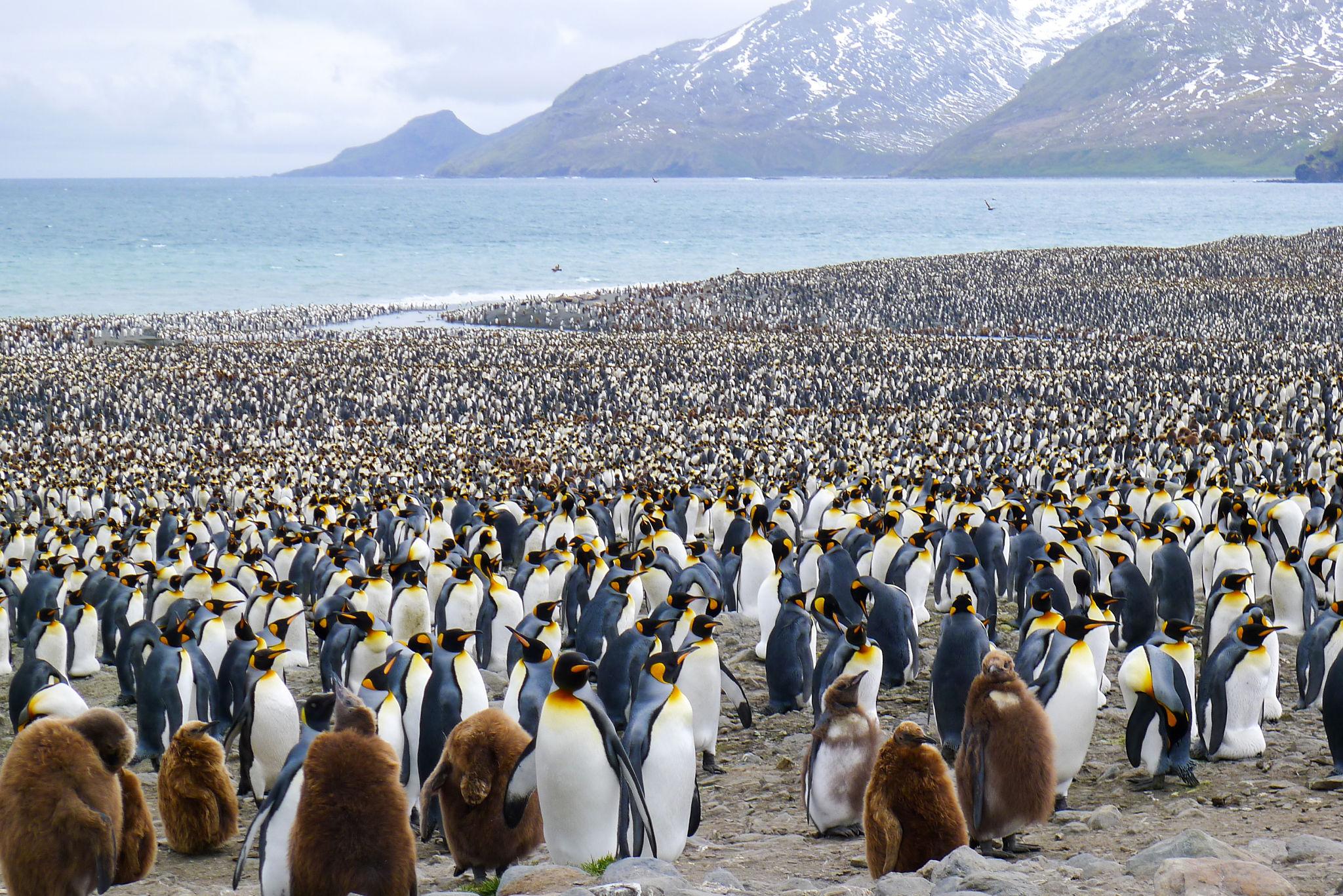
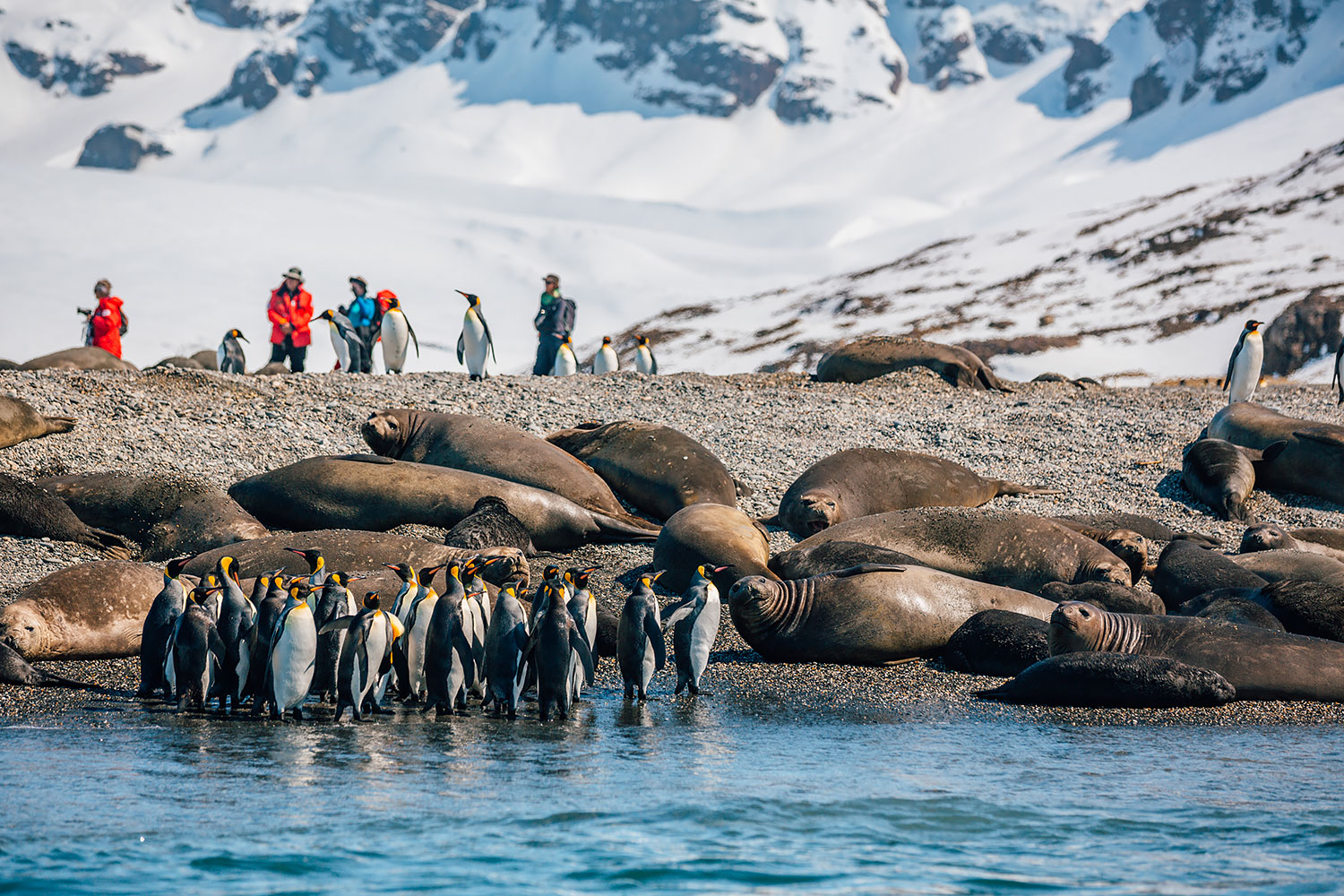
- King penguins in colonies numbered in the hundreds of thousands – the beaches at St. Andrews Bay and Salisbury Plain are the iconic spots
- Elephant seals – South Georgia hosts roughly half the global population
- Antarctic and South Georgia fur seals – loud, territorial, everywhere along the shoreline
- Gentoo, macaroni, and chinstrap penguins – alongside kings at various landing sites
- Wandering albatrosses – nesting on Prion Island, visible on the wing throughout
- Humpback, fin, and orca whales – increasingly common as populations recover
- South Georgia pintail and pipit – endemic species that dedicated birders specifically seek out
Standing on a beach surrounded by seals and penguins and albatrosses, that abstract point becomes something considerably more concrete.
What to Pack for South Georgia Island
Packing correctly is essential for staying warm and comfortable.
Clothing Essentials
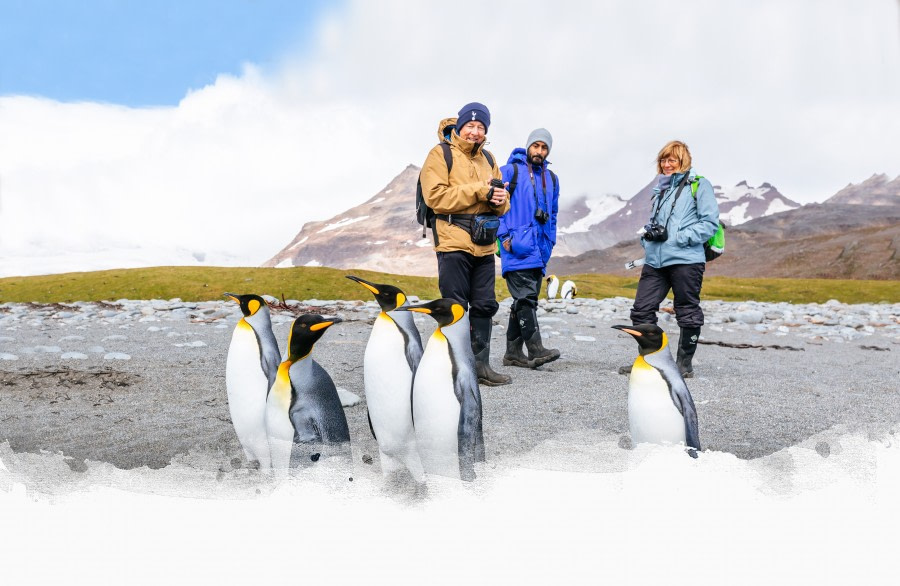
- Waterproof jacket and pants
- Thermal base layers
- Insulated gloves
- Warm hat
- Wool socks
- Neck gaiter or scarf
- Waterproof backpack
Footwear
Most expedition companies provide rubber boots for shore landings, but double-check before you go.
Camera Gear
Bring:
- Extra batteries
- Dry bags
- Zoom lens
- Lens cloths
Cold temperatures drain batteries quickly, so extras are a must.
The evening lectures are worth attending. Every night, the naturalists brief passengers on what's coming the next day – the ecology, the history, the animal behavior to watch for. These aren't mandatory events. They're also the reason some travelers come away from South Georgia understanding what they saw, rather than just having seen a lot of penguins.
Prepare for Expedition-style Travel
This is not luxury resort travel — even on upscale expedition ships.
You’ll likely experience:
- Wet zodiac landings
- Strict environmental rules
- Limited internet
- Unpredictable weather
- Flexible itineraries
Weather and sea conditions often determine where ships can safely land.
Being flexible is part of the adventure.
Environmental Rules Are Strict
South Georgia Island has strong conservation protections to preserve its fragile ecosystem.
Visitors must:
- Clean boots before landings
- Keep distance from wildlife
- Avoid leaving anything behind
- Follow guide instructions carefully
The island’s ecosystems are incredibly sensitive, and tourism is carefully managed to protect the wildlife.
Expect Limited Connectivity
Do not expect reliable cell service or high-speed Wi-Fi.
Most expedition ships offer limited internet packages, but connections can be slow and expensive. This is actually one of the best parts of the trip — a chance to unplug and fully immerse yourself in nature.
Is South Georgia Island Worth It?
Absolutely.
South Georgia Island offers some of the most breathtaking scenery and wildlife encounters anywhere on Earth. From massive king penguin colonies to towering glaciers and remote mountain landscapes, every moment feels surreal.
It’s not the easiest destination to reach, but that’s exactly what makes it so special.
A final, honest word about this trip
South Georgia is not a passive experience. The Drake crossing demands something from passengers. The landings are physically active. Flexibility isn't a personality trait that helps here – it's a literal operational requirement, because plans change when weather changes and weather changes constantly.
But the people who go – the ones who come back talking about it years later, in the way people talk about things that genuinely rearranged something in them – they're not describing the logistics.
They're describing a particular morning when the light came through the clouds over a glacier, and there were penguins as far as they could see in every direction, and the noise of the colony was everywhere, and for a few minutes the rest of the world felt very, very far away.