
I used to keep my recipes from a family recipe box in three places: a splattered binder, about forty screenshots on my phone, and a Pinterest board I never actually opened.
Then one night I wanted to make my grandma's cornbread and spent twenty minutes hunting for it before I gave up and winged it. It was fine. It was not grandma's cornbread.
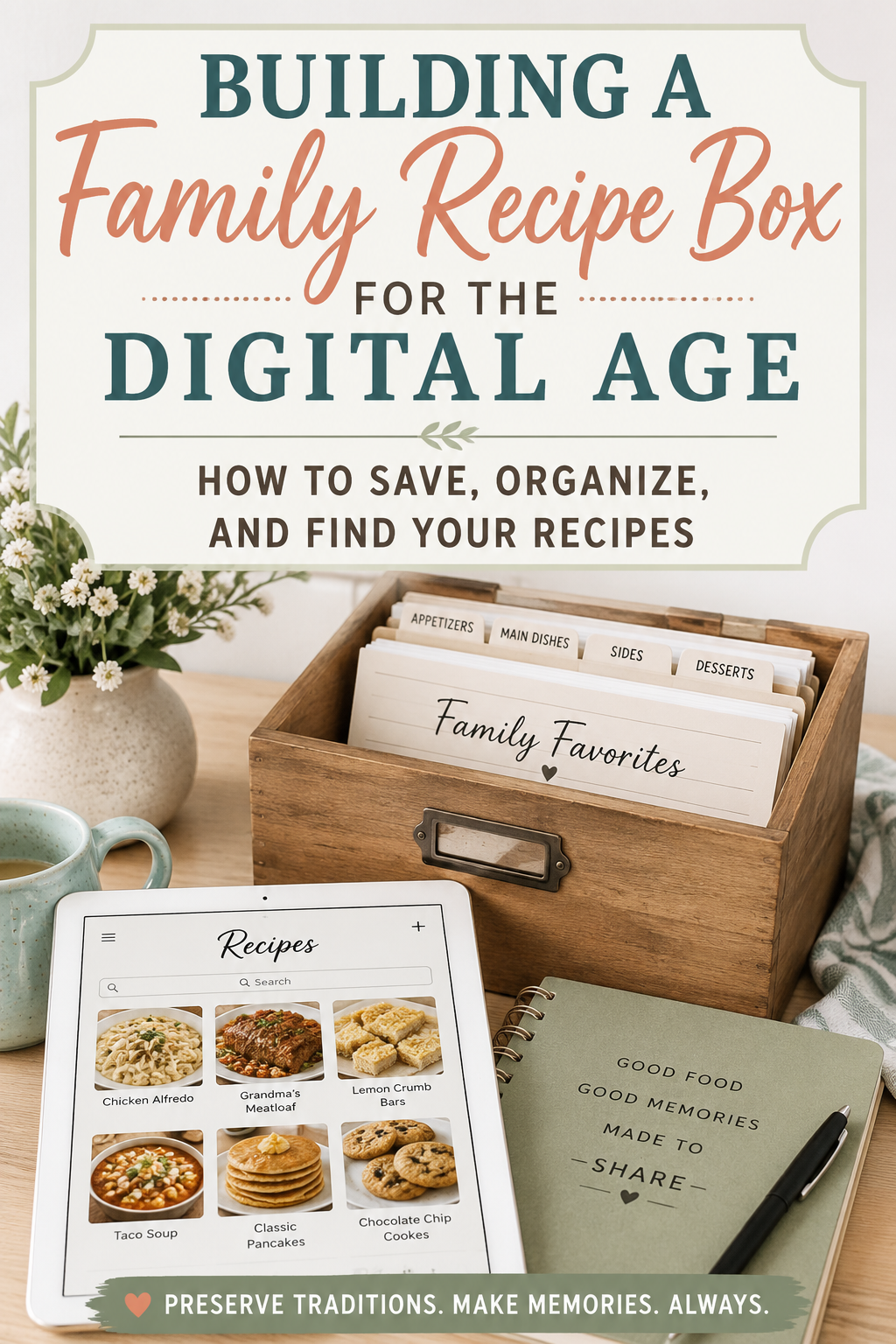
That was the night I decided to get my recipe collection in order, and I want to walk you through how I did it, because if I can do this, anybody can.
The goal here is simple: save the recipes you love in one place, keep the sentimental ones safe, and be able to find any of them in about ten seconds when you're standing in the kitchen with flour on your hands.
Gather everything in one spot first for family recipe box
Before you organize anything for a family recipe box, you have to know what you've got. Pour a coffee and pull it all together. For me that meant the binder, the phone screenshots, the recipes friends had texted me, a couple of email chains, and the handwritten cards from my mom and grandma that I keep in an old recipe tin.

Once it's all in front of you, the handwritten cards are the ones I'd deal with first, because those are the ones you can't replace. I scanned each of grandma's cards with my phone so I'd have a photo backup, then put the originals back in the tin. If my house ever floods or that tin walks off, I still have her handwriting saved. That step alone made the whole project feel worth it.
Keep the logins for your family recipe box from becoming their own mess
Here's the part nobody warns you about. The minute you go digital, you end up with accounts. A recipe app login, your grocery pickup account, a meal-kit subscription, the site where you saved that copycat recipe, maybe an account for the store loyalty program that holds your card. Before long you've got a dozen logins tied to your food life, and if you're anything like me, you were reusing the same password for half of them.
That's where a good password manager earns its keep. Instead of trying to remember which login goes with which recipe app or family recipe box, or worse, using your kid's birthday for everything, it stores all those account details in one secure place and fills them in for you.
Your grocery-pickup account, your recipe subscriptions, the sites where your saved recipes live, all locked behind one strong password you actually remember. It sounds like a small thing, but when your payment info is sitting inside a grocery account, keeping that login secure matters as much as backing up the recipe itself.
A few habits made this painless for me:
- Let the manager create the long passwords so you're not reusing the same one across your grocery and recipe accounts.
- Turn on two-step login for any account that stores your card, like grocery pickup or meal kits.
- Keep a note in there for the answers to those “security questions,” since I never remember which street I said I grew up on.
Set up categories the way you actually cook for your family recipe box
Once everything is gathered and your accounts are sorted for your family recipe box, you get to the fun part: sorting the recipes themselves. Don't overthink the system. The best one is the one you'll actually use. I organize mine by how dinner really happens at my house, not by some fancy chef structure.
The table below is roughly how I break mine down, and it might give you a starting point.
| Category | What goes here | Why I keep it separate |
| Weeknight quick | 30-minute dinners, sheet-pan meals | I need these fast on a Tuesday |
| Sourdough and bread | Discard recipes, rolls, loaves | My starter keeps me swimming in discard |
| Holiday and family | Grandma's cornbread, the honey ham | Sentimental ones I make once a year |
| Copycat favorites | Restaurant dishes we recreate at home | Cheaper than eating out with the kids |
| Kid-approved | The handful they'll actually eat | Saves me a fight at the table |
Tag the recipes as you go with a word or two you'd actually search for, like “chicken” or “freezer” or “potluck.” That way, when someone asks you to bring a dish to the school thing, you type “potluck” and there's your answer. If you're just getting into sourdough and drowning in discard like I was, my guide on how to make a sourdough starter will give you plenty to file under that bread category.
Give it a little upkeep and it'll last
A recipe collection is like a starter. Feed it a little and it stays healthy. I add new recipes the day I find them instead of letting screenshots pile up, and every few months I clear out the ones we tried and didn't love. The digital recipe organizer world has grown into a market worth hundreds of millions of dollars, which tells you how many of us were tired of losing grandma's cornbread. You don't need anything fancy to fix it, though. You need everything in one place, backed up, and easy to search.
Now when I want that cornbread, I type “cornbread,” and there it is, in grandma's own handwriting, saved for good. That's the whole point. Less time hunting, more time at the table with the people you're feeding.