

China’s high-speed rail network makes it possible to connect major cities in a matter of hours, often with fewer hassles than flying. Stations usually sit closer to city centers than airports, departures are frequent on popular routes, and train travel gives you a chance to see more of the country along the way.
The key is to build a realistic route. China is vast, and a map can make distant cities look deceptively close. A smart itinerary groups destinations by region, allows enough time for each stop and includes a little flexibility for busy travel days.
Start with a route that fits your schedule
Choose two or three priority cities before looking at individual trains. Once those are fixed, you can add nearby destinations without turning your vacation into a race between stations.

Beijing, Xi’an and Shanghai form a practical first-time route. Beijing offers major historic sites, Xi’an is known for the Terracotta Army, and Shanghai provides a very different urban experience. Direct high-speed services connect these cities, though travel times vary by train category and the number of stops.
Another option is to focus on one region. Shanghai, Hangzhou, and Suzhou work well together because the rail journeys between them are short. In southern China, Guangzhou, Shenzhen, and Hong Kong can be combined into a compact itinerary, subject to entry requirements. Chengdu and Chongqing are another popular pairing for food, city views and easy rail connections.
Use these rough guidelines when estimating how many stops to include:
- Seven days: two main cities, plus one nearby day trip
- Ten days: three cities at a comfortable pace
- Fourteen days: three or four cities with rest time built in
A three-hour train ride may still consume half a day once you include hotel checkout, the trip to the station, security checks and local transportation after arrival. Treat transfer days as travel days when building your schedule.
Check trains before booking hotels
Research the rail connection before committing to nonrefundable accommodations. Some city pairs have frequent departures throughout the day, while others offer fewer direct services or require a change. A route may also use more than one station in the same city.
Resources covering China rail travel can help you compare routes, typical journey durations, schedules and ticket details as you shape your itinerary. Check the exact station names closely. Beijing South and Beijing West, for example, serve different routes and aren’t interchangeable. Shanghai also has several passenger stations, including Shanghai Hongqiao and the centrally located Shanghai Railway Station.
China’s official 12306 railway ticket platform provides schedule searches and ticket services. International visitors should enter passport details exactly as they appear in the travel document. A missing middle name or transposed number can create problems when collecting tickets or passing station checks.
Before reserving a hotel, confirm:
- Which station your preferred train uses
- How long it takes to reach that station
- The earliest realistic departure after checkout
- The arrival time and local transit options at your destination
- Whether the train is direct or requires a transfer
An inexpensive room can become inconvenient if it adds an hour-long trip to an early morning departure. On a short vacation, location often saves more than a slightly lower nightly rate.
Understand tickets and travel dates
High-speed trains commonly carry letter-number service codes, such as G and D trains. G services are generally the fastest, while D services may take longer or make more stops. Journey time matters more than the label, so compare actual departure and arrival times.
Seat classes usually include second, first, and business class on trains that offer them. Second class is the standard choice for most solo travelers and works well for trips of several hours. First class gives you more room, while business class costs much more. Availability depends on the specific service.
Tickets normally go on sale within a limited booking window. That window can change, so confirm current rules close to your travel dates. Demand rises sharply around public holidays, school breaks and major festivals. The week surrounding China’s National Day in early October and the Lunar New Year travel period can be especially busy.
Allow extra time to understand Chinese public holiday dates before locking in an itinerary. Some holidays create extended breaks by moving regular workdays, which may surprise visitors who only look at the holiday’s official date.
If your schedule is fixed, book popular long-distance routes soon after sales open. If plans are flexible, compare several departures on the same day. A train leaving 30 minutes earlier may have better seat availability or fewer intermediate stops.
Make station days easier
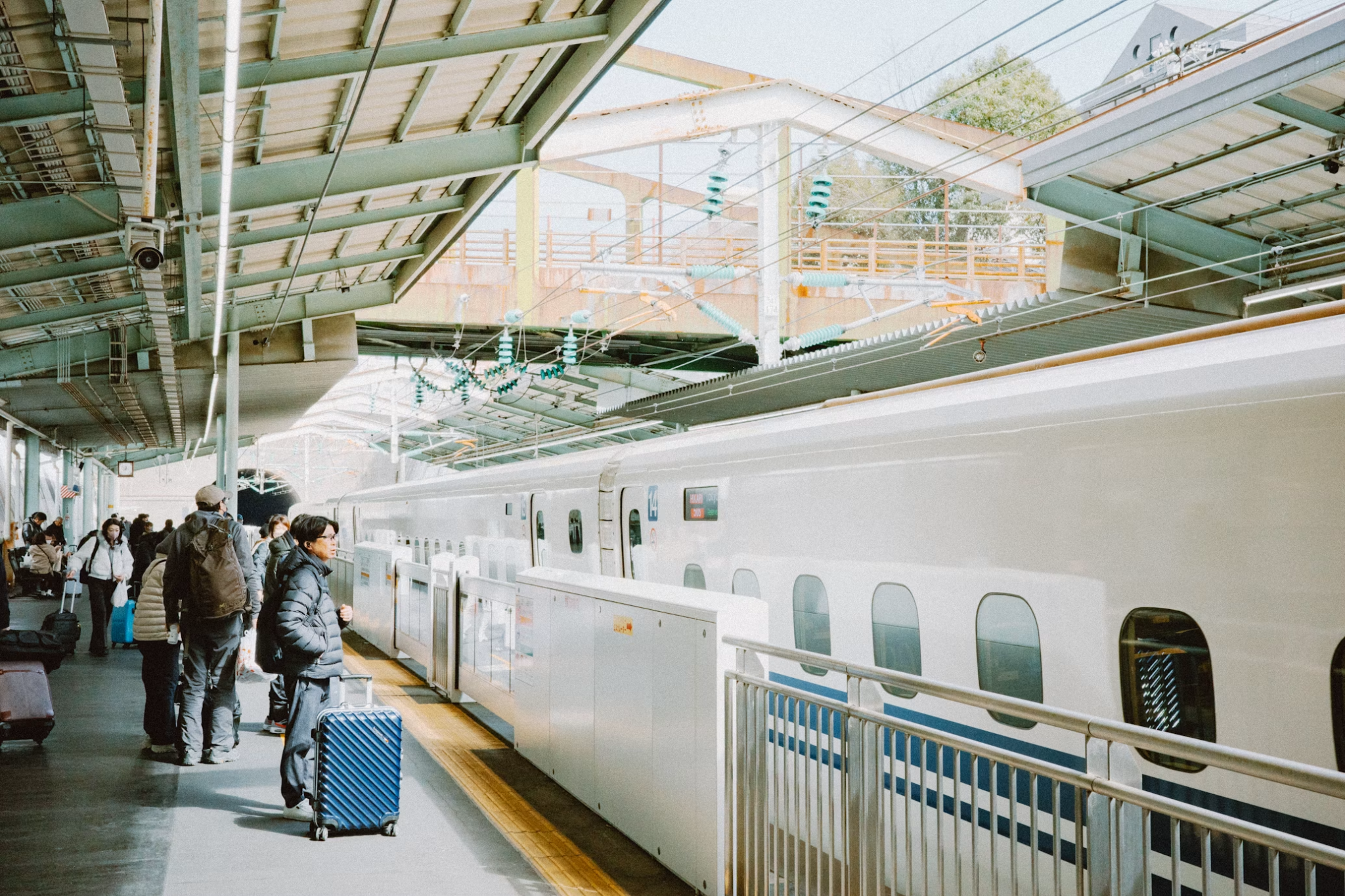
Major Chinese railway stations can feel more like airport terminals than small neighborhood stations. You’ll usually pass through an entrance check and security screening before reaching the waiting hall. Your passport serves as the primary identification linked to the reservation, so keep it readily available.
Arrive about 45 to 60 minutes before departure at a large station, especially on your first rail trip. Smaller stations may require less time, but arriving early gives you room to find the correct entrance and platform gate. Boarding often begins shortly before departure, and gates may close several minutes before the train leaves.
Station signs commonly include English in major cities. Departure boards show the train number, destination, departure time and gate. Match the train number first since several services may leave for the same city.
Pack for quick movement through crowded spaces:
- Use a suitcase you can lift onto a train or storage rack
- Keep your passport and booking details in an easy-to-reach pocket
- Carry water and a snack for longer trips
- Save the hotel name and address in Chinese characters
- Download an offline translation tool before leaving your hotel
Luggage space can fill quickly. Smaller bags usually fit on overhead racks, while larger suitcases may need to go in storage areas near the end of the carriage. Put identifying information on your bag and remove valuables before storing it away from your seat.
Plan for arrival in each city
A train’s arrival time only tells part of the story. Large stations can take 15 to 30 minutes to exit, especially when crowds are heavy. From there, you may need to take the metro or a taxi to reach your hotel. Avoid scheduling a timed attraction or dinner reservation immediately after arrival.
Save screenshots of your hotel’s address in English and Chinese. Taxi drivers may not recognize an English hotel name, and mobile service isn’t always dependable inside a busy station. Check the metro’s operating hours if your train arrives late.
Travel preparation should also cover documents and connectivity. Review current China entry requirements well before departure, as visa and transit policies depend on nationality, destination, and length of stay. The CDC China destination page offers current health guidance for travelers, while the U.S. Department of State provides information on safety and security. State Department travel advisory covers safety, local laws and consular information for U.S. citizens.
Leave some open space in the itinerary once the practical details are settled. Two full days in Xi’an or three in Beijing will feel far more rewarding than arriving late, sightseeing for a few hours and leaving the next morning. Rail makes it easy to cover impressive distances, but the best part begins after you walk out of the station and have time to explore.
For your final check, write down each train number, station name and hotel address in one place. That simple list can turn a complicated multi-city route into a series of manageable travel days.