

Yes, you can learn how to make sausage at home without a professional sausage stuffer, electric meat grinder or butcher’s setup. The easiest route is to start with good-quality pork mince, season it well, mix it until it becomes sticky, then shape it into patties, cook it as loose sausage, or stuff it into simple sausage casings.

This guide focuses on how to make sausage at home with fresh sausage, not fermented, smoked or dry-cured cold meat. That matters because fresh sausage is much safer and simpler for beginners. You make it, chill it, cook it thoroughly and eat it within a sensible time.
Because sausage is made from ground meat, food safety matters. The USA Food Standards Agency says minced meat products should be cooked thoroughly because mincing can move bacteria through the meat, not just leave them on the surface. Fresh sausage should be cooked all the way through, with no pink meat and clear juices.
How to Make Sausage at Home
You do not need a professional kitchen for basic sausage making. For your first batch, keep the setup simple and work in small batches so the meat stays cold and manageable.

Essential tools:
- Large mixing bowl
- Sharp knife
- Chopping board
- Kitchen scales
- Measuring spoons
- Frying pan
- Paper towels
- Plastic wrap
- Fridge space
- Clean hands or disposable food-safe gloves
Helpful but optional tools:

- Food processor, for pulsing cut meat into rough ground meat
- Stand mixer with a paddle attachment, useful when you need to mix meat
- Basic sausage stuffer, stuffer tube, stuffing tube, casing tube or sausage nozzle
- Stuffer attachment for a mixer, if you already own one
- Sausage pricker or a clean needle for releasing air bubbles
- Digital food thermometer
A meat grinder is useful, especially if it has a coarse die and fine die, but it is not required. You can buy minced pork from a butcher or supermarket and still make a tasty sausage at home. The result may not look exactly like shop-bought sausage links, but that is perfectly fine.
How to Make Sausage at home: the best base for a tasty sausage
For a classic fresh sausage recipe, pork shoulder is one of the best choices. It has good flavour, a useful balance of lean meat and fat, and enough structure to make a juicy sausage. If you are starting with whole pork shoulder, trim away any tough sinew, then cut meat into small cubes before mincing or pulsing.
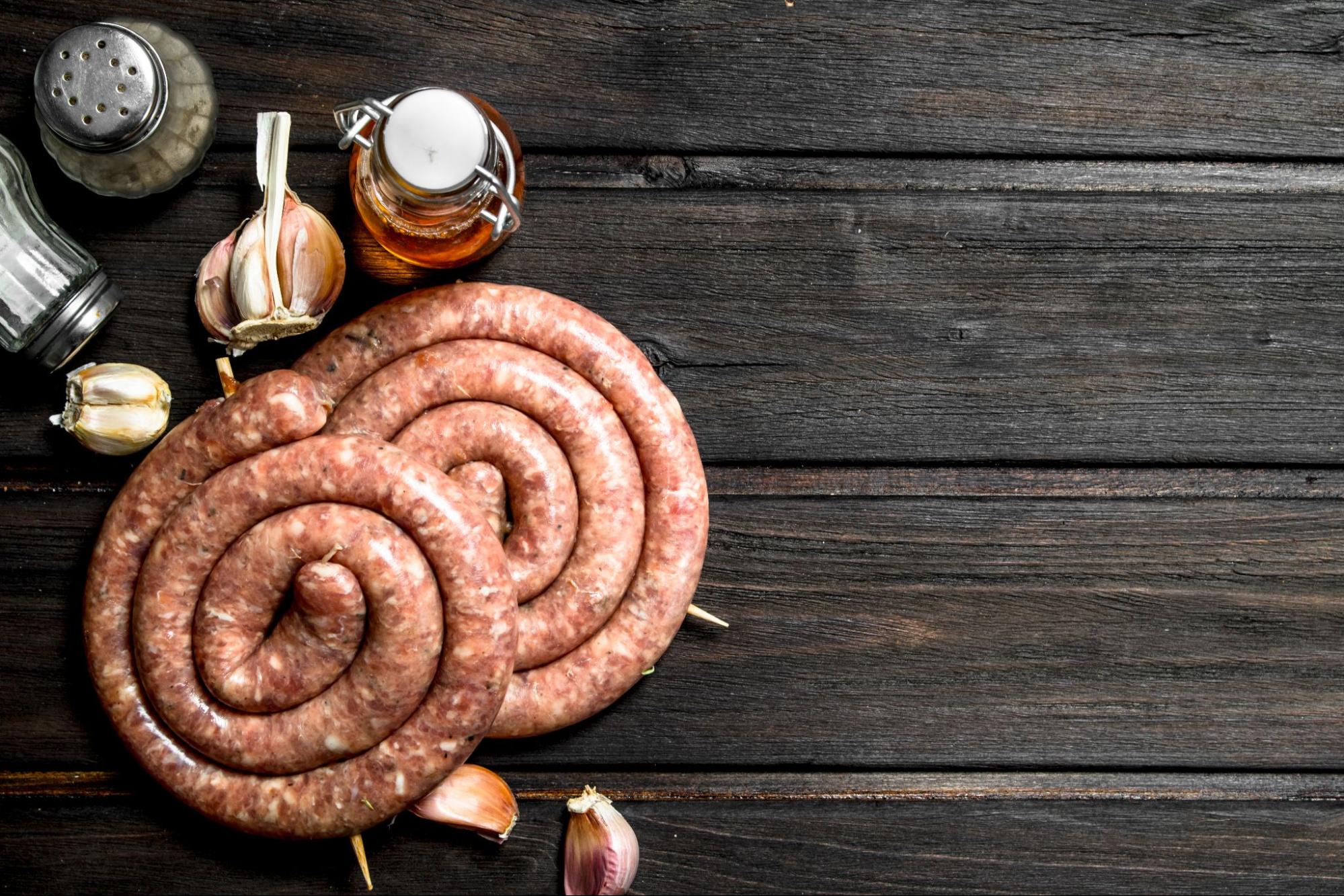
If you want the simplest method, use good-quality pork mince. Avoid very lean mince, as it can make dry sausage. A useful starting point is roughly 70–80% lean pork and 20–30% pork fat. Fat is not just there for richness. It helps the sausage retain moisture, improves the bite and carries the flavour of the sausage seasoning.
You can use other meats, but pork for homemade sausage is the easiest option for beginners. If you eat pork, start there before experimenting with chicken, turkey, lamb, or beef. Once you understand the basic method, you can adapt the meat mixture to suit your own taste.
This guide works whether you are making ground sausage, bulk sausage, patties or proper links. The same basic principle applies: keep all the meat cold, season it accurately, mix it until it binds, then cook it safely.
How to Make Sausage at Home with This Basic Recipe
For 1 kg of fresh sausage meat, use this beginner-friendly formula:
- 1 kg pork mince or minced pork shoulder
- 18 g salt
- 2–3 g black pepper
- 1–2 teaspoons crushed fennel seeds
- 1 teaspoon paprika, optional
- 80–120 ml cold water, white wine or red wine
- Optional garlic, sage, chilli flakes, thyme, or other sausage seasoning
- Hog casings, sheep casings or collagen casings, optional
The liquid is not only for flavour. When you add liquid and mix properly, the proteins in the meat become sticky. This creates the sausage bind, which helps the sausage hold together instead of crumbling in the pan.
You do not need curing salt for fresh sausage that will be cooked and eaten soon. Curing salts contain nitrites or nitrates and belong to cured meat methods, where precise quantities and controls are important. The Food Standards Agency explains that nitrates and nitrites are used mainly in processed meats such as bacon, ham and cured sausages, including for safety reasons such as limiting harmful bacteria.
Step-by-step: how to make sausage at home
Step 1: Chill everything
Cold meat makes better sausage. Warm fat smears into the mince, which can make the finished sausage greasy, dense or dry.
Put your mixing bowl in the fridge for 15–20 minutes before you start. Keep the pork, fat and any wine or water cold too. Do not leave raw minced meat sitting at room temp while you prepare other ingredients.
The Food Standards Agency recommends keeping chilled food out of the fridge for the shortest possible time during preparation and setting the fridge to 5°C or below to keep food cold enough.
Step 2: Prepare the meat
If you are using ready-made pork mince, place it straight into the chilled bowl.
If you are using pork shoulder, cut it into small cubes. If you have a meat grinder, use the coarse die for a rustic texture or the fine die for a smoother sausage. If you do not have a grinder, pulse the chilled cubes in a food processor. Use short bursts. Do not blend the meat into a paste.
Work in batches if needed. It is better to pulse a small amount properly than to overload the machine and warm the meat.
Step 3: Add seasonings
Now add seasonings. Start with salt, black pepper and fennel seeds. Then add garlic, herbs, chilli, or paprika if you want more flavour. For an Italian sausage style, use fennel seeds, garlic, chilli flakes and a splash of red wine. For a lighter version, try sage, black pepper and white wine.
If you want to add paprika, do it at this stage so it spreads evenly through the sausage mixture. Add all the spices before you start mixing, not after the meat has already bound together.
Step 4: Mix meat until sticky
This is the step many beginners rush. Use clean hands, a sturdy spoon or a stand mixer with the paddle attachment. Mix the meat for a few minutes until it changes texture and becomes tacky.
You are not just stirring seasoning through mince. You are creating the bind that helps the sausage hold together. When the meat mixture starts clinging to the bowl and to itself, it is ready.
If it feels too stiff, add a little more cold water, red wine or white wine. Add liquid gradually. You want the mixture moist and sticky, not wet.
Step 5: Review recipe seasoning
Before shaping the whole batch, cook a small test piece. Heat a frying pan with a little oil or olive oil over medium heat. Fry a teaspoon of the mixture until cooked through, then taste it.
This is your chance to review recipe flavour before it is too late. Add more salt, black pepper, fennel, garlic, or paprika if needed. A raw sausage mixture can smell strong, but cooking changes the balance, so always test a small piece.
Step 6: Shape the sausage
You now have three good options.
For uncased sausage, shape the mixture into small patties. This is the easiest beginner method and needs no extra equipment.
For loose sausage, leave the mixture unstuffed and cook it in crumbles. This works well for pasta sauces, breakfast dishes, pizza toppings or stuffing.
For sausage links, stuff the mixture into sausage casings. Links take more practice, but they are satisfying once you get the feel for it.
Step 7: Rest the mixture
Cover the bowl with plastic wrap and put it in the fridge. Resting for at least one hour helps the flavour settle. Leaving the mixture in the fridge overnight gives even better results.
Do not leave the mixture uncovered, and do not rest it at room temperature. Fresh sausage is raw minced meat, so treat it with care from start to finish.
How to stuff sausages without a professional sausage stuffer
If you want to make proper links, you need casings and something to push the filling through them. A professional sausage stuffer is neat and fast, but it is not essential for home batches.
Hog casings are the classic choice for many British-style sausages. Sheep casings are thinner and work well for smaller sausages. Collagen casings are often easier for beginners because they are uniform and usually simpler to handle.
Natural casings normally need soaking in warm water, but always follow the packet instructions. Rinse them gently if required, then slide the casing onto your stuffing tube, stuffer tube, casing tube or sausage nozzle.
Without a proper stuffer, you can use a piping bag, a strong freezer bag with one corner cut off, a funnel, or a basic stuffer attachment. Do not expect speed. This method is best for small batches.
Fill the casing slowly. The sausage should be full but still flexible. If you overfill it, the casing may split when you twist it or cook it.
To make sausage links, pinch the sausage at regular intervals and twist each link in alternating directions. Twist the first link away from you, the next towards you, and continue that pattern. This helps stop the links unravelling.
If you see air pockets or air bubbles, prick them with a sausage pricker or clean needle. Do this gently. You want to release trapped air, not tear the casing.
Cooking homemade sausage safely
Fresh homemade sausage should be cooked gently and thoroughly. Heat a frying pan with a little oil or olive oil. Add the sausages and cook over medium low heat or moderate medium heat, turning often.
Do not blast them over high heat. The outside may brown before the centre is safe to eat, and the casings are more likely to burst. Slow, steady cooking gives better results. The sausages should become evenly and nicely browned.
Because sausage is made from minced meat, it needs to be cooked all the way through. The Food Standards Agency advises that minced meat products should be steaming hot throughout, with no pink meat and clear juices.
A thermometer gives extra confidence. Many professional food-safety checks use a core temperature such as 75°C for at least 30 seconds as an example of a safe cooking check.
After cooking, rest the sausages briefly on paper towels if you want to remove excess surface fat. Serve them as breakfast sausage, in rolls, with mash, or as part of a main course cuisine recipe card if you are publishing the recipe online.
For storage, chill fresh raw sausage promptly and cook it soon. Freeze any extra portions if you will not use them quickly.
Troubleshooting: why did my sausage turn out dry, crumbly or bland?
| Problem | Likely cause | Fix |
| Dry sausage | The mince was too lean, there was not enough pork fat, or the sausage was overcooked | Use pork shoulder, add pork fat and cook more gently |
| Crumbly sausage | The sausage bind did not develop properly | Mix meat longer and add cold water gradually |
| Bland flavour | Not enough salt or seasoning | Fry a test patty before shaping the full batch |
| Burst casings | The casings were overfilled or cooked too hot | Fill loosely and cook over medium low heat |
| Air pockets | Air was trapped during stuffing | Prick air bubbles before cooking |
| Mushy texture | The meat got too warm | Chill the bowl, meat, and tools before mixing |
Most problems are easy to fix in the next batch. If the first try is uneven, split or a little rustic, that is perfectly fine. A great recipe comes from testing, tasting and adjusting.
The most common mistake is under-seasoning. Sausage needs more salt and spice than plain mince because the seasoning has to carry through the whole mixture. The second most common mistake is using meat that is too lean. Without enough fat, even a well-seasoned sausage can taste dry.
Simple flavour variations
Classic pork sausage
Use pork, salt, black pepper, sage and cold water. This is a simple British-style base and a good place to start if you want an everyday sausage.
Italian sausage
Use pork, salt, black pepper, garlic, chilli flakes, fennel seeds and red wine. This version is excellent as loose sausage in pasta sauce or shaped into links.
Paprika and garlic sausage
Use pork, salt, garlic, black pepper, paprika and white wine. This gives a deeper colour and a warmer flavour without making the sausage too hot.
Once you understand the basic method, you can make your own sausages with different herbs, spices, and liquids. Keep notes each time so you know what to change in the next batch.
FAQ
Can I make sausage without casings?
Yes. Uncased sausage is the easiest version of homemade sausage. Shape the mixture into small patties, roll it into logs wrapped in plastic wrap for chilling, or cook it as loose sausage. You still get the flavour of sausage without the stuffing step.
Do I need a sausage stuffer?
No. A sausage stuffer makes the job cleaner and faster, but it is not essential. For a small batch, a piping bag, funnel, stuffing tube, casing tube or basic stuffer attachment can work. You can also skip casings completely.
Can I use pork mince instead of grinding meat?
Yes. Pork mince is the simplest way to make sausage at home without a meat grinder. Choose mince with enough fat, or ask your butcher for minced pork shoulder with extra pork fat.
Do I need curing salt?
No, not for fresh sausage that will be cooked and eaten soon. Curing salt is for cured, smoked or dried meat products and should not be guessed or improvised.
Why add cold water or wine?
Cold water, red wine or white wine helps spread the seasoning and improve the texture. It also helps the sausage mixture bind when you mix it properly.
Can I calculate nutrition calories?
Yes, but nutrition calories depend on the pork, fat level, casing, oil and cooking method. For accuracy, weigh your ingredients and use a reliable nutrition calculator.
Conclusion: the simplest way to make your own sausages
You can make sausage at home without professional equipment. Start with good pork mince, salt, black pepper and one or two seasonings. Mix until sticky, fry a small test piece, adjust the flavour, then shape the mixture into patties, loose sausage or links.
For a first attempt, skip the casings and make patties. Once the flavour and texture are right, try hog casings or collagen casings. Good sausage making is not about expensive equipment. It is about cold meat, balanced seasoning, proper mixing, careful cooking and a little practice.