
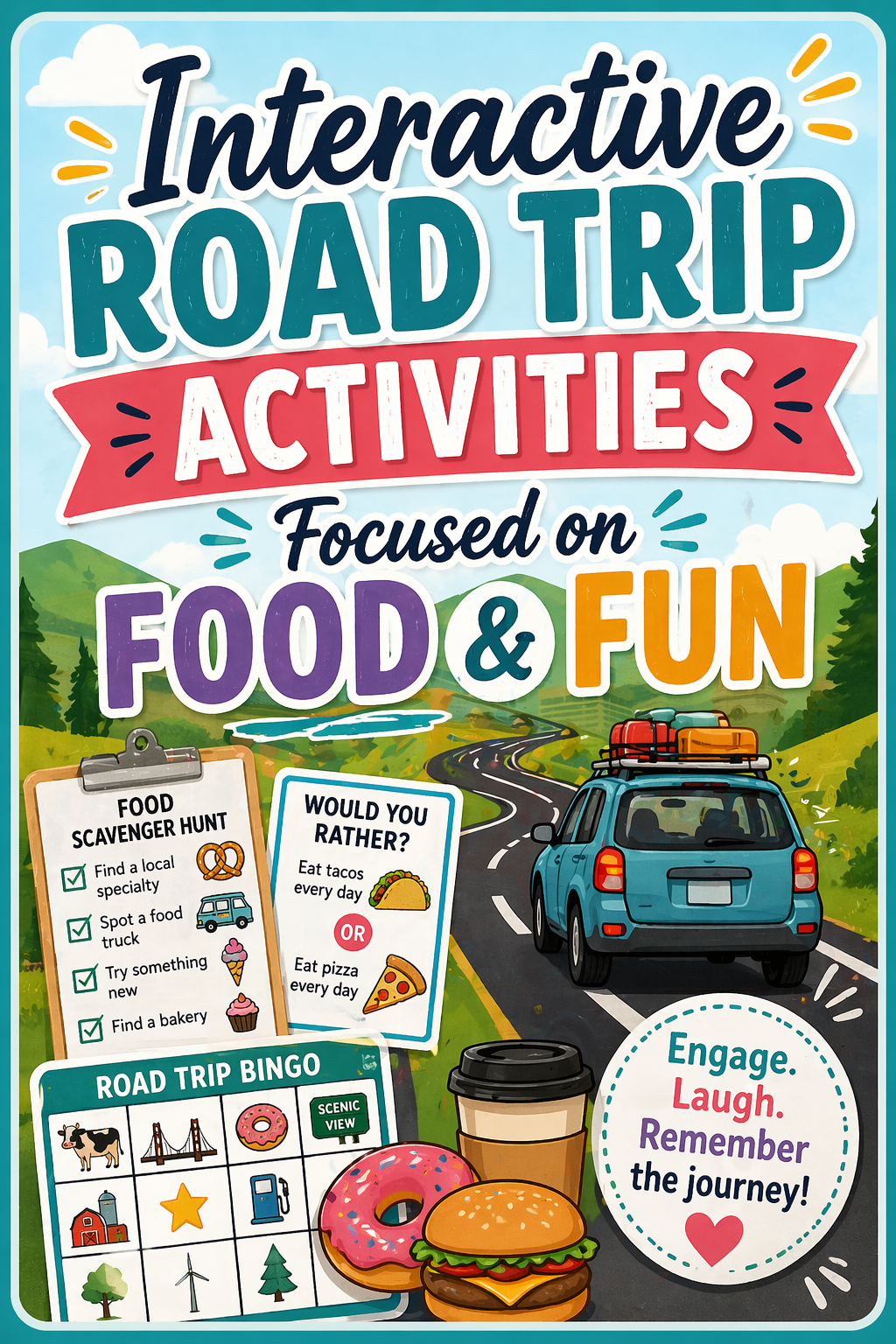
During family travel, parents often look for ways to support their children's academic goals through interactive road trip activities.
In this article, professional online reading tutors share how you can build a strong foundation and reinforce kids' old and new skills during your travels with some of the best educational activities for kids.
Snack-Based Learning on the Go
Edible Math & Logic
Turn your snack bag into a toolkit. Before everyone digs in, try these quick ideas.
- Addition with crackers: Place two crackers on one side of a tray. Place three crackers on the other. Have your child combine both piles. Ask for the new total. This visual check builds basic addition skills.
- Multiplication arrays: Arrange snacks into equal rows and columns on a flat surface. Ask your child to count the number of rows and columns. Have them multiply those two numbers to find the total. This turns an abstract concept into a hands-on exercise.
- Grouping strategy: Divide a pile of pretzels into smaller clusters of three or five. Count each cluster separately. This organizes the task. It helps children practice skip-counting and foundational division.
- Subtraction in action: Start with five grapes in a pile. Ask your child to take away two to eat. Count what remains on the napkin. This model subtraction is a real event, not just a problem on paper.
Visual Logic and Estimation
- Organize candies by shade: Take a napkin and fill it with candy. Sort them by color. It improves categorization skills.
- Identify the shapes of snacks: Look for shapes in the food, such as squares or circles. Name the shapes. By doing this, kids strengthen their geometry vocabulary.
- Make patterns with different goodies: Repeat the snack sequence. Use a pattern such as cracker, grape, cracker, grape. Let the youngster continue the sequence.
- Calculate snacks in a container: Give a clear snack bag to the child. Find out how many pieces they think there are. Count them all afterward to ensure accuracy.
Roadside Literacy and Interactive Fun
Reading the Road
Signs, billboards, and maps are perfect for learning on the go with the following tasks:
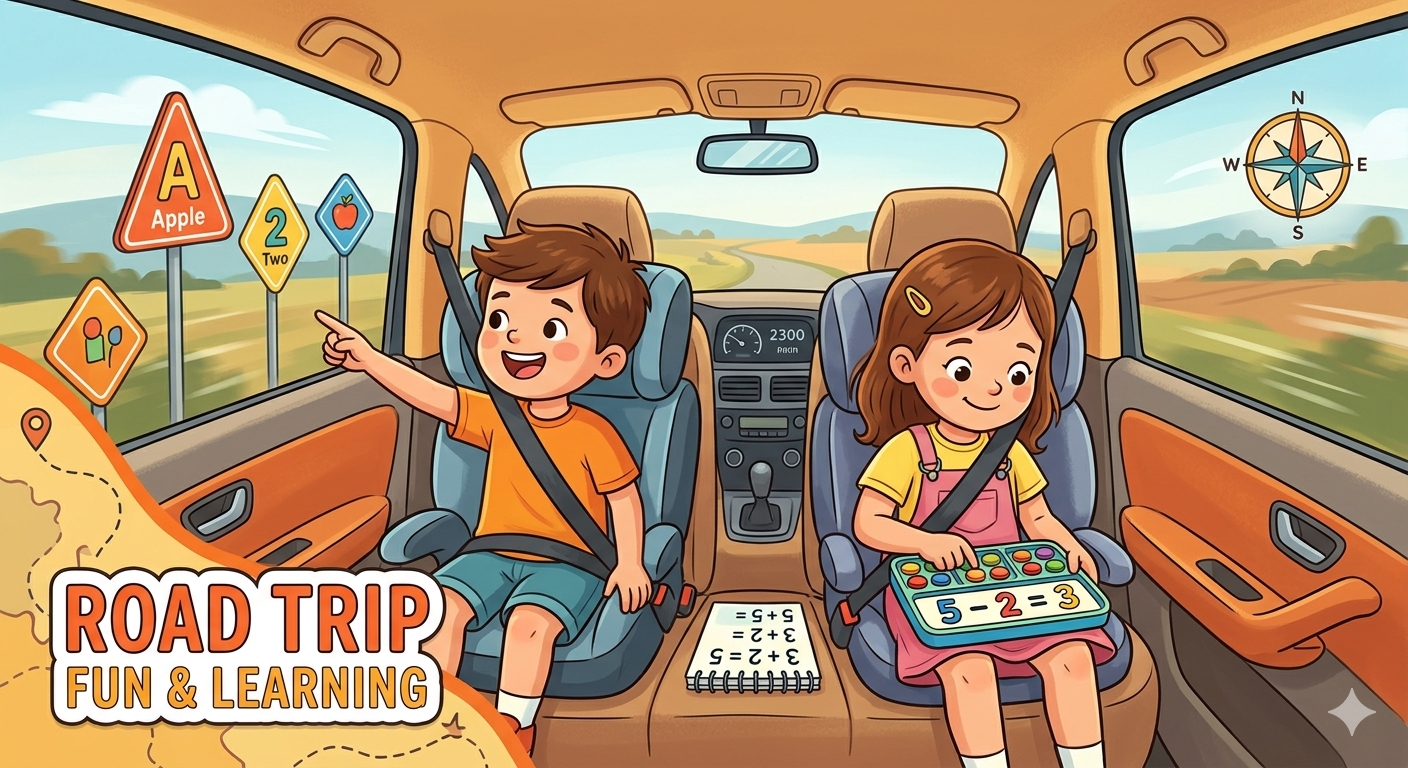
- Read license plates: Select a plate. Let the child spell the letters or state them for you. It helps students recognize letters.
- Identify town names: Look at the initial letter of a city's name on a sign. Ask your child to guess the whole name before it appears. This increases confidence in phonics and word prediction.
- Read road signs out loud: Identify typical road signs. By doing so, the kid will be able to read faster. It helps children identify signs more quickly by sight.
- Look for signs with specific letters: Take a set distance from one letter. Identify the letter on any sign with your child. By doing this, kids will improve their ability to scan visually.
- Read shop names: Practice reading store signs at gas stations. When the child sees a store, ask them to read the signage. This makes familiar brands useful literacy tools.
Navigation and Observation
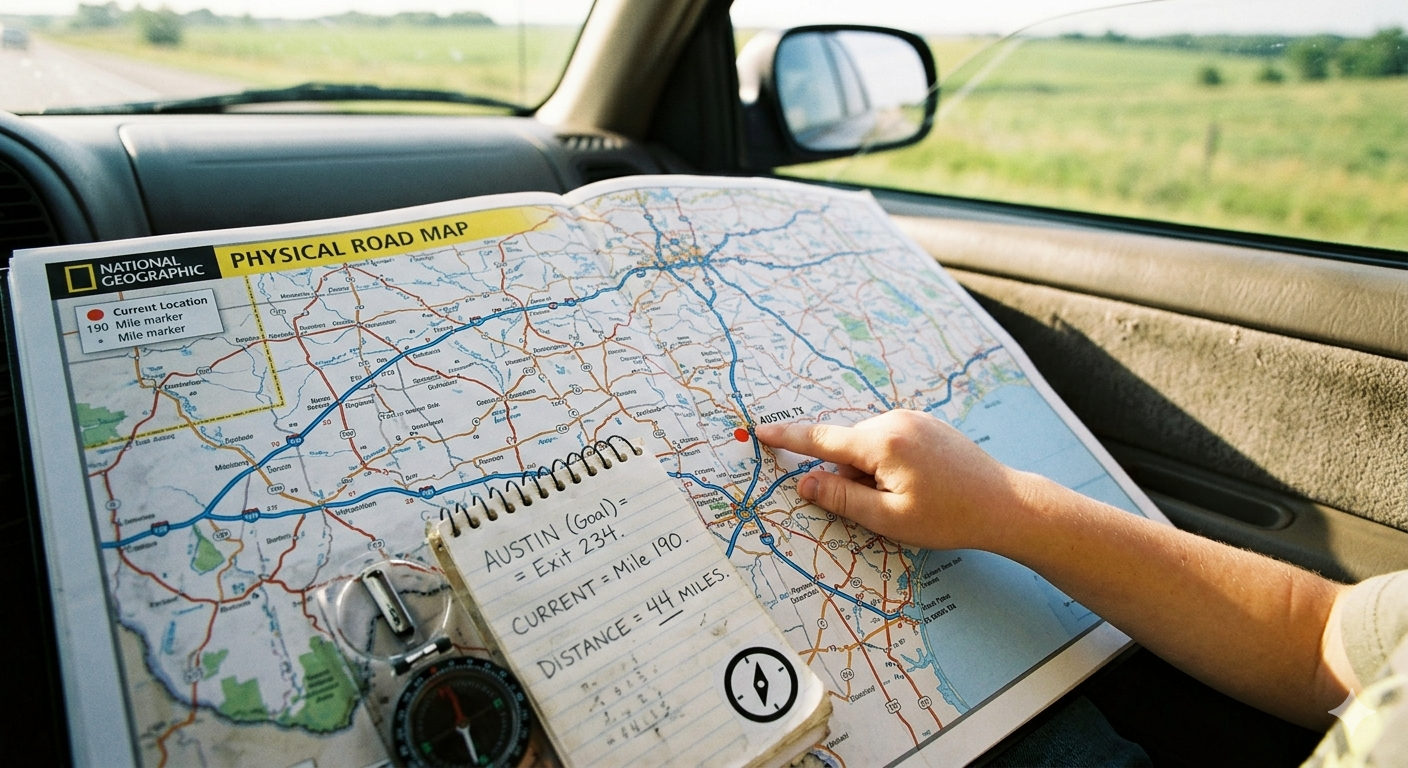
- Identify cities on paper maps: Trace your route on a physical map to do interactive reading games. Have the child find the names of upcoming towns. This activity builds geography skills and map-reading logic.
- Describe images on large billboards: Ask the child to explain what they see in a billboard advertisement. This task improves vocabulary and narrative ability. It forces them to look closely at details.
- Tracking exit signs: Have your child keep a tally of every exit sign you pass for the next ten minutes. This activity connects visual observation with counting practice.
- Highway marker subtraction: Look for the small green mile markers on the side of the road. Pick a destination or a rest stop. Subtract the current mile marker from the goal number.
- Sign color classification: Explain that road signs use specific colors to signal meaning. Ask your child to classify them as they appear. Use yellow for warnings. Use blue for services.
Smart Pit Stops and Budgeting
Gas stations and rest stops provide chances for real-world application. These stops break up the drive. They allow for movement. They also allow for specific math games for kids.
The Gas Station Challenge
When it’s time to stretch your legs, give the kids a real-world task. Give your kids a budget, but not too much, so that they can purchase a snack for $5. Explore the store and take a peek at the prices. Make sure the child selects things that are within the budget. They need to understand if they have enough funds to meet their needs.
The lesson emphasizes how crucial it is to verify costs. Kids need to prioritize their decisions. They can't possibly purchase everything. We are able to make logical conclusions as a result.
- Prior to visiting the store, establish a strict budget.
- Request that the child read aloud from the price tags.
- Ask the child to maintain a running total on paper or in their mind.
- Verify the total at the register.
Restaurant Ordering Activity
Learning through play is the best way to know new things, so having a quick food stop allows you to analyze the menu. Give your child the menu and ask them to read the options. Ask them to calculate the total cost for the family order. It requires reading comprehension. It requires adding prices.
This task gives the child the feeling of being a helper. The task feels like it is their responsibility. It allows them to forget about how long the trip is. It provides a clear goal for the stop. As soon as the task is complete, they can relax.
Tasks like these provide a sense of agency. When a child is in a car, they often feel powerless. When you give them a job, they feel important. This makes the stop more meaningful.
Making Every Mile Count
The goal isn't to recreate a classroom in the backseat. It’s about showing kids that learning happens everywhere even at 65 mph. By keeping things light and focusing on "food and fun," you eliminate the stress and keep their curiosity alive.
There is a live number line on the road. The odometer in your car is an excellent math tool. Keep an eye on the dashboard every twenty miles by asking your child to do so. Take note of the starting mileage. Together, calculate the remaining distance to your destination.
This turns the trip into a giant word puzzle. Get an estimate of when you can expect to arrive. Calculate the distance traveled in one hour using the speedometer. It keeps the mind active during long periods of time. In other words, it relates math to movement.
Conclusion
A successful road trip is built on good snacks and better engagement. Whether you're playing math games for kids or spotting letters on a map, these moments make the drive fly by. Grab your snacks, set your GPS, and enjoy the ride! Traveling offers a special chance for development. You can close the gap between your home and school lives in tiny stages.