
If you've been looking for a delicious way to use your freshly milled flour, these Fresh Milled Flour Bagels are a great place to start! They're chewy on the outside, soft and hearty on the inside, and packed with the wonderful flavor that comes from using freshly ground wheat berries.
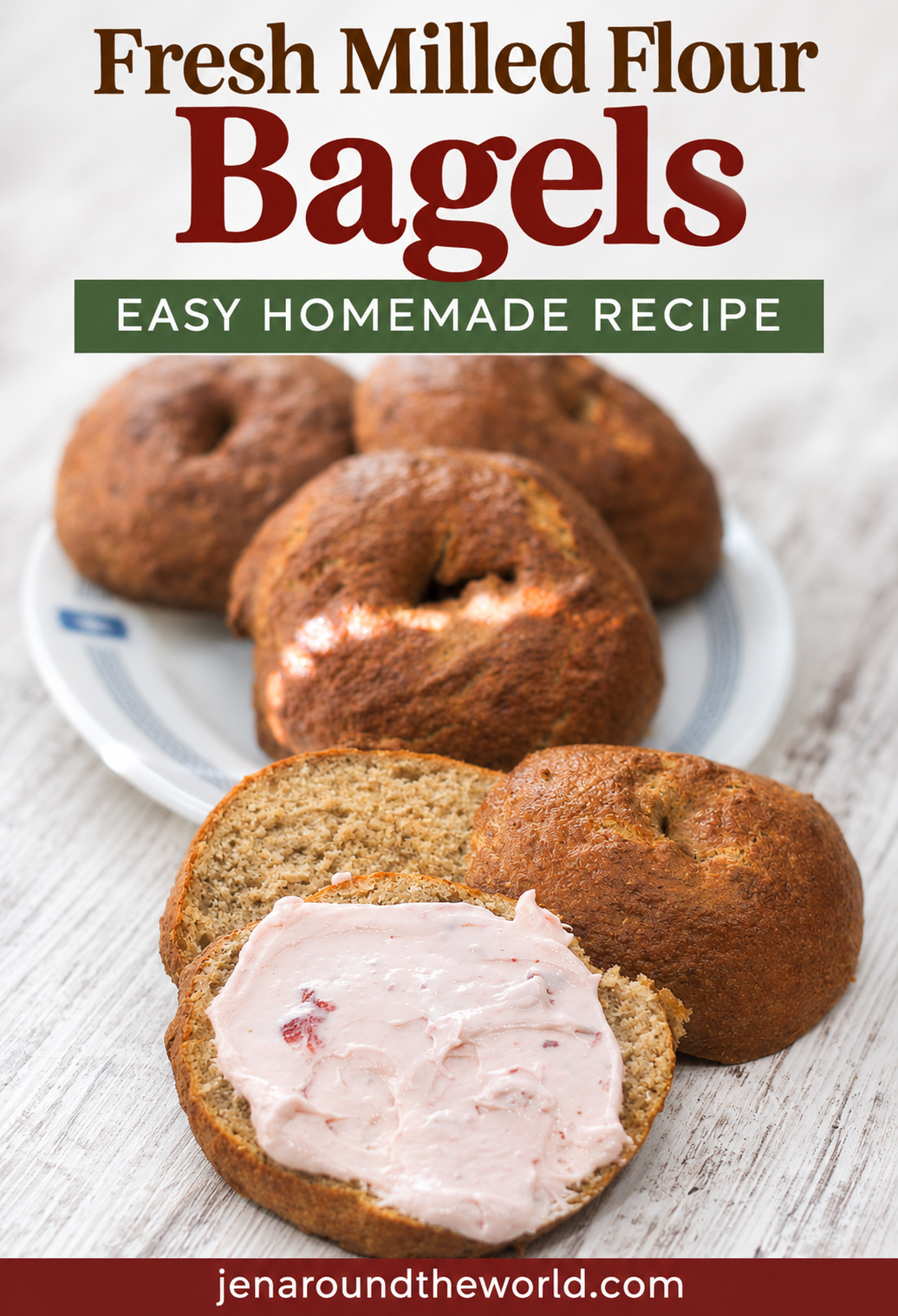
Making homemade bagels might sound intimidating, but I promise it's easier than you think. With a few simple ingredients, a little patience, and your favorite wheat berries, you can make bakery-style bagels right in your own kitchen.
One of my favorite things about making bread from freshly milled flour is knowing exactly what goes into it. There are no unnecessary additives, and you get to enjoy the natural flavor of whole wheat.
Whether you love your bagels toasted with butter, topped with cream cheese, or turned into a delicious breakfast sandwich, this homemade bagel recipe is one you'll want to make again and again.
Why You'll Love These Fresh Milled Flour Bagels
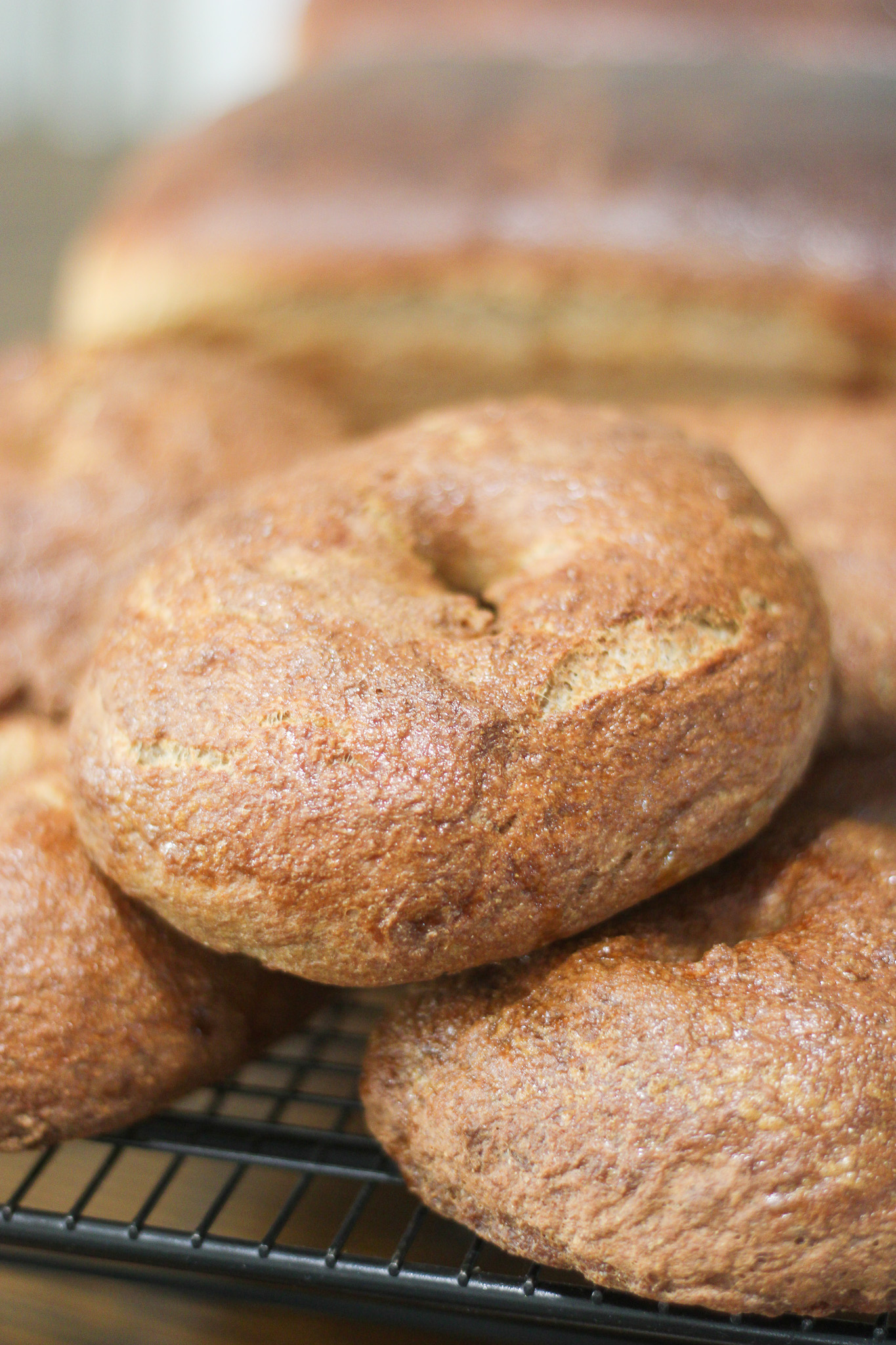
There are so many reasons to skip the grocery store bagels and make your own.
- Made with 100% freshly milled flour. No store-bought flour is needed for this recipe.
- Simple ingredients. You only need wheat berries, water, yeast, honey, and salt.
- Wonderful texture. Boiling the bagels before baking helps create that classic chewy bagel crust.
- Perfect for meal prep. Make a batch and freeze the extras for quick breakfasts.
- Easy to customize. Add your favorite toppings, from everything bagel seasoning to sesame seeds.
And let's not forget how amazing your kitchen will smell while these are baking!
What Is Fresh Milled Flour?
Fresh milled flour is simply flour made by grinding whole wheat berries at home using a grain mill.
Unlike commercially refined white flour, freshly milled whole wheat flour contains the bran, germ, and endosperm of the wheat kernel.

Because you're using the entire wheat berry, the flour retains the naturally occurring fiber, oils, and nutrients found in whole grains.
Freshly milled flour also has a wonderful nutty flavor that makes homemade breads, rolls, and bagels taste delicious.
If you've never tried milling your own flour, bagels are a fun recipe to experiment with once you're comfortable working with whole wheat dough.
What Are the Best Wheat Berries for Homemade Bagels?
When making bagels with freshly milled flour, choosing the right wheat berries makes a difference.
Bagels need a strong dough that can develop enough gluten to create their signature chewy texture.
Here are two excellent options.
Hard White Wheat Berries
Hard white wheat is my first recommendation for homemade bagels.

It has a milder flavor than hard red wheat, making it a great choice if you're used to traditional bakery bagels.
It also has the protein needed to help develop a strong, elastic dough.
Hard Red Wheat Berries
Hard red wheat has a stronger, nuttier whole wheat flavor.
It also works well for making bagels and produces a hearty, rustic result.
My recommendation: Start with hard white wheat berries if you're new to making fresh milled flour bagels. You can always experiment with hard red wheat or a combination of the two later.
Avoid using soft white wheat as your primary flour for this recipe. It has less gluten-forming potential and is better suited for cakes, cookies, and tender baked goods.
Ingredients for Fresh Milled Flour Bagels
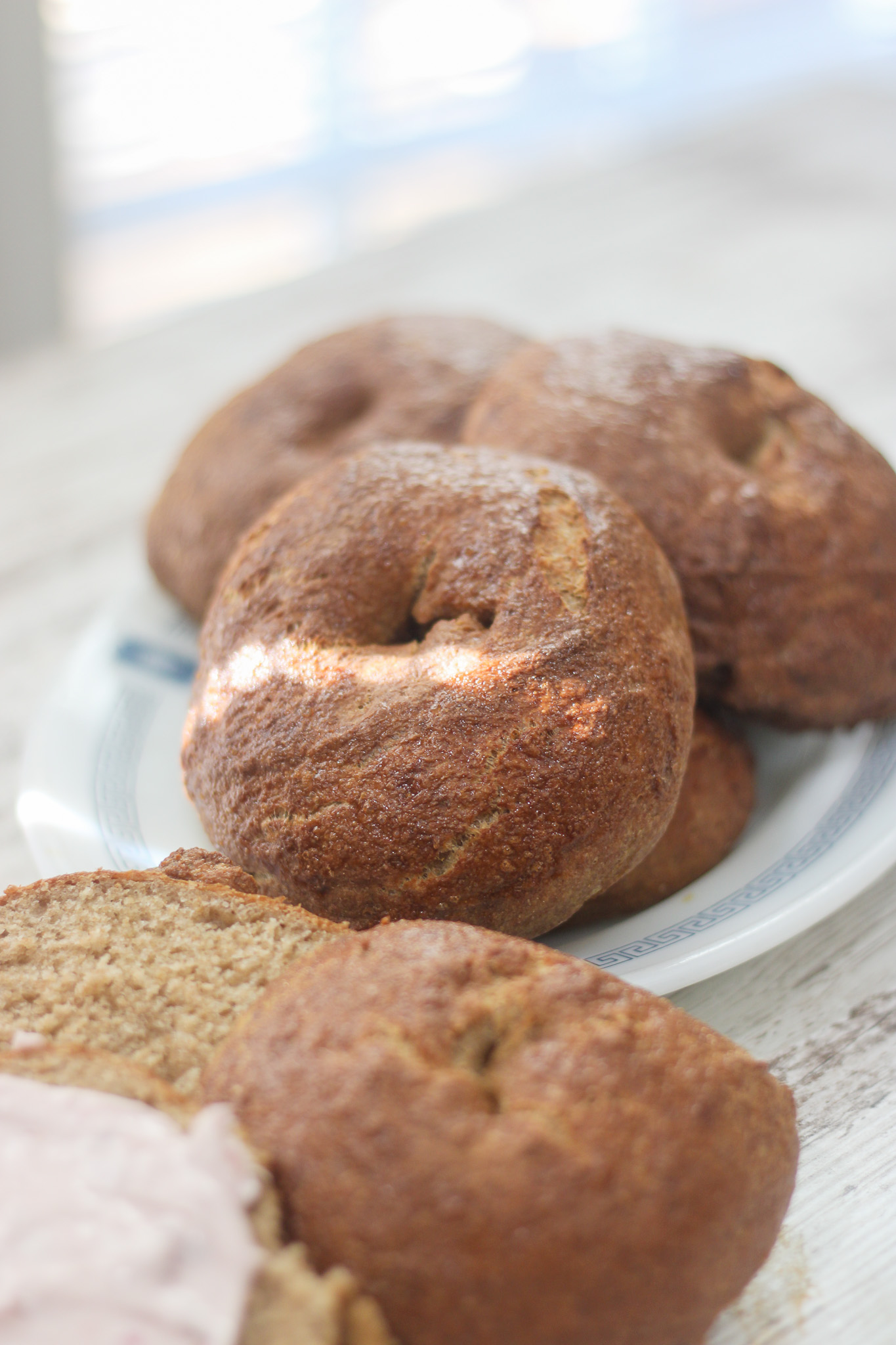
This recipe makes approximately 8 medium bagels.
For the Bagel Dough
- 500 grams freshly milled hard white wheat flour
- 325 grams warm water (about 1⅓ cups plus 1 tablespoon)
- 2¼ teaspoons instant yeast (7 grams)
- 1 tablespoon honey (about 20 grams)
- 1¾ teaspoons fine sea salt (about 10 grams, depending on brand)
For Boiling the Bagels
- 2 quarts water
- 1 tablespoon honey
Optional Bagel Toppings
- Everything bagel seasoning
- Sesame seeds
- Poppy seeds
- Dried minced onion
- Flaky sea salt
- Cinnamon sugar
A quick note about measuring: I highly recommend using a kitchen scale when baking with freshly milled flour. Freshly ground flour can vary in volume depending on how finely it is milled, so weighing your ingredients gives you more consistent results.
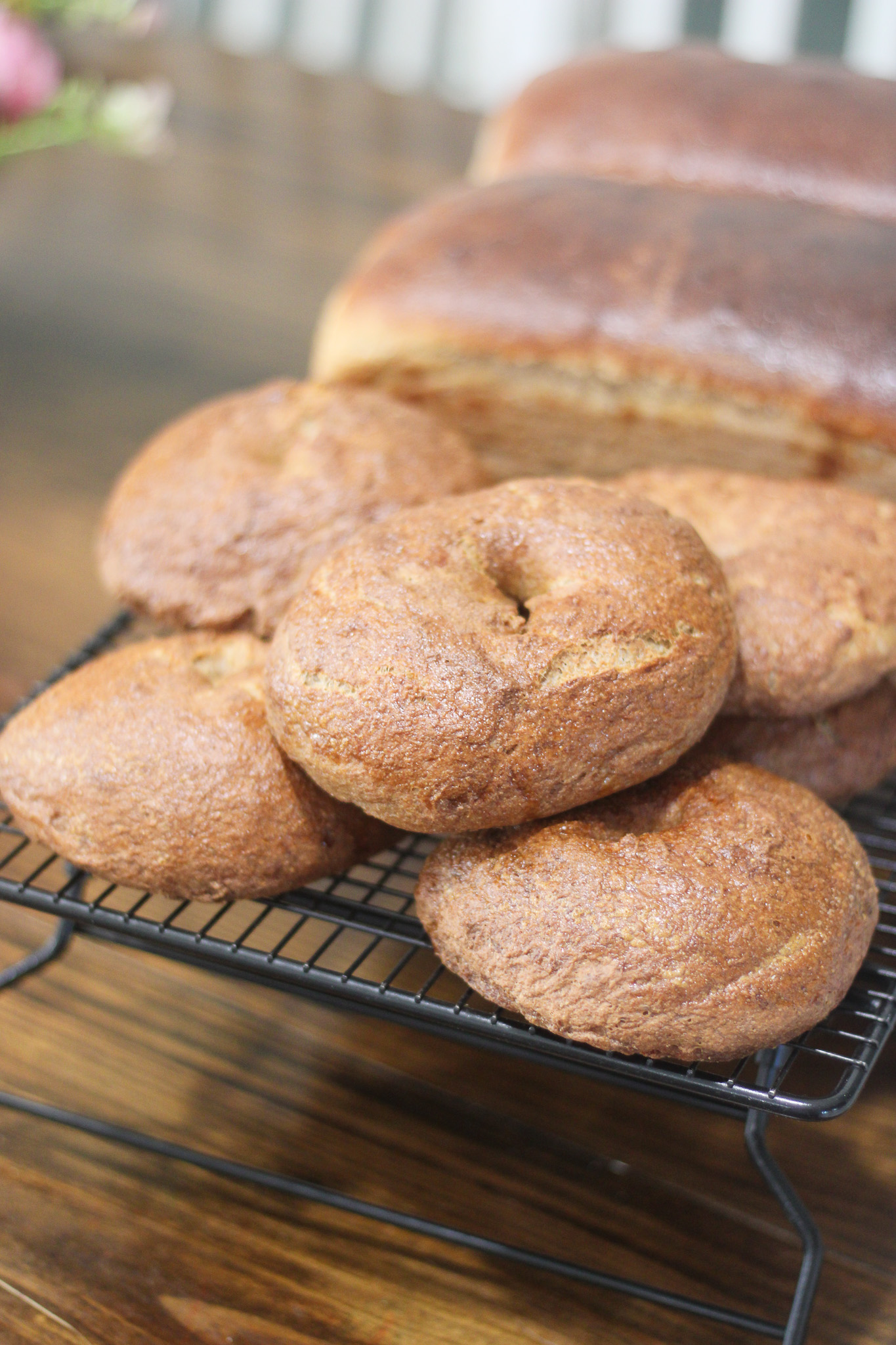
How to Make Fresh Milled Flour Bagels
Making homemade bagels involves a few simple steps: milling the flour, mixing and kneading the dough, letting it rise, shaping the bagels, boiling them, and baking.
Don't skip the boiling step! That's what helps give bagels their traditional chewy crust.
Step 1: Mill Your Wheat Berries
Start by milling enough hard white wheat berries to produce 500 grams of flour.
Use the finest setting recommended by your grain mill for wheat.
You want the flour to be finely ground so the finished bagels have a smoother texture.
If your freshly milled flour feels warm after grinding, allow it to cool slightly before mixing your dough.
Step 2: Mix the Bagel Dough
In the bowl of a stand mixer, combine the warm water, honey, and instant yeast.
Add the freshly milled flour and mix until a shaggy dough forms.
Cover the bowl and allow the dough to rest for 20 to 30 minutes.
This resting period is especially helpful when working with freshly milled whole wheat flour because it gives the bran time to absorb moisture.
After resting, add the salt.
Step 3: Knead the Dough
Using the dough hook attachment, knead the dough on low speed for approximately 8 to 12 minutes.
The dough should become smoother and more elastic as the gluten develops.
Bagel dough is naturally firmer than sandwich bread dough, so don't expect it to be extremely soft or sticky.
If the dough seems excessively dry or crumbly after kneading begins, add water one teaspoon at a time.
Because freshly milled flour absorbs water differently depending on the wheat variety and milling process, you may need to make small adjustments.
The finished dough should feel firm but pliable.
Step 4: Let the Dough Rise
Transfer the dough to a lightly greased bowl.
Cover it with a clean kitchen towel or plastic wrap and place it in a warm area.
Allow the dough to rise for approximately 60 to 90 minutes, or until noticeably puffy and roughly doubled in size.
Freshly milled whole wheat dough may rise differently than dough made with refined white flour, so pay attention to the dough rather than relying entirely on the clock.
Step 5: Shape the Bagels
Once the dough has risen, gently press it down to release some of the air.
Divide the dough into 8 equal portions.
Roll each portion into a smooth ball.
Using your thumb, poke a hole through the center of each dough ball.
Gently stretch the opening until it is approximately 1½ to 2 inches wide.
Remember that the holes will shrink as the dough rests and bakes.
Place the shaped bagels on a parchment-lined baking sheet.
Cover loosely and allow them to rest for approximately 15 to 20 minutes while you prepare the boiling water.
Step 6: Boil the Bagels
Preheat your oven to 425°F.
Bring 2 quarts of water to a gentle boil in a large pot.
Stir in 1 tablespoon of honey.
Carefully lower 2 or 3 bagels into the boiling water, depending on the size of your pot.
Boil for 30 to 45 seconds on each side.
Use a slotted spoon to remove the bagels and return them to the parchment-lined baking sheet.
Repeat with the remaining bagels.
Why boil bagels?
Boiling gelatinizes starches on the surface of the dough, helping create the chewy exterior that makes bagels different from regular bread rolls.
A longer boiling time generally creates a thicker, chewier crust, while a shorter boil produces a slightly softer exterior.
Step 7: Add Your Favorite Toppings
While the boiled bagels are still damp, sprinkle them with your favorite toppings.
Everything bagel seasoning is always a delicious choice, but sesame seeds, poppy seeds, and flaky salt are wonderful options too.
For plain bagels, simply leave them as they are.
Step 8: Bake Until Golden Brown
Bake the bagels in your preheated 425°F oven for approximately 20 to 25 minutes.
The bagels should be golden brown on the outside and fully baked in the center.
If checking with an instant-read thermometer, aim for approximately 200°F to 205°F in the center.
Transfer the bagels to a wire cooling rack and let them cool for at least 15 to 20 minutes before slicing.
Now comes the best part: enjoying your homemade fresh milled flour bagels!
Tips for Making the Best Fresh Milled Flour Bagels
If you're new to baking with freshly milled flour, these tips can help you get better results.
Give the Flour Time to Hydrate
Freshly milled whole wheat flour contains bran and germ, which absorb moisture differently than refined flour.
Allowing the dough to rest before kneading helps hydrate the flour and makes the dough easier to work with.
Don't Add Too Much Extra Flour
Bagel dough should be firm, but adding too much flour can make the finished bagels dense and dry.
If the dough feels slightly tacky, give it time to develop during kneading before adding additional flour.
Knead Until the Dough Is Elastic
Gluten development is important when making bagels.
Because whole wheat flour contains bran, it may not stretch quite as smoothly as dough made with refined bread flour.
Look for dough that becomes cohesive, elastic, and noticeably smoother after kneading.
Don't Overproof the Bagels
Overproofed bagels can collapse or become wrinkled during boiling.
The shaped bagels only need a short rest before they go into the water.
Don't Skip the Boiling Step
If you bake the dough without boiling it first, you'll end up with something closer to a bread roll than a traditional bagel.
That quick dip in boiling water makes a big difference in the finished texture.
How to Store Homemade Fresh Milled Flour Bagels
Homemade bagels don't contain the same preservatives found in many store-bought varieties, so proper storage is important.
At room temperature: Store completely cooled bagels in an airtight container or sealed bag for approximately 2 days.
In the freezer: Slice the cooled bagels in half and place them in a freezer-safe bag. Freeze for up to 3 months for the best quality.
To reheat: Toast frozen bagel halves directly from the freezer or allow whole bagels to thaw before warming.
I love freezing homemade bagels because it makes breakfast so easy. Just grab one from the freezer, pop it in the toaster, and breakfast is almost ready!
What to Serve With Homemade Bagels
These homemade whole wheat bagels are delicious served in so many different ways.
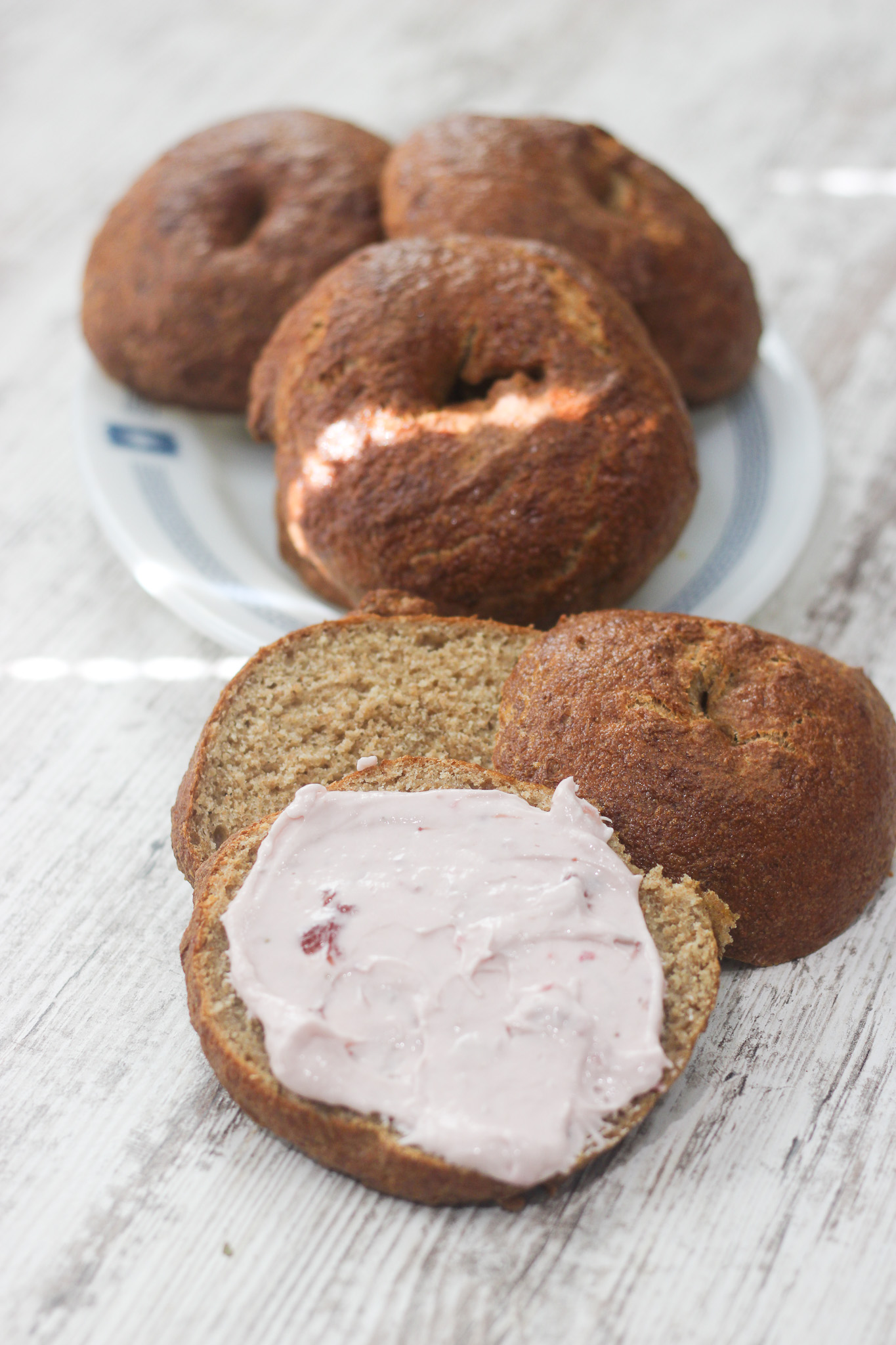
For a simple breakfast, toast one and spread it with butter or your favorite cream cheese.
You can also make a hearty breakfast sandwich with scrambled eggs, bacon, and cheddar cheese.
For lunch, turn your bagel into a sandwich with turkey, ham, cheese, or your favorite sandwich fillings.
And if you love sweet breakfasts, try topping a warm bagel with peanut butter, honey, or homemade jam.
More Homemade Bread Recipes to Try
If you enjoy making homemade bagels, you'll probably love experimenting with other bread recipes too.
Freshly milled flour can be used to make sandwich bread, dinner rolls, cinnamon rolls, pizza dough, and so much more.
Once you start making bread from freshly ground wheat berries, you'll discover just how versatile homemade flour can be.
Final Thoughts
Making Fresh Milled Flour Bagels at home is a wonderful way to put your grain mill to good use.
With just a handful of ingredients and a little time, you can create homemade bagels that have a hearty whole wheat flavor, a chewy crust, and a satisfying texture.
Whether you're new to milling your own wheat or you've been doing it for years, this recipe is a great addition to your homemade bread collection.
Give these bagels a try, experiment with your favorite toppings, and enjoy the satisfaction of making them completely from scratch.
Love Bagel Recipes? Check These Out
Fresh Milled Flour Bagels
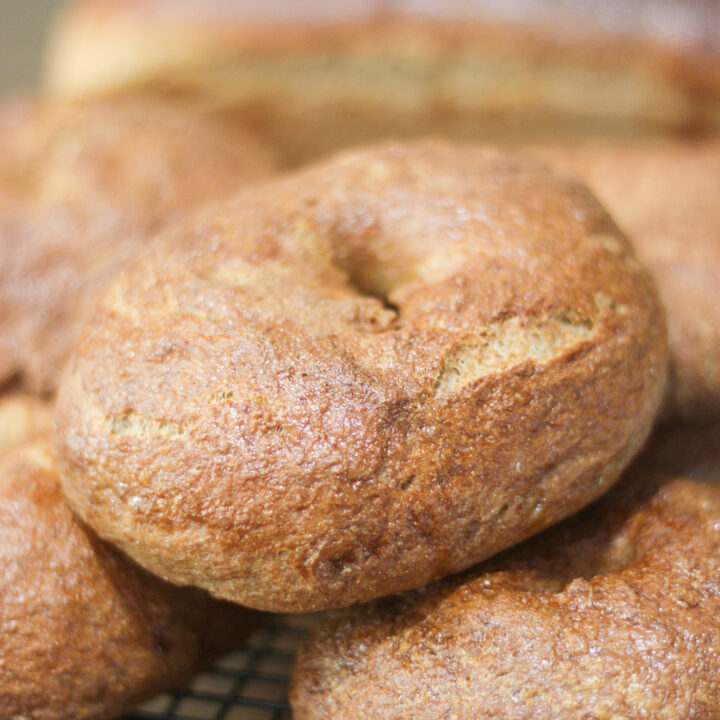
These homemade fresh milled flour bagels are made with 100% freshly ground hard white wheat. They have a hearty whole wheat flavor, a chewy golden crust, and a delicious texture. Perfect for breakfast sandwiches, cream cheese, or toasting with butter!
Ingredients
For the bagel dough
- 500 grams freshly milled hard white wheat flour
- 325 grams warm water
- 2¼ teaspoons instant yeast (7 grams)
- 1 tablespoon honey (20 grams)
- 1¾ teaspoons fine sea salt (about 10 grams)
For boiling
- 2 quarts water
- 1 tablespoon honey
Instructions
- Mill hard white wheat berries on a fine setting until you have 500 grams of freshly milled flour.
- In a stand mixer bowl, combine warm water, honey, and instant yeast. Add the flour and mix until a shaggy dough forms.
- Cover and let the dough rest for 20–30 minutes to allow the freshly milled flour to absorb the water.
- Add salt and knead with a dough hook on low speed for 8–12 minutes until smooth and elastic. Add water one teaspoon at a time if the dough is excessively dry.
- Transfer to a lightly greased bowl, cover, and let rise for 60–90 minutes or until roughly doubled.
- Divide dough into 8 equal pieces. Shape each into a ball, poke a hole through the center, and stretch the opening to 1½–2 inches.
- Place shaped bagels on a parchment-lined baking sheet. Cover and rest for 15–20 minutes. Preheat oven to 425°F.
- Bring 2 quarts water to a gentle boil and add 1 tablespoon honey. Boil bagels in batches for 30–45 seconds per side.
- Remove with a slotted spoon and place back on the baking sheet. Add desired toppings while the surface is damp.
- Bake at 425°F for 20–25 minutes until golden brown and the centers reach approximately 200–205°F. Cool on a wire rack before slicing.
Notes
Hard white wheat berries are recommended for their mild flavor and gluten-forming potential.
Always weigh freshly milled flour for the most consistent results.
Allow the dough to rest before kneading so the bran can absorb moisture.
Bagel dough should be firm but pliable, not excessively dry.
Store in an airtight container for up to 2 days or freeze for up to 3 months.
Nutrition Information:
Yield:
8Serving Size:
1Amount Per Serving: Calories: 245Total Fat: 1gSaturated Fat: 0gUnsaturated Fat: 1gSodium: 527mgCarbohydrates: 54gFiber: 4gSugar: 5gProtein: 7g