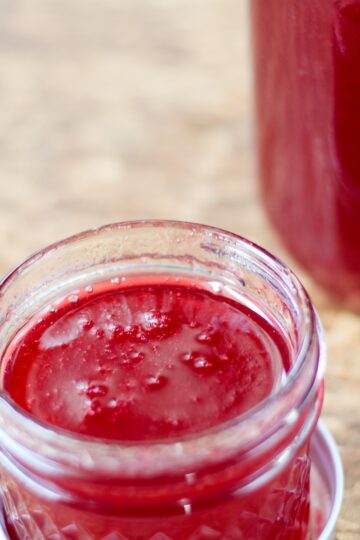

If you love the bright, tropical flavor of pineapple, you are going to love this easy homemade pineapple jelly. It’s sweet, fruity, and full of pineapple flavor, with a beautiful golden color that looks just as good as it tastes.
Making jelly at home might sound intimidating, but it is actually pretty simple once you get the hang of it. Pineapple juice, sugar, and pectin come together to create a smooth, spreadable jelly that is perfect for toast, biscuits, English muffins, and so much more.
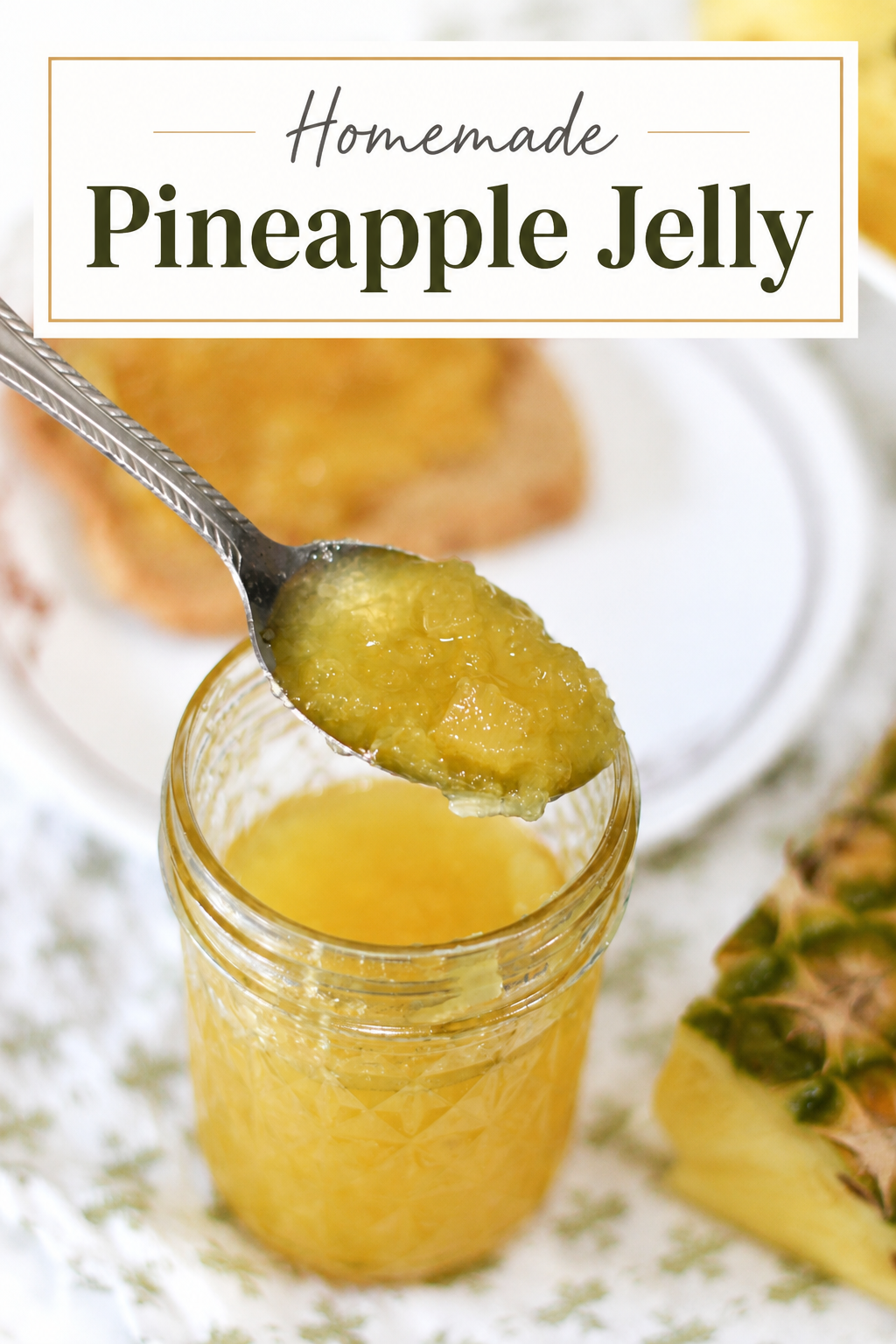
This is also a great recipe when you have extra pineapple juice on hand and want to turn it into something delicious.
Why You'll Love This Homemade Pineapple Jelly
Homemade pineapple jelly has such a fresh, tropical flavor that you just don't get from most store-bought jellies. Since jelly is made with juice rather than chunks of fruit, the finished texture is smooth, clear, and easy to spread.
It's perfect for:
- Toast and English muffins
- Homemade biscuits
- Buttermilk biscuits
- Scones
- Pancakes and waffles
- PB&J sandwiches
- Glazing chicken or pork
- Adding to cheese and charcuterie boards
- Homemade food gifts
A jar of this sunny yellow jelly also makes a wonderful homemade gift.
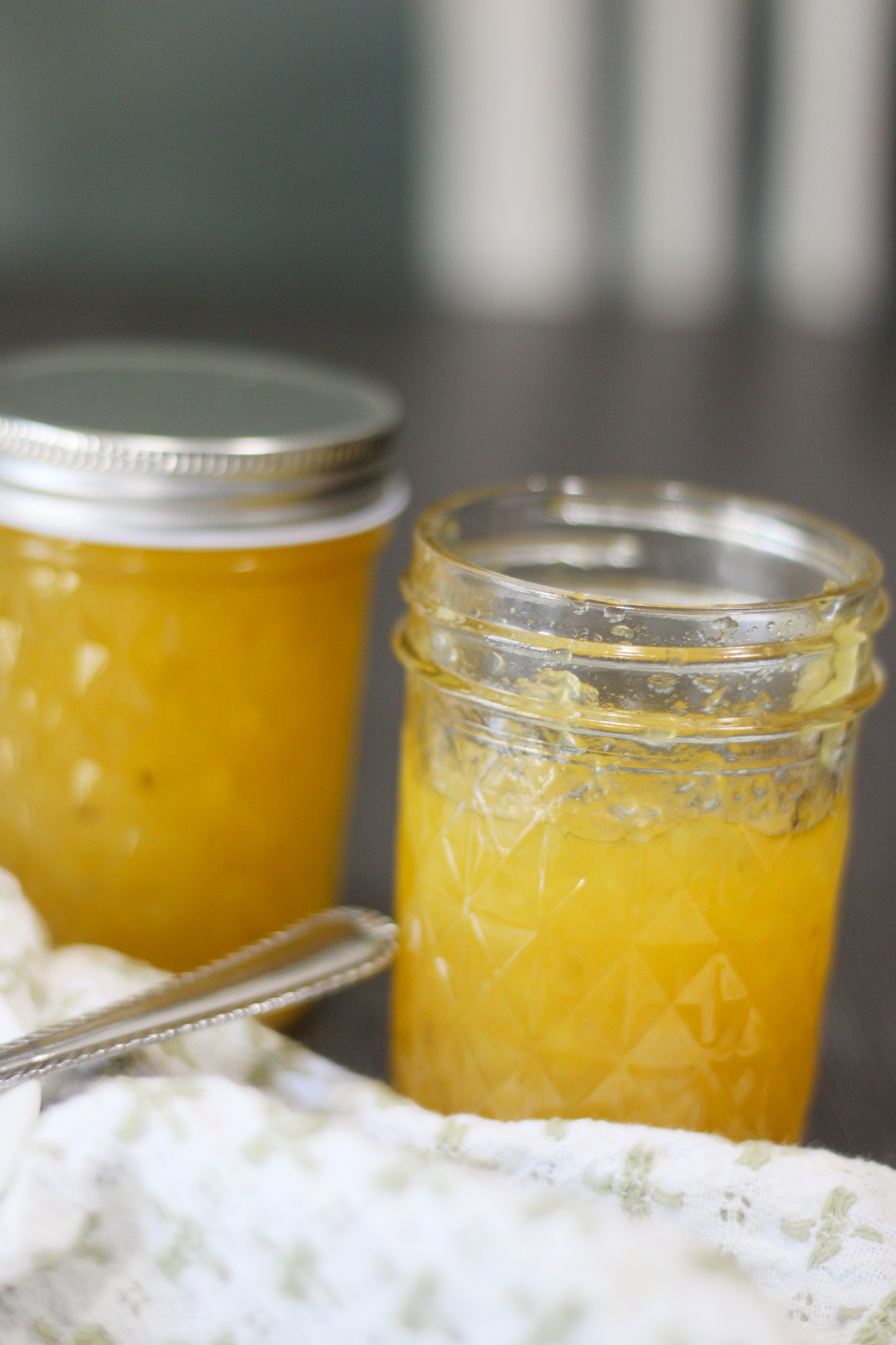
Ingredients for Homemade Pineapple Jelly
For a basic batch of pineapple jelly, you will need:
- 4 cups fresh pineapple, peeled, cored, and finely chopped
- 1 tablespoon lemon juice
- 1 (1.75-ounce) box powdered fruit pectin
- 5 cups granulated sugar
The lemon juice adds a little acidity and helps balance the sweetness of the pineapple.
Important: When making jelly with pectin, measure your ingredients before you begin. Once the mixture starts boiling, the recipe moves quickly.
Instructions on How to Make Homemade Pineapple Jelly
Peel and core the fresh pineapple. Cut it into chunks and place it in a food processor or blender. Pulse until the pineapple is very finely chopped but still has a little texture.
You don't want it completely liquefied.Measure 4 cups of the prepared pineapple and add it to a large, heavy-bottomed saucepan.Stir in the lemon juice and powdered pectin until well combined.
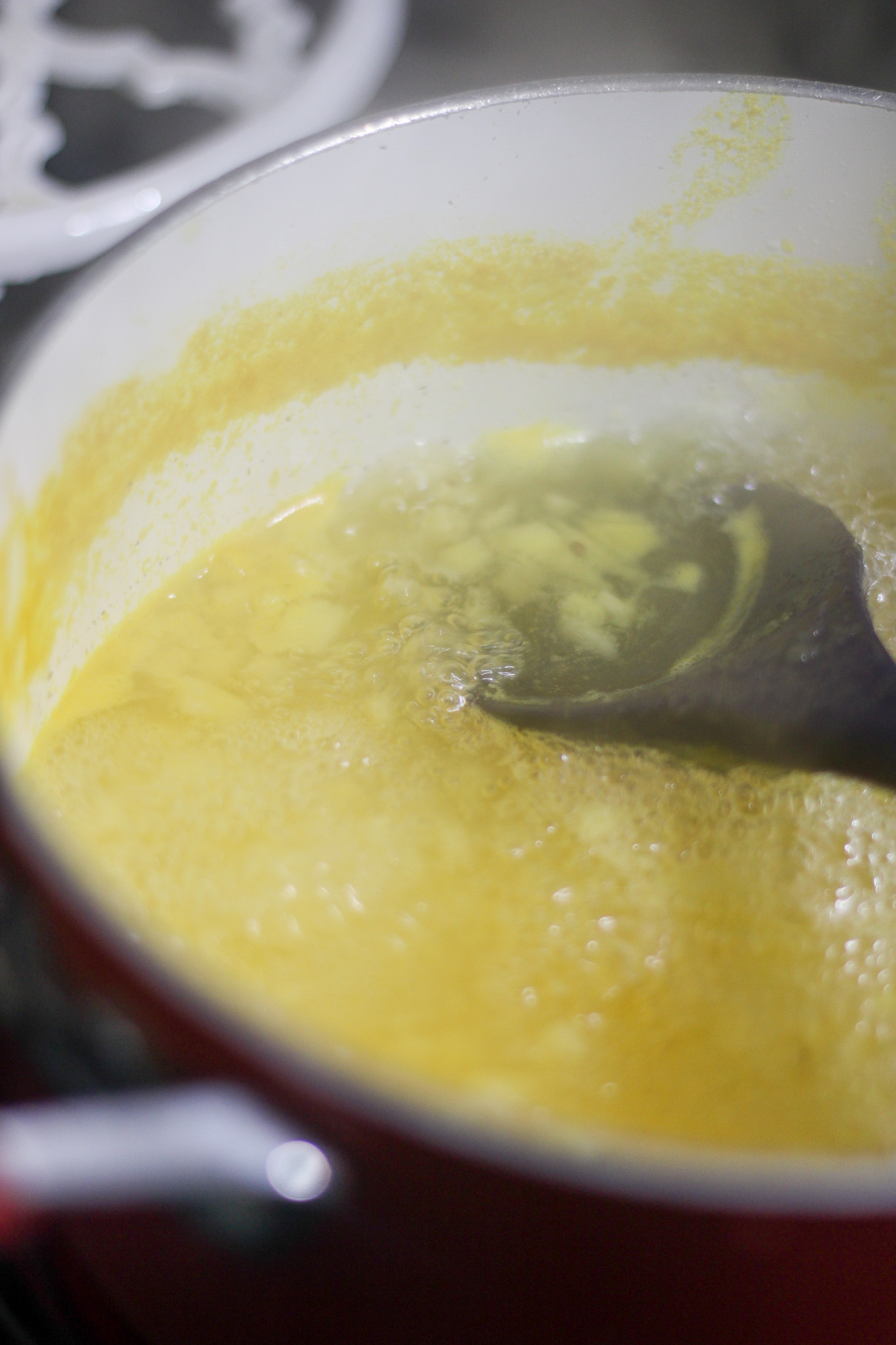
Place the saucepan over medium-high heat and bring the pineapple mixture to a full rolling boil, stirring frequently.Once boiling, add all of the sugar at once. Stir continuously until the sugar has dissolved.Return the mixture to a full rolling boil that cannot be stirred down.
Boil hard for 1 minute, stirring constantly, or follow the boiling time recommended by the specific brand of pectin you are using.Remove from the heat and skim off any foam that has formed on top.Carefully ladle the hot pineapple jelly into clean jars.Allow the jelly to cool and set.
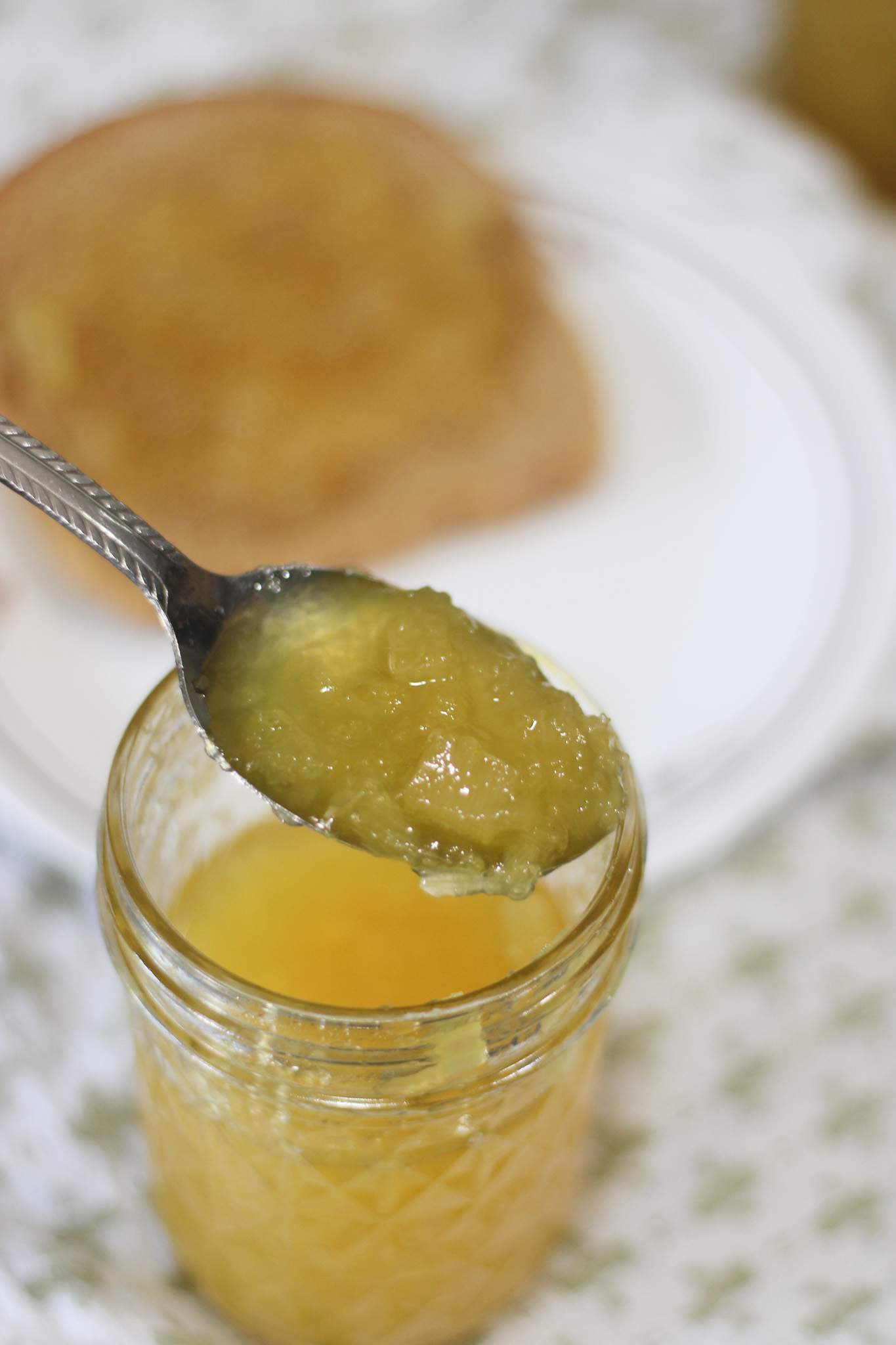
It may take 24–48 hours to reach its final consistency.Store in the refrigerator unless you are following a tested canning recipe with the appropriate processing time, headspace, and jar size.
What if I don't Want Fruit Chunks In My Jelly?
If you want a more smoother jelly, you can use bottled or canned 100% pineapple juice for this recipe. Avoid pineapple juice cocktails or drinks that have a lot of added ingredients. Just swap out the fresh pineapple. You will use the same amount, 4 cups.
You can also make pineapple juice from fresh pineapple, but you will want to strain it very well before making jelly. Jelly should have a smooth, clear consistency without pieces of fruit or pulp.
If your pineapple juice contains a lot of pulp, pour it through a fine-mesh strainer or cheesecloth before measuring it for the recipe.
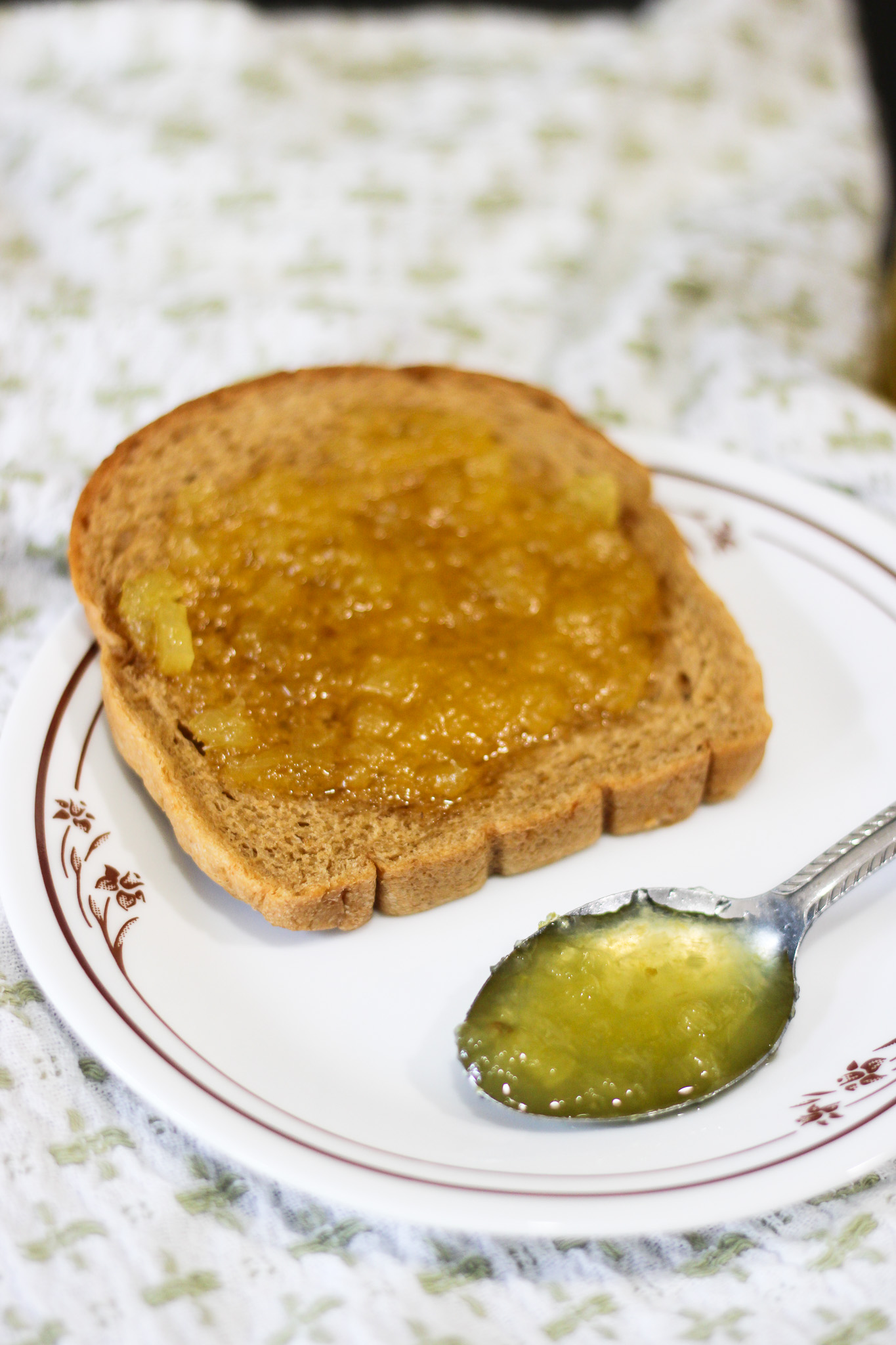
How Do I Know If My Jelly Will Set?
One of the hardest parts about making homemade jelly is waiting to see if it sets!
Don't worry if your pineapple jelly still looks thin when you pour it into the jars. Hot jelly is supposed to be fairly liquid.
As it cools, the pectin begins working and the jelly thickens.
It can take anywhere from several hours to 24–48 hours for homemade jelly to reach its final consistency, so resist the temptation to declare the batch a failure too soon.
After 48 hours, if they jelly still has not set up to your liking, simply reprocess it again and cook it a little longer.
Tips for Making the Best Pineapple Jelly
Measure carefully. Jelly recipes depend on the correct balance of juice, sugar, acid, and pectin.
Use a large pot. Jelly bubbles up dramatically when it boils. A larger pot gives the mixture plenty of room and helps prevent boil-overs.
Don't reduce the sugar without using an appropriate low-sugar pectin. Traditional pectin relies on a specific amount of sugar to produce a proper gel.
Add the sugar all at once. Have it measured and ready before you start cooking.
Use a timer. Once the mixture returns to a rolling boil after adding the sugar, boil it for the time specified by your pectin recipe.
Give it time to set. Jelly often continues thickening as it cools.
Can I Make Pineapple Jelly Without Pectin?
It is possible to make some homemade jellies without commercial pectin, but pineapple isn't the easiest fruit for naturally setting jelly.
Using commercial pectin makes the process much more reliable and gives you a consistent, spreadable texture.
If you want to make a reduced-sugar version, look for pectin specifically designed for low- or no-sugar recipes rather than simply reducing the sugar in a traditional jelly recipe.
Pineapple Jelly vs. Pineapple Jam
What's the difference between pineapple jelly and pineapple jam?
It all comes down to the fruit.
Pineapple jelly is made primarily from pineapple juice. The finished product is smooth and translucent without chunks of fruit.
Pineapple jam is made with crushed or chopped pineapple, giving it a thicker texture with pieces of fruit throughout.
Both are delicious, but jelly is especially nice when you want something silky and easy to spread.
How to Store Homemade Pineapple Jelly
Refrigerator pineapple jelly should be kept covered in the refrigerator.
For longer-term pantry storage, use a tested water-bath canning recipe and follow current safe-canning recommendations for jar size, headspace, processing time, and altitude adjustments. Do not assume that a refrigerator jelly recipe is automatically safe for shelf-stable canning.
Once a jar has been opened, keep it refrigerated.
Love Making Jams and Jellies? Check these recipes out
Homemade Pineapple Jelly
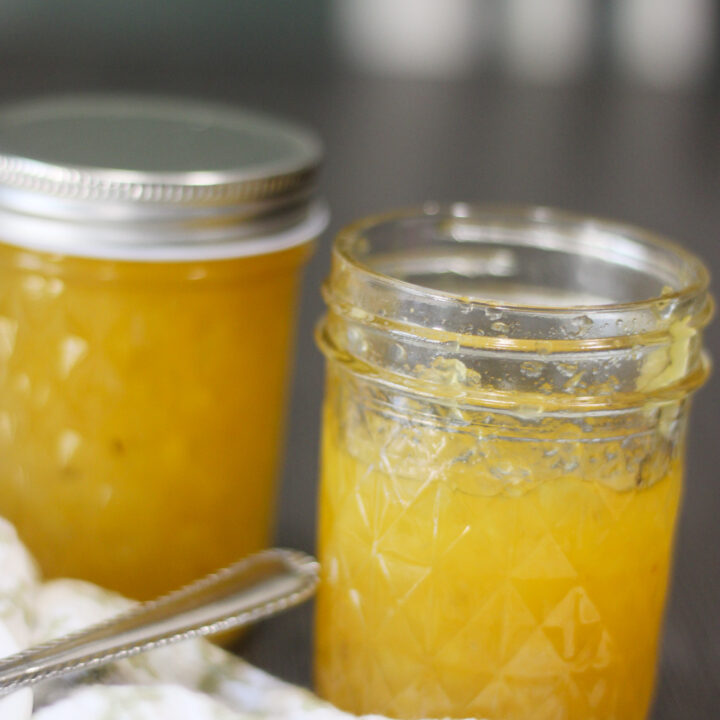
This easy homemade pineapple jelly is sweet, fruity, and bursting with tropical pineapple flavor. Spread it on warm biscuits, toast, English muffins, or scones for a delicious homemade treat.
Ingredients
- 4 cups fresh pineapple, peeled, cored, and finely chopped
- 1 tablespoon lemon juice
- 1 (1.75-ounce) box powdered fruit pectin
- 5 cups granulated sugar
Instructions
- Peel and core the fresh pineapple, then cut it into chunks.
- Add the pineapple to a food processor or blender and pulse until very finely chopped. You want a fine texture, but don't completely puree it into juice.
- Measure 4 cups of prepared pineapple and place it in a large, heavy-bottomed saucepan.
- Add the lemon juice and powdered pectin. Stir until everything is well combined.
- Place the saucepan over medium-high heat. Bring the pineapple mixture to a full rolling boil, stirring frequently to prevent scorching.
- Once the mixture reaches a full rolling boil, add all 5 cups of sugar at once. Stir continuously until the sugar is dissolved.
- Bring the mixture back to a full rolling boil that cannot be stirred down.
- Boil hard for 1 minute, stirring constantly, or use the boiling time recommended by your particular brand of pectin.
- Remove the saucepan from the heat. If foam has formed on the surface, skim it off with a spoon.
- Carefully ladle the hot pineapple jelly into clean, prepared jars, leaving room at the top.
- Allow the jars to cool. The pineapple jelly will continue to thicken as it cools and may need 24–48 hours to reach its final consistency.
- Store the finished jelly in the refrigerator unless you are processing it using a tested water-bath canning recipe.
Notes
Fresh pineapple: Use ripe, sweet pineapple for the best flavor.
Texture: Finely chopping the pineapple gives this recipe the thicker, fruit-filled consistency shown in the finished jelly.
Don't reduce the sugar: Traditional powdered pectin needs the proper ratio of fruit, sugar, and pectin to set correctly. If you want less sugar, use a pectin specifically formulated for low-sugar recipes.
Setting time: Don't worry if the jelly seems loose while it's hot. Give it at least 24 hours—and up to 48 hours—to fully set.
Canning: If you want the jars to be shelf-stable, use a tested pineapple preserve recipe and follow its specified acidity, headspace, jar size, water-bath processing time, and altitude adjustment. The recipe above should otherwise be treated as a refrigerator recipe.
Nutrition Information:
Yield:
8Serving Size:
1Amount Per Serving: Calories: 701Total Fat: 0gSaturated Fat: 0gUnsaturated Fat: 0gSodium: 16mgCarbohydrates: 177gFiber: 2gSugar: 168gProtein: 1g