
If your garden is overflowing with ripe tomatoes, making homemade tomato paste is one of the best ways to preserve that fresh tomato flavor. It takes a little time, but the process itself is incredibly simple—and the flavor is so much richer than anything you can buy in a can.
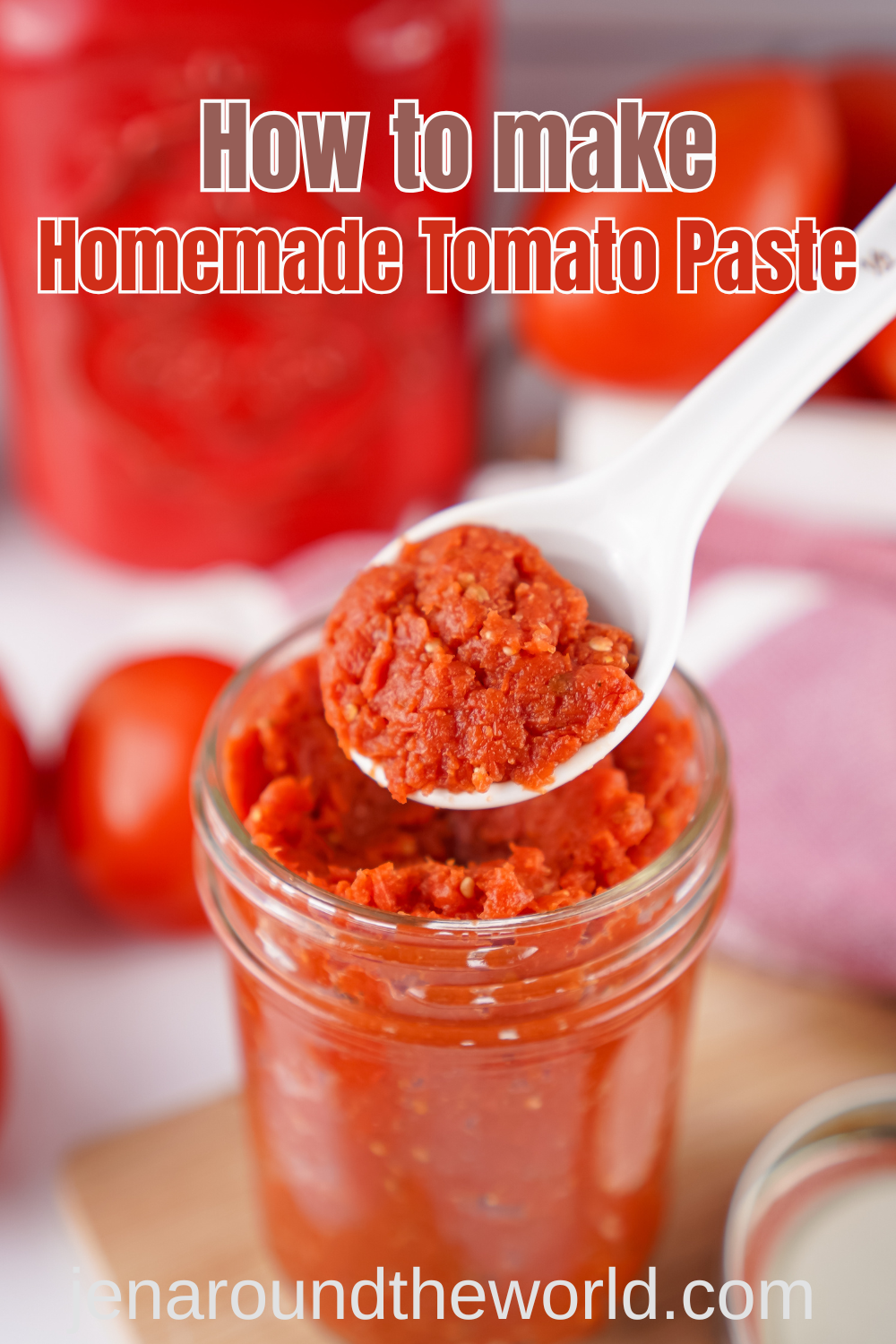
Homemade tomato paste is thick, concentrated, slightly sweet, and packed with tomato flavor. Use it in homemade spaghetti sauce, soups, stews, chili, casseroles, pizza sauce, and just about any recipe that needs an extra boost of tomato goodness.
The best part? You only need a few simple ingredients.
What Is Tomato Paste?
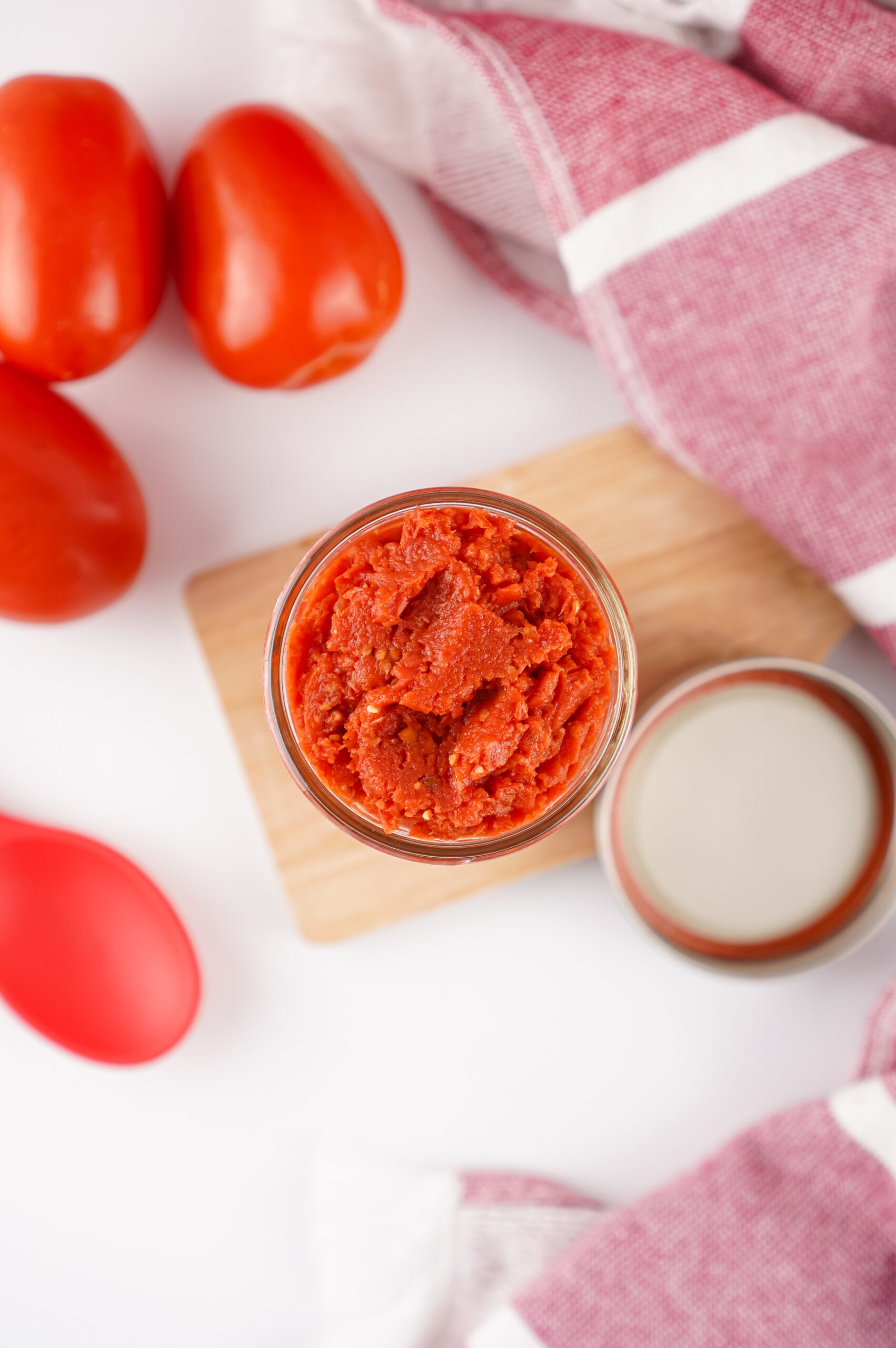
Tomato paste is essentially tomatoes that have been cooked down until most of their water has evaporated. As the tomatoes reduce, their flavor becomes much more concentrated.
That's why a recipe may only call for a tablespoon or two of tomato paste—it adds a surprising amount of flavor in a small package.
When you make tomato paste at home, you can also control exactly what goes into it. No unnecessary ingredients, just ripe tomatoes, a little salt, and olive oil.
What Are the Best Tomatoes for Homemade Tomato Paste?
You can technically make tomato paste with just about any ripe tomato, especially if you're trying to use what you have growing in the garden.
However, Roma, San Marzano, and other paste tomatoes are particularly good choices because they are meaty and contain less water and fewer seeds than large slicing tomatoes.
If you're using especially juicy tomatoes, don't worry. They'll still work beautifully—they'll simply take longer to cook down.
Ingredients
- 5 pounds ripe tomatoes
- 2 tablespoons olive oil
- 1 teaspoon salt, or to taste
You can easily scale this recipe up if you have a lot of tomatoes to preserve.
How to Make Homemade Tomato Paste
1. Prepare the Tomatoes
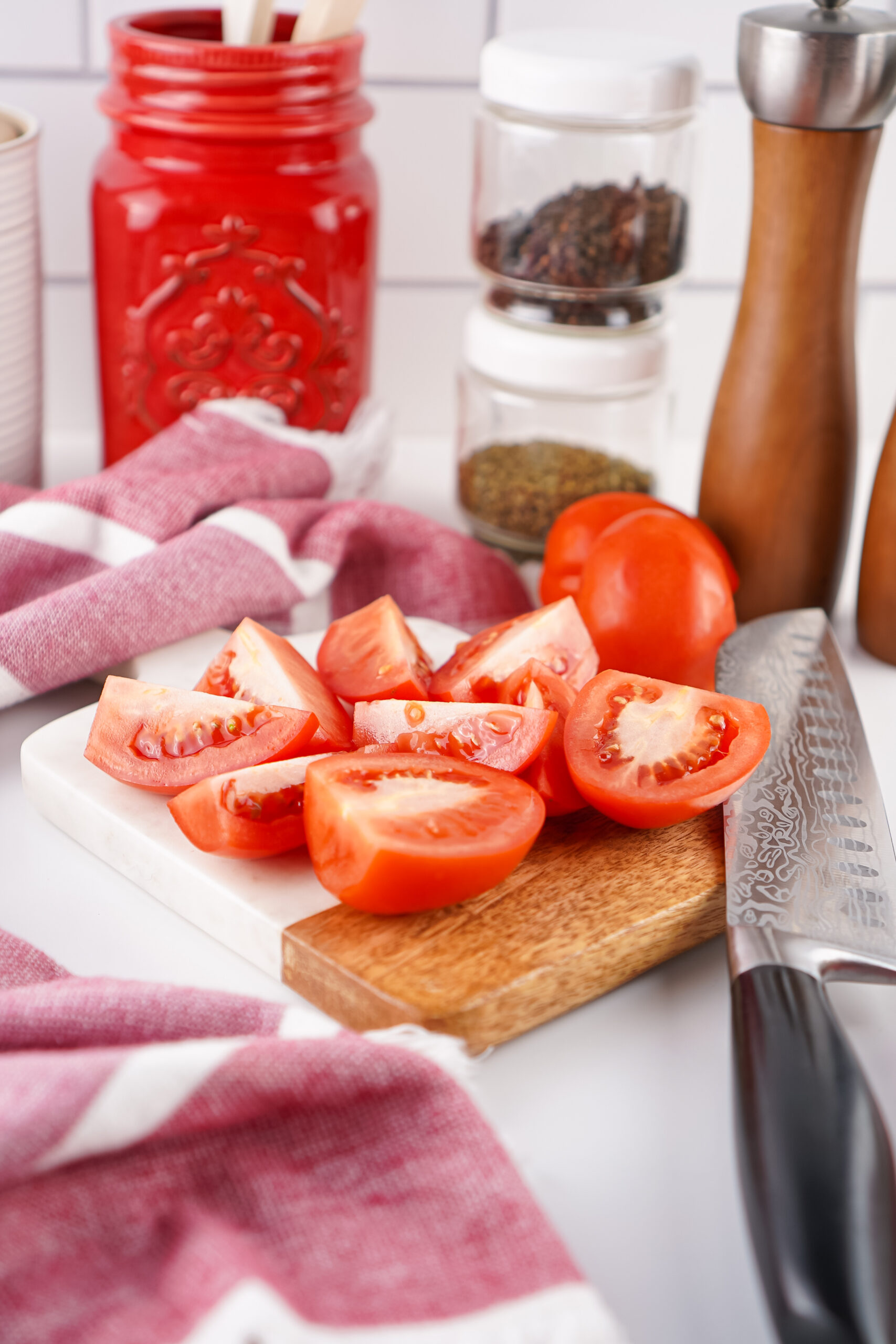
Wash the tomatoes thoroughly and remove the stems and any bruised or damaged areas.
Cut the tomatoes into quarters. There's no need to worry about making them perfectly uniform because everything will be cooked and strained.
2. Cook the Tomatoes
Add the chopped tomatoes to a large, heavy-bottomed pot along with the olive oil.
Cook over medium heat, stirring occasionally, until the tomatoes begin releasing their juices and completely soften. This usually takes about 20 to 30 minutes.
As they cook, use a wooden spoon or potato masher to help break them down.
3. Remove the Skins and Seeds
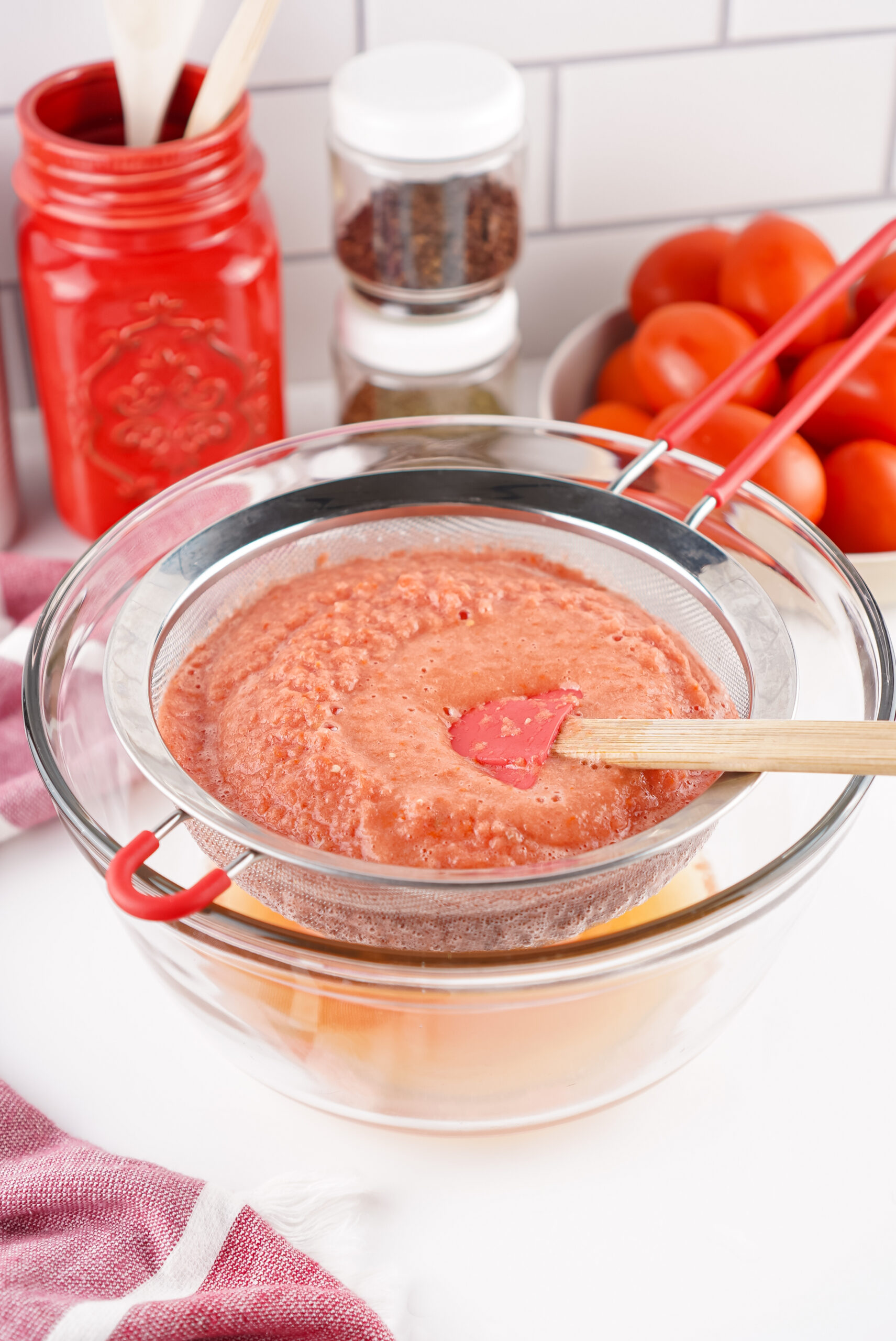
Once the tomatoes are very soft, pass the mixture through a food mill or fine-mesh sieve.
This removes the tomato skins and seeds and leaves you with a smooth tomato puree.
If you have a food mill, this is definitely the easiest way to do it.
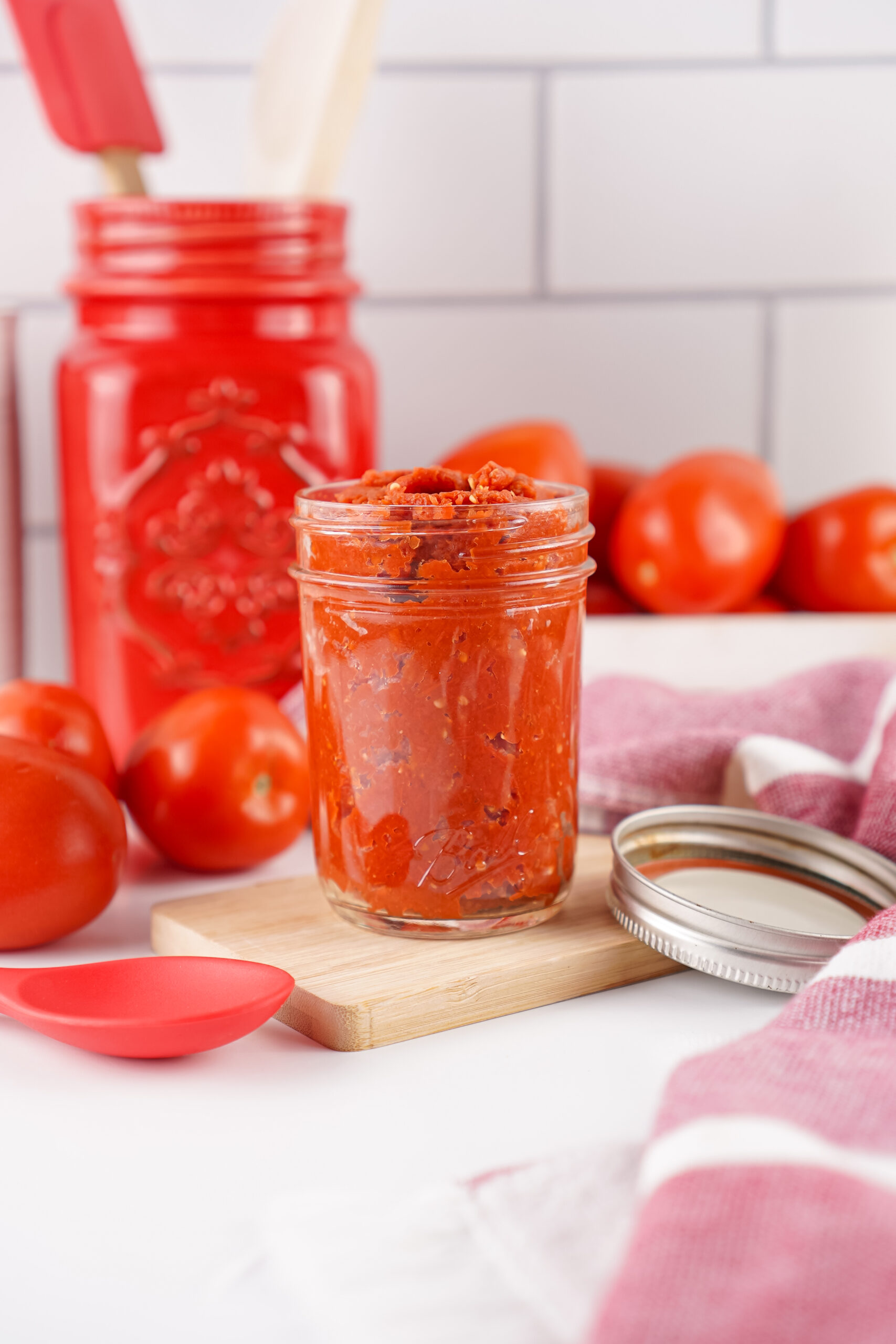
4. Cook the Tomato Puree Down
Return the smooth tomato puree to the pot and cook it over low to medium-low heat.
Now comes the part that requires a little patience.
Allow the tomatoes to gently simmer, stirring frequently, until the mixture begins to reduce and thicken. As it gets thicker, you'll need to stir more often so the tomato paste doesn't scorch on the bottom of the pan.
Continue cooking until the tomatoes are very thick and have reached a paste-like consistency.
Depending on how juicy your tomatoes were, this can take 2 to 4 hours or longer.
An Oven Method
If you don't want to stand over the stove quite as much, you can finish your tomato paste in the oven.
After straining the tomatoes, pour the puree onto a large rimmed baking sheet or into a shallow baking dish. Place it in a 250°F oven.
Cook until the tomatoes have reduced into a thick paste, stirring and scraping the mixture toward the center of the pan every 30 minutes or so.
As the paste gets thicker, check and stir it more frequently to prevent the edges from burning.
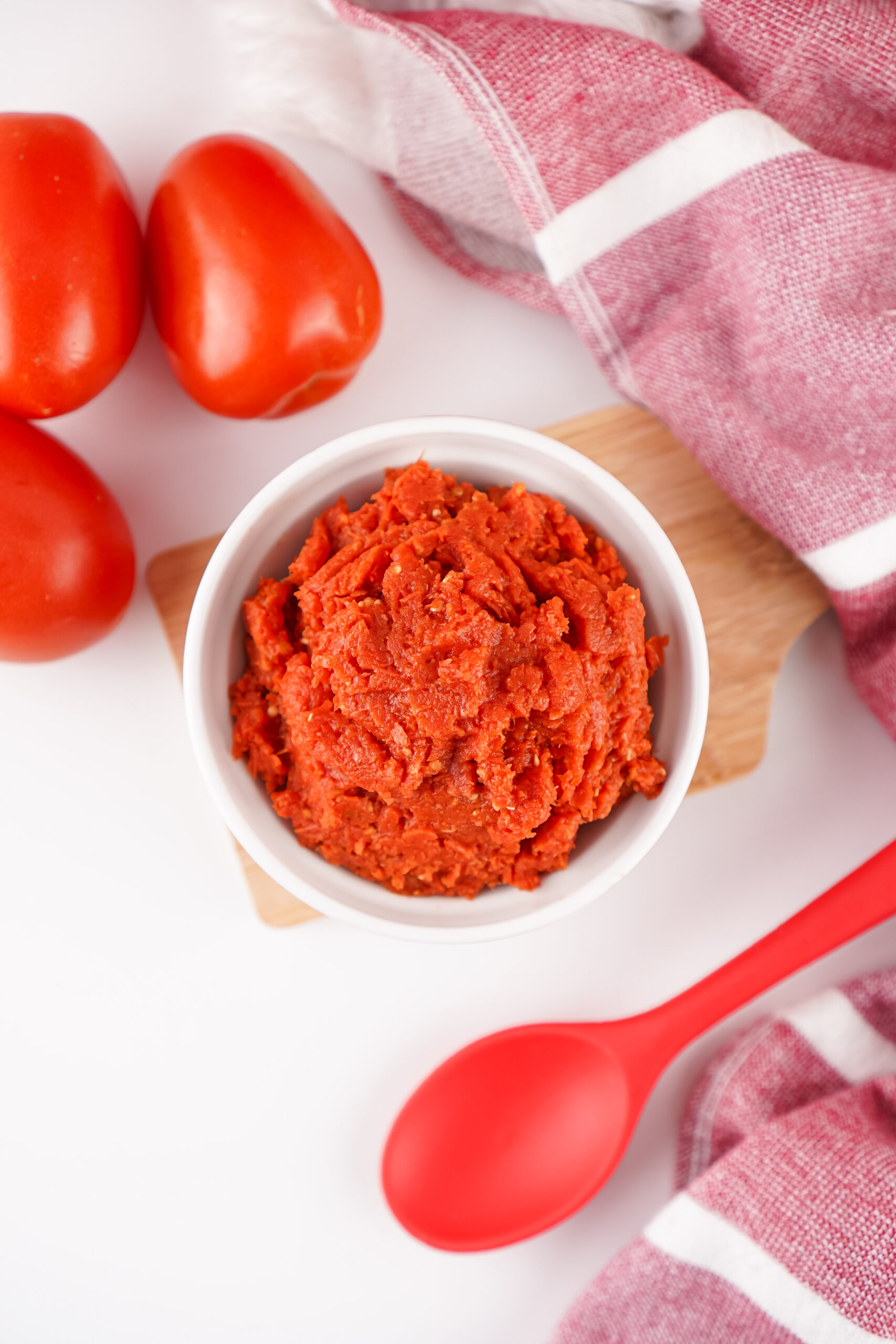
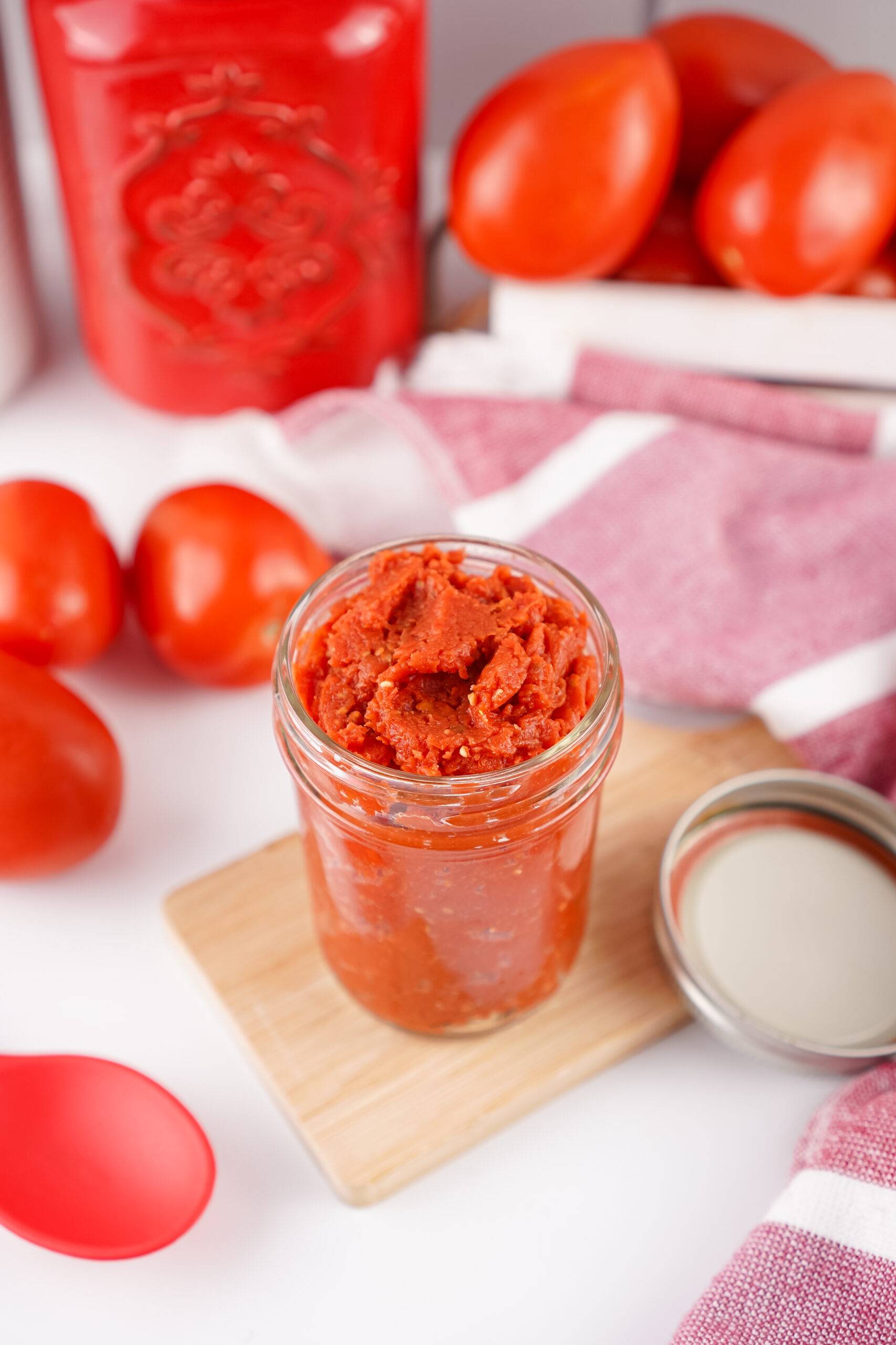
The tomato paste is ready when it is thick, deep red, and holds its shape when you drag a spoon through it.
How Do I Know When Homemade Tomato Paste Is Done?
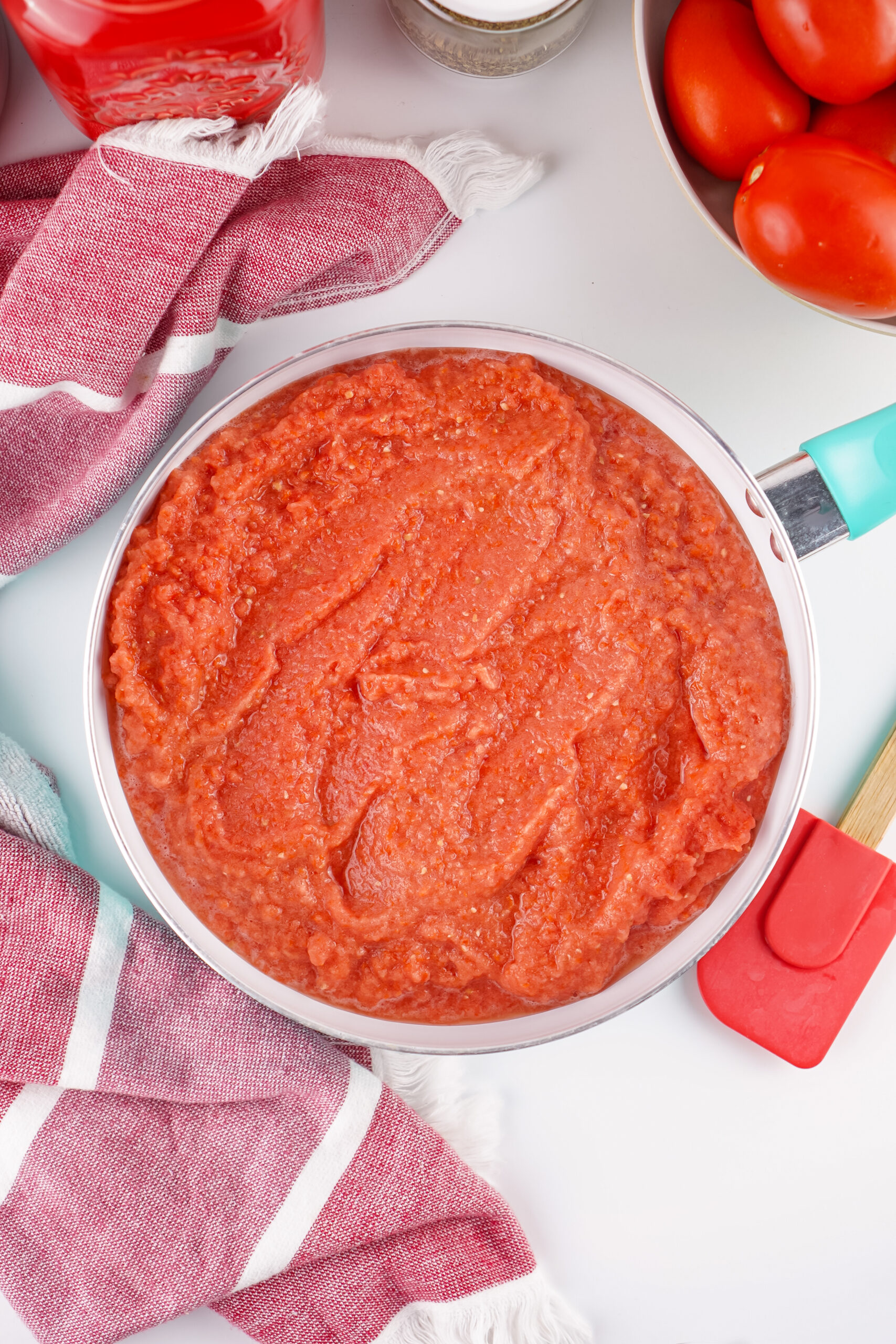
Your finished tomato paste should be considerably darker than the tomato puree you started with.
It should also be very thick.
Drag a spoon or spatula across the bottom of the pan. If the mixture stays separated instead of immediately flowing back together, you're getting close.
Remember that homemade tomato paste will thicken slightly more as it cools.
How Much Tomato Paste Will 5 Pounds of Tomatoes Make?
The final amount will vary depending on the type of tomatoes you use and how much water they contain.
Don't be surprised when a huge pile of tomatoes turns into a relatively small amount of tomato paste. That's exactly what you want!
You're removing most of the water and concentrating all that fresh tomato flavor into a much smaller amount.
How to Store Homemade Tomato Paste
Once your tomato paste has cooled, transfer it to an airtight container and keep it refrigerated for several days.
For longer storage, freezing is my favorite option.
Spoon tablespoon-sized portions onto a parchment-lined baking sheet and freeze until solid. Transfer the frozen tomato paste portions to a freezer-safe container or bag.
You can also freeze tomato paste in an ice cube tray.
Once frozen, pop the cubes out and place them in a freezer bag. Then, whenever a recipe calls for a tablespoon or two of tomato paste, you can grab exactly what you need.
For best quality, use frozen homemade tomato paste within several months.
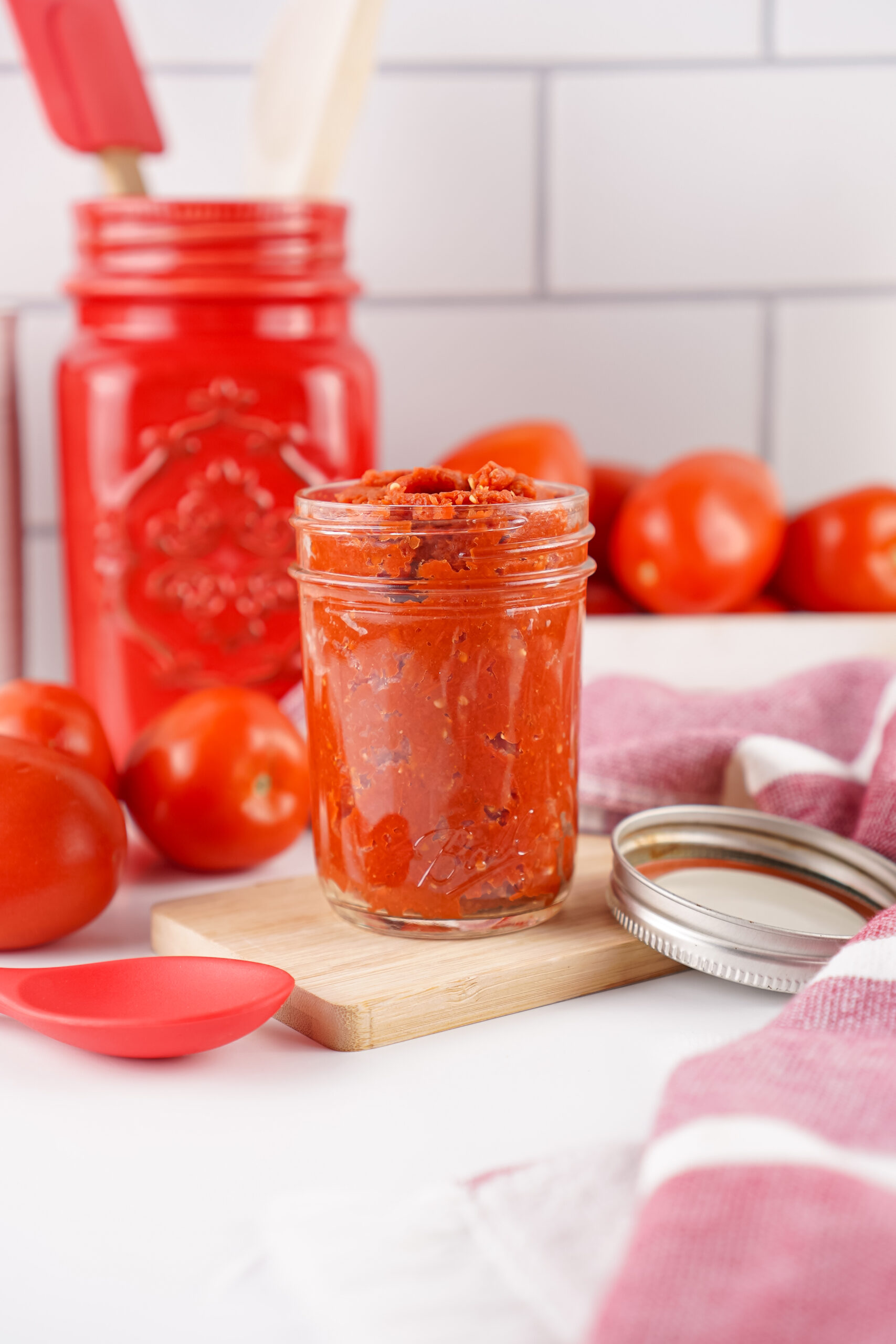
Important: Don't treat this recipe as shelf-stable canned tomato paste unless you're following a tested home-canning recipe from a trusted food-preservation source. Freezing is an easy and safe way to preserve this homemade version.
Ways to Use Homemade Tomato Paste
Once you have homemade tomato paste tucked away in your freezer, you'll be surprised at how often you reach for it.
Try adding it to:
One of my favorite tricks is to sauté a tablespoon of tomato paste in a little olive oil before adding the rest of the ingredients to a sauce or soup. Cooking it for a minute or two helps caramelize the tomato paste and makes that rich tomato flavor even more pronounced.
Tips for the Best Homemade Tomato Paste
Use very ripe tomatoes. This is the perfect recipe for tomatoes that are extra ripe but still good.
Choose meaty tomatoes when possible. Roma and other paste tomatoes will reduce faster because they contain less water.
Use a wide pan. The greater surface area allows moisture to evaporate more quickly.
Keep the heat low toward the end. Once the tomatoes begin turning into a thick paste, they can scorch quickly.
Stir frequently. You'll need to stir more often as the tomato mixture thickens.
Freeze it in small portions. Most recipes only call for one or two tablespoons, so freezing small amounts makes it much more convenient.
Making the Most of Fresh Tomatoes
There's something so satisfying about turning a big batch of garden tomatoes into homemade pantry and freezer staples.
Yes, homemade tomato paste takes some time to cook down, but most of that time is simply allowing the tomatoes to slowly reduce. What you're left with is a beautifully concentrated tomato flavor that can transform sauces, soups, stews, and so many other dishes.
So, the next time you find yourself staring at a counter overflowing with ripe tomatoes, don't let them go to waste. Turn them into homemade tomato paste and tuck it away in the freezer—you'll be glad you did when tomato season is long gone.
Love Using Fresh Tomatoes? Check These Recipes Out
After School Snack Board
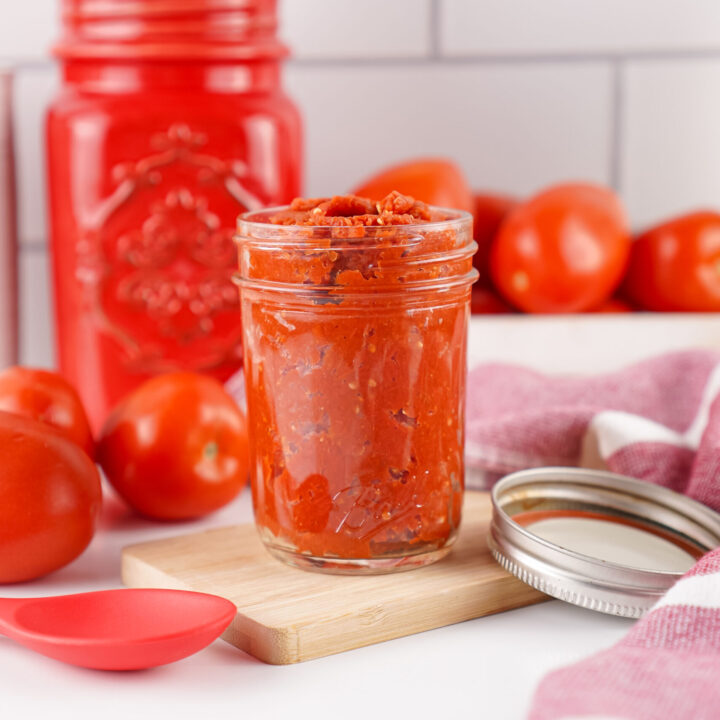
Make homemade tomato paste from fresh garden tomatoes with this easy recipe. Learn how to cook, thicken, store, and freeze it for later.
Ingredients
- 5 pounds ripe Roma or paste tomatoes
- 2 tablespoons olive oil
- 1 teaspoon salt
Instructions
- Wash the tomatoes, remove the stems, and cut them into quarters.
- Add the tomatoes and olive oil to a large heavy-bottomed pot.
- Cook over medium heat for 20 to 30 minutes, stirring occasionally, until the tomatoes are very soft and have released their juices.
- Mash the tomatoes with a wooden spoon or potato masher as they cook.
- Pass the cooked tomatoes through a food mill or fine-mesh sieve to remove the skins and seeds.
- Return the smooth tomato puree to the pot and stir in the salt.
- Cook over low to medium-low heat for 2 to 4 hours, stirring frequently, until the mixture is very thick and deep red.
- Stir more often as the tomato paste thickens to prevent it from scorching.
- Remove from the heat and allow the tomato paste to cool completely.
- Store in an airtight container in the refrigerator for short-term use, or freeze in tablespoon-sized portions for longer storage.
Notes
Roma, San Marzano, and other paste tomatoes work best because they contain less water. Cooking time will vary depending on how juicy your tomatoes are.
For easy portioning, freeze the tomato paste in an ice cube tray or scoop tablespoon-sized portions onto a parchment-lined baking sheet. Once frozen, transfer to a freezer-safe bag.
This recipe is intended for refrigerator or freezer storage. Do not use it for shelf-stable canning unless you follow a tested home-canning recipe.
Nutrition Information:
Yield:
10Serving Size:
1Amount Per Serving: Calories: 67Total Fat: 3gSaturated Fat: 0gUnsaturated Fat: 3gSodium: 230mgCarbohydrates: 9gFiber: 3gSugar: 6gProtein: 2g