
Learning how to make homemade mayo is one of those kitchen skills that sounds intimidating—but is actually incredibly easy.
With just a few simple ingredients and an immersion blender, you can make rich, creamy homemade mayonnaise in about one minute.

This easy recipe tastes fresher than store-bought versions and gives you full control over the ingredients. Once you try it, you may never go back to jarred mayo again. I know my family and I are so glad we found out how to make delicious homemade mayo!
Why Make Homemade Mayonnaise?
Homemade mayonnaise isn’t just a fun kitchen project—it’s also practical.

- Made with real, simple ingredients
- No preservatives or artificial flavors
- Creamier texture than store-bought mayo
- Customizable with herbs, garlic, or spices
- Ready in under 2 minutes
If you’re looking for a healthier alternative to processed condiments, this DIY mayonnaise recipe is a great place to start.

Ingredients for Homemade Mayo
This recipe makes about 1 cup of mayonnaise.
- 1 large egg, room temperature
- 1 cup neutral oil (avocado oil, light olive oil, or canola oil)
- 1 tablespoon lemon juice or white vinegar
- ½ teaspoon salt
- ½ teaspoon Dijon mustard (optional, but recommended)
If you want to make this a healthy homemade mayo, be sure to use the avocado oil. That is what I use, and it really makes for a delicious mayo flavor.

Step 1: Add Ingredients to the Jar
Place the egg, lemon juice (or vinegar), salt, and Dijon mustard into a wide-mouth mason jar or tall blending cup. Pour the oil on top last.
Do not stir.
Step 2: Blend
Insert the immersion blender so it touches the bottom of the jar. Turn it on and keep it completely still for 10–15 seconds.
You’ll see the mayonnaise begin to emulsify at the bottom.

Step 3: Finish
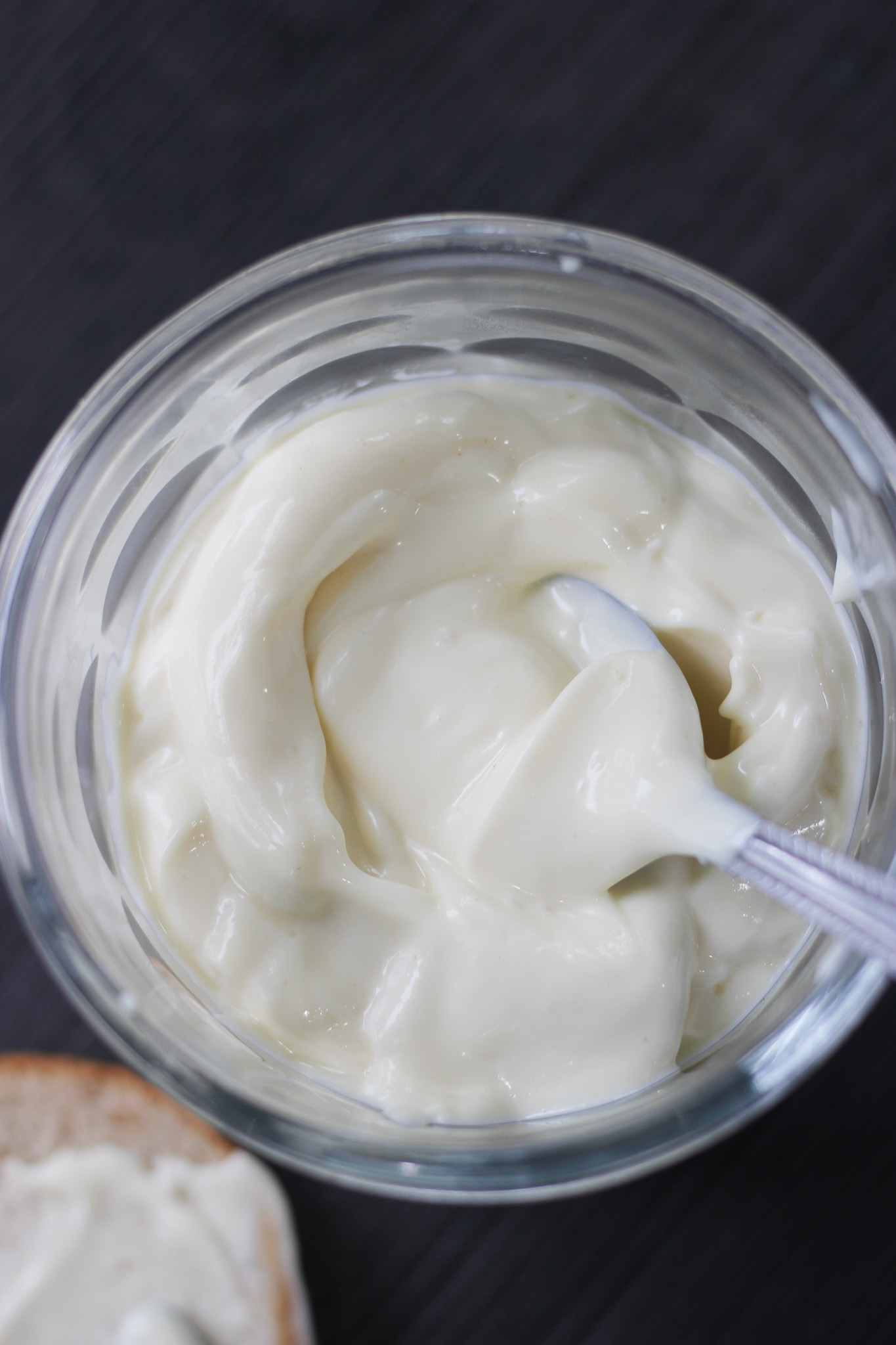
Slowly lift the blender upward until all the oil is incorporated and the mayo is thick and creamy.
Your homemade mayo is ready to use.
Can You Make Mayo Without an Immersion Blender?
Yes! While an immersion blender is easiest, you can also use:
- Food processor – Slowly drizzle oil while processing
- High-speed blender – Blend on low and add oil gradually
- Whisk by hand – Works, but requires patience and arm strength
The key is slow oil incorporation to create a stable emulsion.
How to Fix Broken Homemade Mayo
If your mayonnaise looks runny or separated, it can usually be saved.
Fix broken mayo:
- Add a fresh egg yolk to a clean bowl or jar
- Slowly blend the broken mayo into the yolk
- Continue blending until thick and smooth
This method works almost every time.
Homemade Mayo Flavor Variations

Once you master the base recipe, try these popular variations:
- Garlic aioli – Add fresh or roasted garlic
- Lemon herb mayo – Mix in dill, parsley, or chives
- Chipotle mayo – Blend in chipotle peppers in adobo
- Honey mustard mayo – Add honey and extra Dijon
These are perfect for sandwiches, burgers, fries, and wraps.
How Long Does Homemade Mayo Last?
- Store in an airtight container
- Keep refrigerated
- Use within 5–7 days
- Always use fresh, high-quality eggs
Because this is a raw egg mayonnaise recipe, freshness is key.
Final Thoughts on Making Homemade Mayo
This easy homemade mayo recipe proves that making mayo from scratch doesn’t have to be complicated. With better flavor, cleaner ingredients, and endless customization options, homemade mayo is a simple upgrade for everyday meals.
If you enjoy making kitchen staples from scratch, this recipe is one you’ll come back to again and again.
Check out these other homemade baking essentials
- Homemade Sweetened Condensed Milk
- Brown Sugar with just two ingredients
- Easy Lemon Curd
- Homemade Butter
- Homemade Buttermilk
How to Make Your Own Homemade Mayo
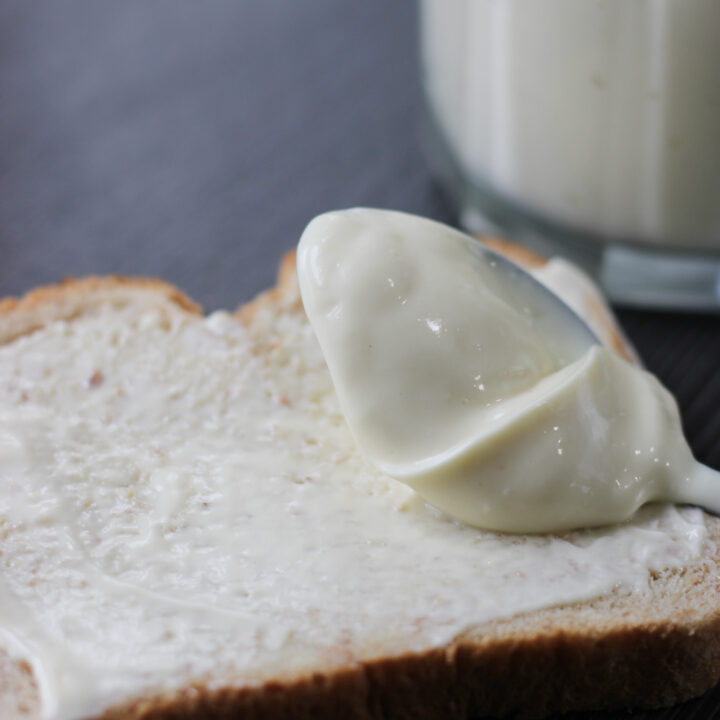
Making your own mayo is simple and easy.
Ingredients
- 1 large egg at room temperature
- 1 tablespoon Dijon mustard
- 1 tablespoon red wine vinegar
- ¼ teaspoon kosher salt, or more to taste
- 1 cup canola oil
- 1 teaspoon fresh lemon juice
Instructions
- Add egg, mustard, vinegar, and salt to the small bowl of a food processor or blender and process for 20 seconds.
- Scrape the sides and bottom of the bowl, turn the blender on then begin to slowly add the oil in small amounts until about a quarter of the oil has been added (this is critical for proper emulsification).
- With the processor on, continue to add it slowly, but increase to a very thin stream instead of drops of oil.
- When all of the oil has been added, scrape the bottom and sides of the bowl and process for an extra 10 seconds. Taste mayonnaise for seasoning then add salt, lemon juice or extra vinegar to taste. Note, if the mayo seems too thin, slowly stream in more oil with the processor running until thick.
Nutrition Information:
Yield:
30Serving Size:
1Amount Per Serving: Calories: 67Total Fat: 7gSaturated Fat: 1gTrans Fat: 0gUnsaturated Fat: 7gCholesterol: 6mgSodium: 26mgCarbohydrates: 0gFiber: 0gSugar: 0gProtein: 0g